


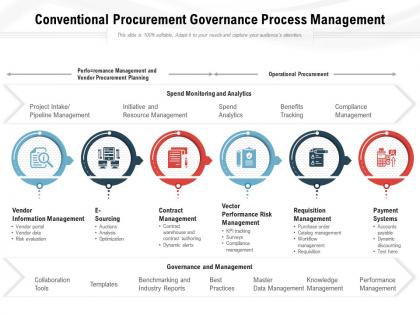
Conventional procurement governance process management




Try Before you Buy Download Free Sample Product
 Impress Your
 Audience
 100%
100% Editable
 Save Hours
 of Time


Our Conventional Procurement Governance Process Management are topically designed to provide an attractive backdrop to any subject. Use them to look like a presentation pro.
People who downloaded this PowerPoint presentation also viewed the following :
Conventional procurement governance process management with all 2 slides:
Use our Conventional Procurement Governance Process Management to effectively help you save your valuable time. They are readymade to fit into any presentation structure.
FAQs for Conventional procurement
So you'll need solid policies and clear roles - like who's doing what and when. Set up proper oversight and risk management stuff too. Transparent reporting is huge, plus regular compliance checks to keep everyone honest. Stakeholder engagement matters way more than people think - procurement touches everyone, not just your team. Honestly, the biggest thing is having procedures people actually use, not just fancy documents nobody reads. Oh, and map out your current process first. Shows you where the gaps are before you start fixing things. Start there and build out.
Good procurement governance is honestly a game-changer for compliance risks. You'll have way fewer regulatory headaches when there's solid policies and vendor screening in place. The audit trail thing is huge too - makes those compliance reviews so much smoother (learned that the hard way). Early risk detection is another win, whether it's financial stuff or supply chain problems. Clear approval workflows help catch issues before they blow up. But here's the thing - doesn't matter how great your processes look on paper if your team isn't actually using them consistently.
Look, tech automates your governance stuff and makes everything way more transparent. Real-time spending visibility is huge. Automated workflows stop people from doing random things without approval - honestly saved my sanity at my last job. AI flags sketchy patterns before they blow up into compliance nightmares. The manual workload on your team drops but control quality actually gets better, which is weird but true. Don't try fixing everything at once though. Figure out what's driving you crazy first, then find specific tools for those problems. Way less overwhelming that way.
Honestly, start with the basics - cost savings and how fast you're getting contracts done. Those numbers don't lie. Compliance rates matter too, but I'd personally focus more on supplier performance scores since that's where you'll catch problems before they blow up. Oh, and definitely survey your stakeholders because grumpy internal customers = major red flag. Risk stuff is obvious but worth tracking. Pick maybe 4 metrics max that actually tie to what your company cares about. Review quarterly so you're not drowning in data but can still catch trends early.
Honestly, the resistance to change is brutal - nobody wants to give up control of their budgets. Different departments get super territorial about how they've always done things. Your data will probably be a mess too, which makes tracking anything a nightmare. Plus all these random systems that don't connect? Yeah, good luck with that. Most companies also totally underestimate how much time and people you actually need to make this work. My advice: get the executives on board first (like, really on board), then nail down your biggest processes before you worry about the small stuff. Oh, and maybe stock up on coffee - you're gonna need it.
So SRM is basically how you execute your procurement governance day-to-day. Your governance framework sets all the rules - performance metrics, risk protocols, escalation procedures, that stuff. SRM is where you actually run those plays through business reviews, contract management, performance monitoring. Think of governance as your playbook and SRM as the actual game. The key is making sure your SRM processes match what your governance says you should be doing - I've seen too many companies where these two things don't talk to each other at all.
Start with clear procurement policies that spell out your whole process. Post everything publicly and use the same evaluation criteria each time. Document every single decision - seriously, it's annoying but you'll thank yourself later when people start asking questions. Set up conflict protocols too. Multiple approvals for big purchases are non-negotiable. Everything needs to be visible and auditable, which honestly is just common sense these days. Oh, and make a checklist for your team! Deadlines make people forget stuff. Keep it simple so nothing slips through the cracks.
Make it a real requirement in your governance, not just something nice to have. I'd start with your riskiest supplier categories first - way easier to manage. Build ESG criteria right into vendor selection: labor practices, environmental stuff, supply chain transparency. Yeah it feels like more paperwork at first, but honestly it saves you from huge headaches later. Your procurement policies need to mandate these checks at every step. Create scorecards that rate suppliers on sustainability alongside the usual cost and quality metrics. Trust me, this approach actually protects your business way more than you'd think.
So procurement governance is basically how you make sure your buying decisions actually match what your company wants to achieve overall. Like if your business is pushing hard for sustainability, your procurement rules should favor green suppliers - makes total sense, right? Otherwise you're just working against yourself. The trick is building in checkpoints so every big purchase gets measured against your main priorities before anyone signs off. Without this alignment, you'll have departments buying stuff that completely undermines your strategic goals. It's honestly one of those things that seems obvious but gets overlooked way too often.
Ugh, regulations basically blow up your whole procurement process. You'll be drowning in approval layers and paperwork trails that match whatever the regulators want to see. SOX requirements? Government contracts? Your "just buy the thing" workflow turns into this massive compliance beast. Who approves different dollar amounts, record retention timelines - it all gets dictated for you. Honestly, I learned this the hard way at my last job. Map your specific regulatory stuff first, then build your governance around those requirements. Way easier than trying to shoehorn compliance into an existing system later.
Start with the basics - regulatory compliance, ethics, and your company's policies. Contract law is key too. Internal workshops are fine, but external certs like CIPS or NIGP actually mean something to employers and give you way better perspective. Soft skills matter more than people think - you'll constantly deal with different departments who hate procurement rules. Risk management principles help too. Oh, and bookmark your procurement manual because you'll live in that thing. Regulations change all the time so plan for regular updates.
You know how procurement always feels like a battle between departments? Getting everyone on the same page early totally changes that. Finance, legal, ops, IT - when they're all talking from the start, you catch problems before they blow up your budget. Each team spots risks the others miss. And honestly, people stop being so resistant when they actually helped build the strategy instead of having it dumped on them. The trick is regular check-ins and making sure everyone's measuring success the same way. Oh, and shared dashboards help too - keeps people focused on the same goals.
Look at compliance rates first - are people actually doing what you set up? Cost savings from your controls matter too. Track how long it takes from request to signed contract. Risk stuff is massive though - count how many supplier headaches or contract fights you've dodged because of your framework. Stakeholder satisfaction surveys sound boring but they're gold for figuring out if you're helping or just being annoying bureaucrats. Best case scenario? You're saving money AND speeding things up while staying compliant. Pick 2-3 metrics that fit your company's priorities. Check them monthly and you'll spot trends fast.
Honestly, you gotta bake this stuff into your governance from day one - don't try to tack it on later. Map out who needs to weigh in on what decisions first. Then set up regular touchpoints that actually work for your team's schedule. Include everyone who matters: finance, legal, end users, leadership. But here's the thing - skip the pointless meetings where people just sit there. Give them real input and actual decision-making power when it makes sense. Weekly check-ins or monthly reviews, whatever clicks. The whole thing falls apart without transparency and consistent feedback loops anyway.
Honestly, bad procurement governance will wreck your finances fast. Departments start doing their own thing - buying duplicates, missing bulk discounts, the whole mess. Contract penalties pile up because nobody's tracking compliance properly. Then you get hit with supply chain disasters and quality problems that should've been caught early. Cash flow gets messy, budgets go sideways, and auditors start asking uncomfortable questions. I've seen this tank companies before. Set up spending limits and approval processes first - sounds boring but it'll stop the worst bleeding right away.
-
Excellent design and quick turnaround.