

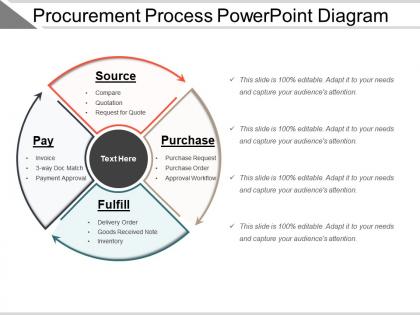
Procurement process powerpoint diagram





Try Before you Buy Download Free Sample Product
 Impress Your
 Audience
 100%
100% Editable
 Save Hours
 of Time


Acquire across the board flexibility with our Procurement Process Powerpoint Diagram. Cater for fast changing demands.
People who downloaded this PowerPoint presentation also viewed the following :
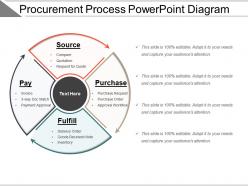
Procurement process powerpoint diagram with all 5 slides:
Get over hardships with our Procurement Process Powerpoint Diagram. They always care for your feelings.


FAQs for Procurement
The key procurement process stages include need identification, supplier sourcing, request for proposals, vendor evaluation, contract negotiation, purchase order creation, and performance monitoring. These stages streamline organizational purchasing by ensuring competitive pricing, quality assurance, and compliance adherence, with many companies finding that structured procurement ultimately delivers cost reductions and enhanced supplier relationships.
Companies can effectively evaluate suppliers through comprehensive criteria including financial stability, quality certifications, delivery track records, pricing competitiveness, and compliance standards. This strategic combination of quantitative metrics and qualitative assessments enables organizations to minimize risks, ensure consistent supply chains, and build long-term partnerships, with many finding that thorough supplier evaluation ultimately delivers cost savings and enhanced operational efficiency.
Technology revolutionizes procurement through automation, AI-powered supplier selection, digital contract management, real-time spend analytics, and cloud-based procurement platforms. These solutions streamline operations by reducing manual paperwork, accelerating approval workflows, and enhancing supplier transparency, with many organizations finding that strategic technology integration delivers significant cost savings and competitive advantage.
Organizations ensure compliance with procurement regulations by implementing standardized procedures, conducting regular audits, providing comprehensive staff training, and utilizing digital procurement platforms with built-in compliance checks. These systems streamline vendor verification, contract management, and documentation requirements, with many companies finding that automated workflows and real-time monitoring significantly reduce regulatory risks while enhancing operational efficiency and transparency.
**INPUT**: What are the best practices for managing supplier relationships throughout the procurement lifecycle? **OUTPUT**: Best practices include establishing clear performance metrics, conducting regular reviews, maintaining transparent communication channels, implementing collaborative planning processes, and creating structured feedback mechanisms. These approaches streamline procurement by building trust, minimizing disputes, and enhancing service quality, with many organizations finding that strategic supplier partnerships ultimately deliver cost reductions, faster delivery times, and competitive advantage in increasingly complex markets. **Word count: 60 words**
Procurement analytics enhances decision-making by providing data-driven insights into supplier performance, spend patterns, market trends, and risk factors. Through predictive modeling and real-time dashboards, organizations streamline vendor selection, optimize contract negotiations, and identify cost-saving opportunities, ultimately delivering better supplier relationships and strategic competitive advantage.
Organizations can implement supplier consolidation, strategic sourcing, automated procurement systems, competitive bidding processes, and long-term contract negotiations to reduce procurement costs. These strategies streamline operations by eliminating redundant suppliers, leveraging bulk purchasing power, and minimizing manual processing errors, with many companies finding that automated systems deliver 15-20% cost reductions while enhancing supplier relationship management.
Sustainability and ethical sourcing integrate into procurement through supplier assessment criteria, environmental impact evaluations, social responsibility audits, and compliance monitoring throughout the supply chain. These considerations enable organizations to minimize environmental footprint, ensure fair labor practices, and meet regulatory requirements, while many companies finding that sustainable procurement ultimately delivers cost savings, enhanced brand reputation, and competitive advantage in increasingly conscious markets.
Global supply chain disruptions significantly reshape procurement strategies by forcing organizations to prioritize supplier diversification, increase inventory buffers, and invest in supply chain visibility technologies. Companies across industries, from automotive manufacturers to healthcare providers, are increasingly adopting multi-sourcing approaches and regional supplier networks, ultimately building more resilient procurement frameworks that balance cost efficiency with risk mitigation.
Procurement teams can leverage contracts to maximize value by negotiating favorable terms, implementing performance-based clauses, establishing clear deliverables, and incorporating strategic partnerships with suppliers. These approaches enable organizations to secure better pricing, ensure quality standards, and mitigate supply chain disruptions, while many companies finding that well-structured contracts ultimately deliver cost savings and enhanced operational efficiency.
Organizations should track metrics including procurement cycle time, cost savings achieved, supplier performance ratings, purchase order accuracy, and contract compliance rates. These measurements streamline operations by identifying bottlenecks, optimizing vendor relationships, and reducing processing costs, with many companies finding that comprehensive tracking delivers faster procurement cycles and improved budget control.
Collaboration between departments improves procurement by aligning requirements, sharing market insights, and coordinating budgets across organizational functions. When finance, operations, and procurement teams work together, organizations streamline vendor selection, reduce duplicate purchases, and negotiate better contracts, ultimately delivering cost savings and faster procurement cycles while enhancing strategic supplier relationships.
Common procurement pitfalls include inadequate supplier vetting, poor contract negotiations, lack of spend visibility, insufficient stakeholder communication, and weak compliance monitoring. These challenges can significantly impact operational efficiency and cost management, with many organizations finding that streamlined procurement processes, strategic vendor relationships, and robust oversight systems ultimately deliver better supplier performance and substantial cost savings.
Businesses can incorporate stakeholder feedback into procurement strategy through regular surveys, cross-functional committees, supplier scorecards, and performance reviews that capture insights from end-users, finance teams, and operational staff. This collaborative approach enables organizations to identify cost-saving opportunities, improve vendor relationships, and enhance service quality, with many companies finding that stakeholder-driven procurement decisions ultimately deliver better outcomes and stronger competitive advantage.
Risk management serves as a critical foundation throughout procurement by identifying potential supplier failures, quality issues, compliance violations, and supply chain disruptions before they impact operations. Through comprehensive vendor assessments, contract safeguards, and contingency planning, organizations minimize financial exposure, ensure regulatory compliance, and maintain operational continuity, with many companies finding that proactive risk strategies ultimately deliver cost savings and competitive advantage.
-
Great product with highly impressive and engaging designs.
-
Design layout is very impressive.