

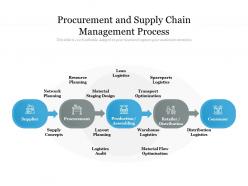
Procurement and supply chain management process





Try Before you Buy Download Free Sample Product
 Impress Your
 Audience
 100%
100% Editable
 Save Hours
 of Time


Convince them hands down with our Procurement And Supply Chain Management Process. They will be forced to believe in you.
People who downloaded this PowerPoint presentation also viewed the following :
Procurement and supply chain management process with all 5 slides:
Convince them of your concern with our Procurement And Supply Chain Management Process. They will appreciate your handling of complaints.

FAQs for Procurement and supply
Honestly, three things are totally reshaping how we buy stuff: spreading out suppliers, going digital, and hitting those green targets. Single sourcing is dead after all the chaos we've seen. Digital tools give you way better visibility into what's happening - plus the data helps catch problems early. ESG stuff isn't optional anymore either, stakeholders won't let you skip it. Oh and relationships matter more than ever. Transactional approaches just don't cut it when things get messy. I'd start by looking at your current suppliers and figuring out where you're most exposed risk-wise.
So basically AI can crunch through tons of vendor data way faster than you ever could - finds the best suppliers, spots risks early, predicts what you'll actually need. Blockchain's pretty cool too because it creates this permanent record nobody can mess with. No more "oops we lost that contract" drama. Both cut down on all the boring admin stuff that eats up your day. Honestly, the contract management alone saves so much headache. You end up doing way less paperwork and can focus on the strategic stuff that actually matters. Maybe try one AI tool for spend analysis first?
Look, good supplier relationships are what separate smart procurement from just buying stuff. You'll get better deals and they'll actually prioritize you when things get crazy. My old boss always said treat your best suppliers like partners, not just some random vendor - and honestly, it works. They're way more helpful when problems come up if they don't hate dealing with you. Focus on your most critical suppliers first. Set up regular meetings that aren't just about haggling over contracts. When shortages hit or new tech drops, guess who gets first dibs?
Don't just look at upfront costs - think about what you'll spend long-term on maintenance and replacements. We made this mistake buying cheap office chairs that literally broke after six months (so embarrassing). First, figure out your minimum quality standards. Then score suppliers on both price AND whether they can actually deliver consistently. Volume discounts are your friend with good suppliers, or try locking in longer contracts for better rates. Honestly, the scoring system approach saved us so much headache - you're not just guessing anymore, you've got real data backing your choices.
Honestly, just start by listing out everything that could go wrong - supplier issues, late deliveries, quality problems, compliance stuff, cyber threats. Rate each one on how likely it is and how badly it'd mess you up (boring but necessary). Put someone in charge of watching each risk area and document it all somewhere. Oh, and definitely check your contracts to see who's on the hook when things go sideways. Build backup plans for the scariest scenarios. I'd revisit this every few months since suppliers can implode overnight these days.
Honestly, sustainable procurement is one of those things that actually saves you money. Energy-efficient suppliers cut costs, you waste less stuff, and vendors who care about long-term relationships usually give better deals. Your brand looks good too, which keeps customers around. Yeah, it's more work at first - won't lie about that. But most companies end up running smoother operations. Sustainable suppliers are just more reliable in my experience. Try checking your biggest 5 vendors against some basic sustainability stuff. You might already have more influence than you think to push for changes.
Track both cost and performance stuff to get the real picture. Cost savings and spend under management are obvious ones - that's where you prove you're actually saving money. Cycle times matter too, like how long from requisition to delivery. Quality metrics are huge though - defect rates, supplier scorecards, all that. Procurement teams get way too focused on just the savings sometimes, which is kinda shortsighted. Contract compliance and supplier performance ratings give you the operational side. Start with maybe 3-4 metrics that actually match what your business cares about instead of going crazy measuring everything.
Dude, stop just buying the cheapest crap and start actually working WITH your suppliers. The magic happens when you ditch those boring RFPs and ask vendors to help solve your problems creatively. Get them involved early in product development - they know stuff you don't. I'm telling you, some of our wildest ideas came from random supplier chats over coffee. Pick maybe 3-4 key suppliers and do monthly brainstorming sessions with them. Sounds cheesy but it works. You'll get way more innovation than throwing requirements over the wall and hoping for the best.
Honestly, most people mess up by rushing in without doing their homework on suppliers first. Don't just look at price either - that's a rookie move. Total cost matters way more than the sticker price. I always make sure I know my backup options before I even sit down to negotiate, otherwise you're screwed if they call your bluff. Oh, and define exactly what you need upfront! Sounds obvious but you'd be surprised how many deals go sideways because nobody bothered to spell out the requirements clearly. Building actual relationships with suppliers pays off too - they'll work with you when things get messy.
Man, globalization opens up tons of supplier options worldwide - better prices, specialized stuff you can't get locally. But it gets messy fast. Different regulations, time zones, currencies... honestly dealing with cultural differences alone can be a headache. The real kicker? One issue in some random country can torpedo your whole supply chain. I'd spread suppliers across different regions but always keep backups ready. Oh, and spend actual time getting to know your international partners - their strengths, weaknesses, the works. Don't just assume they operate like your local guys.
Honestly, data analysis is where I'd start - that's become massive in procurement. You're always crunching numbers on supplier performance and market trends. Negotiation skills are a given, but relationship building might be even more crucial since you're creating partnerships that last years. Supply chain basics and procurement software knowledge are pretty essential too. The tech side can feel overwhelming at first, but once you get the hang of analyzing data, everything else clicks into place. Focus there first and you'll be solid.
Honestly, you've gotta break out of that bubble and start talking to other departments regularly. Monthly meetings with marketing, IT, operations - share what's coming down the pipeline and actually listen to what they need. Though half the time they don't even know what they really need, but whatever. Set up some kind of shared dashboard so everyone can see timelines and budget stuff in real time. Stop being the department that just kills everyone's ideas. Pick one team first and build that relationship - once word gets out that you're actually helpful, others will want to work with you too.
Ugh, compliance basically means adding tons of extra steps to everything. You'll be tracking supplier certifications, keeping crazy detailed records, and working from pre-approved vendor lists. Honestly, it slows everything down at first. But here's the thing - it actually makes your supplier relationships way stronger over time and cuts down on risky situations. My advice? Build it into your regular process right away instead of bolting it on later. That never works well. Set up some automated stuff and do regular check-ins to keep yourself sane.
Dude, you're probably sitting on tons of useful data already and just not realizing it. Pull everything - purchase orders, supplier performance, contract details, market trends. Analytics will show you spending patterns and help predict when prices are about to jump. Start with just one category though, don't try to tackle everything at once. Historical pricing data makes negotiations way easier, plus you can catch weird spending before it spirals. I swear, most procurement teams have goldmines of info they never touch. Focus on supplier performance metrics to figure out who's actually worth keeping around.
So the big thing right now is AI automating all the boring stuff we used to do by hand. Sustainability isn't optional anymore either - clients actually care about this now. Supply chains are getting spread out more since, you know, everything kept breaking these past few years. Digital platforms are pretty much standard at this point. If you're still doing procurement with spreadsheets and emails... yikes. Companies don't just want cheap suppliers anymore - they want ones that won't disappear when things get messy. I'd start by automating whatever tasks make you want to bang your head against a wall first.
No Reviews