Procurement Process Flow Chart For Effective Supply Chain Management

Rating:
90%
Procurement Process Flow Chart For Effective Supply Chain Management
Slide 1 of 6
Favourites Favourites

Try Before you Buy Download Free Sample Product

Audience Impress Your
Audience
Editable 100%
Editable
Time Save Hours
of Time
The Biggest Sale is ending soon in
0
0
:
0
0
:
0
0
Rating:
90%
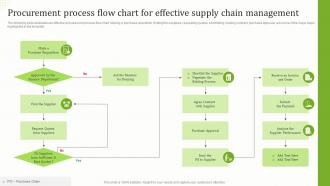
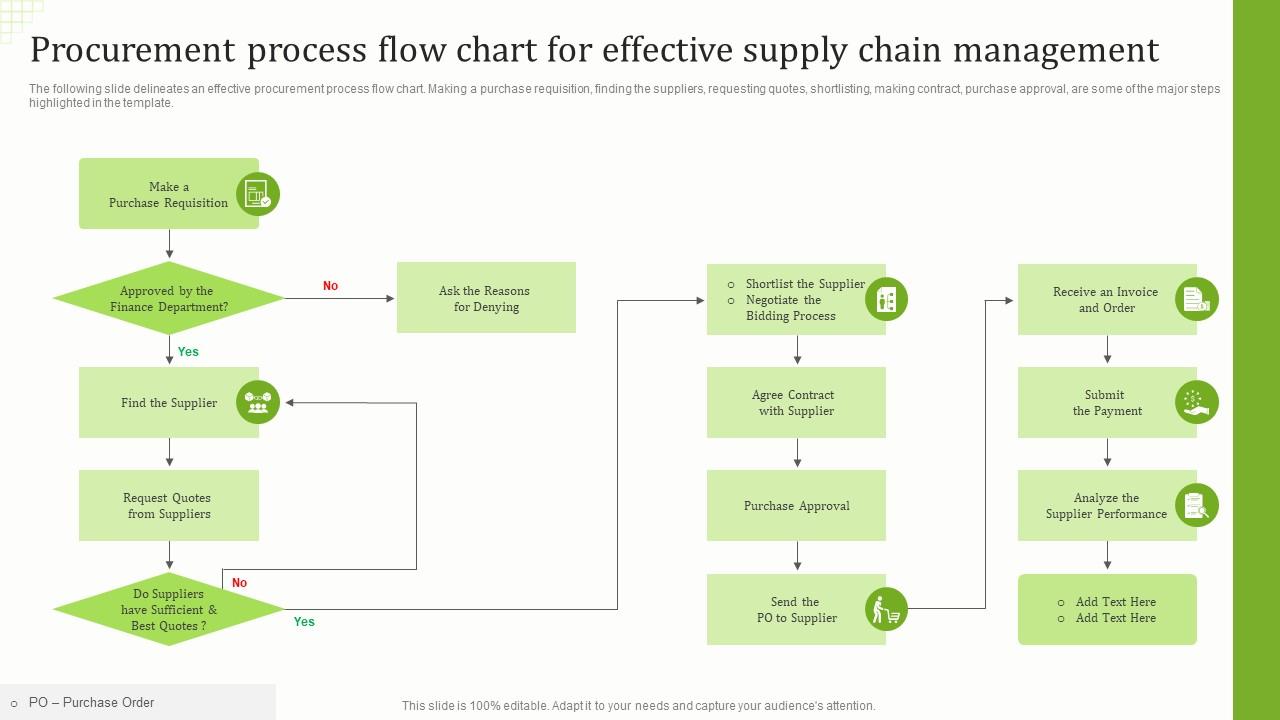
The following slide delineates an effective procurement process flow chart. Making a purchase requisition, finding the suppliers, requesting quotes, shortlisting, making contract, purchase approval, are some of the major steps highlighted in the template. Presenting our set of slides with name Procurement Process Flow Chart For Effective Supply Chain Management. This exhibits information on seven stages of the process. This is an easy-to-edit and innovatively designed PowerPoint template. So download immediately and highlight information on Procurement Process, Flow Chart, Supply Chain Management.
FAQs for Procurement Process Flow Chart For Effective

Start with identifying what you actually need, then define your requirements - seriously, don't skip this part or you'll hate yourself later. Next comes vendor sourcing, requesting proposals, and evaluating all the bids you get back. After that it's contract negotiations and awarding the deal. Performance management wraps it up. Build in approval checkpoints too, especially before picking vendors and signing anything. Your company probably has specific policies around purchase amounts that'll affect the flow. Honestly, I'd map out whatever messy process you have now first, then figure out where things always get stuck.

Okay so basically it's like having a visual map of your whole buying process - from when someone requests something to actually paying for it. Nothing gets lost that way. When you can actually see the workflow, bottlenecks become super obvious. Like, you'll probably be shocked at how many pointless approval steps you have (we definitely were). Your team gets a better sense of where they fit in too. Way less confusing emails back and forth. The standardization helps a ton, and you can quickly spot which parts are taking forever. I'd say map out what you're doing now first, then figure out what's driving everyone crazy and fix those parts.

Dude, you've got so many options it's kinda overwhelming. Visio and Lucidchart are great for detailed diagrams. Miro's awesome if your team wants to collaborate in real-time. Honestly? PowerPoint works fine when you're just starting out - I've seen people do amazing process maps in it. Don't overthink this part. If you want to get fancy later, Bizagi lets you actually automate stuff after mapping it out. My advice is start with whatever software you already have. You can always upgrade once you figure out what features you actually need versus what sounds cool in theory.

Honestly? The worst part is trying to map all those approval levels without creating a total mess. Parallel stuff kills me too - like when legal and procurement both review at once, how do you even show that clearly? And don't get me started on stakeholders who keep adding "quick" steps that ruin everything. Detail-wise, it's this weird balance. Too simple and it's pointless, too complex and people ignore it completely. My take: nail down the basic happy path first. Get everyone nodding yes on that, then sneak in the exceptions later. Way easier sell.

Look, your company's structure basically controls who signs off on what and how fast things move. Centralized places? Fewer people making decisions but everything crawls up this long chain to corporate. Decentralized is way better for speed - local teams can approve smaller stuff without waiting around. But you might lose some buying power when everyone's doing their own thing. Matrix orgs are just a nightmare honestly, like having three bosses who all want input. The real trick is figuring out your exact dollar limits and who actually matters at each level. Otherwise you're just sitting there wondering if you need Karen from finance or not.

Track cost savings and how long it takes from requisition to delivery. Supplier performance scores matter too, plus contract compliance rates. PO accuracy is huge - constant revisions are such a pain. Monitor your team's workload and where approvals get stuck since that kills your timeline. Budget variance shows if you're actually controlling costs or just pretending to. Honestly, I'd start with whatever's causing you the biggest headaches right now. Set up a monthly dashboard so you can catch problems before they blow up.

Map out every regulation that hits your industry first - SOX, GDPR, whatever applies to you. Then build approval gates right into each procurement step. Most companies totally screw this up by bolting compliance on later instead of baking it in from day one. Set up alerts for when vendor certs are about to expire, document everything, and train your team on which regs need which approvals. I'd honestly start with an audit of what you're doing now to spot the biggest gaps. Don't skip the documentation part - auditors love that stuff.

So supplier relationship management? It's woven into your whole procurement process - not just one piece of it. During sourcing you'll see it when you're picking vendors, but it keeps going after you buy stuff too. Good relationships mean your orders go smoother and problems get fixed faster. When there's a shortage, guess who gets served first? The companies that actually maintained relationships year-round. I learned this the hard way at my last job - we only talked to suppliers when we needed something. Terrible strategy. Your procurement runs so much better when you nurture those connections throughout the entire cycle.

Honestly, having a procurement flow chart is a game changer because everyone's on the same page. No more confusion about who's doing what or when stuff needs to happen. Finance knows exactly when to step in, vendors know what's expected - you get the idea. The visual part is key too. People can actually see where things get stuck (and trust me, there's always that one spot). When new people join your team, just hand them the chart instead of doing the whole song and dance explanation. Just make sure it's somewhere accessible to everyone who needs it.

Get your procurement, finance, and legal people in a room first. Map out what you're actually doing now - I know it sounds boring but you'll catch weird stuff you forgot about. Document your changes as you go (future you will thank you). Test it with a small group before unleashing it on everyone. Keep the symbols simple so Bob from accounting can actually read it. Oh and set up quarterly reviews or whatever - honestly, these things get outdated fast if nobody's watching them.

Honestly, visual stuff is a game-changer for procurement. Flow charts show you exactly where things get stuck instead of buried in some dense manual nobody reads. You can see who does what and catch bottlenecks way faster. New people get it quicker too when they're not trying to decode paragraph after paragraph of procedures. Start by mapping what you're doing now - even a rough sketch helps. Then look for where time disappears or things get confusing. Trust me, once you see the whole process laid out visually, the problems become super obvious.

Honestly, feedback loops are like having a reality check built into your process. You get to stop and see what actually went down versus what you hoped would happen. Did that supplier flake again? Was your vendor screening totally useless? Short feedback loops catch this stuff early before it turns into a costly mess. I learned this the hard way once - kept using the same broken approach for months. Now I always set up check-ins after big milestones, especially when reviewing how vendors performed or wrapping up contracts. It's way better than just hoping everything works out.

Get your key people involved from day one - they'll actually buy in if they helped build it. Honestly, most pushback happens when people feel lost or stupid, so training is everything. Test it with a few teams who are already on board first. Those early wins? Pure gold for convincing the skeptics later. Oh, and don't just tell them what's changing - explain how it makes THEIR job easier, not just some corporate BS about efficiency. Listen when they complain too. Sometimes they're right about stuff you missed. The whole thing falls apart if people think you're just steamrolling over them.

Goods are pretty straightforward - you check specs, inspect quality, track delivery. Done. Services? Way more complex since you can't just poke something to see if it works. Instead you're dealing with performance reviews, hitting milestones, managing relationships. Approval processes get weird too because different people need to sign off depending on what you're buying. Honestly, I'd just make separate templates for each type. Your team will thank you later when they're not scratching their heads over which hoops to jump through.

Honestly, you're probably drowning in data already - purchase orders, delivery times, all that stuff. Analytics just helps you make sense of it. Start by picking one thing that's driving you crazy, like why approvals take forever or which suppliers always show up late. Data can help predict when suppliers might mess up before they actually do. I'd focus on spending patterns too - see where money's going weird. The demand forecasting thing is pretty clutch once you get the hang of it. Don't try to fix everything at once though, that's a recipe for burnout.

Ratings and Reviews

90% of 100
Review Form
Write a review
Most Relevant Reviews
  1. 80%

    by Dana Owens

    The website is jam-packed with fantastic and creative templates for a variety of business concepts. They are easy to use and customize.
  2. 100%

    by Dee Hicks

    Like always a great experience with you guys. Always there on the drop of hat to help.

2 Item(s)

per page: