Procurement Process Flow Chart With Purchase Order
Try Before you Buy Download Free Sample Product
Audience
Editable
of Time
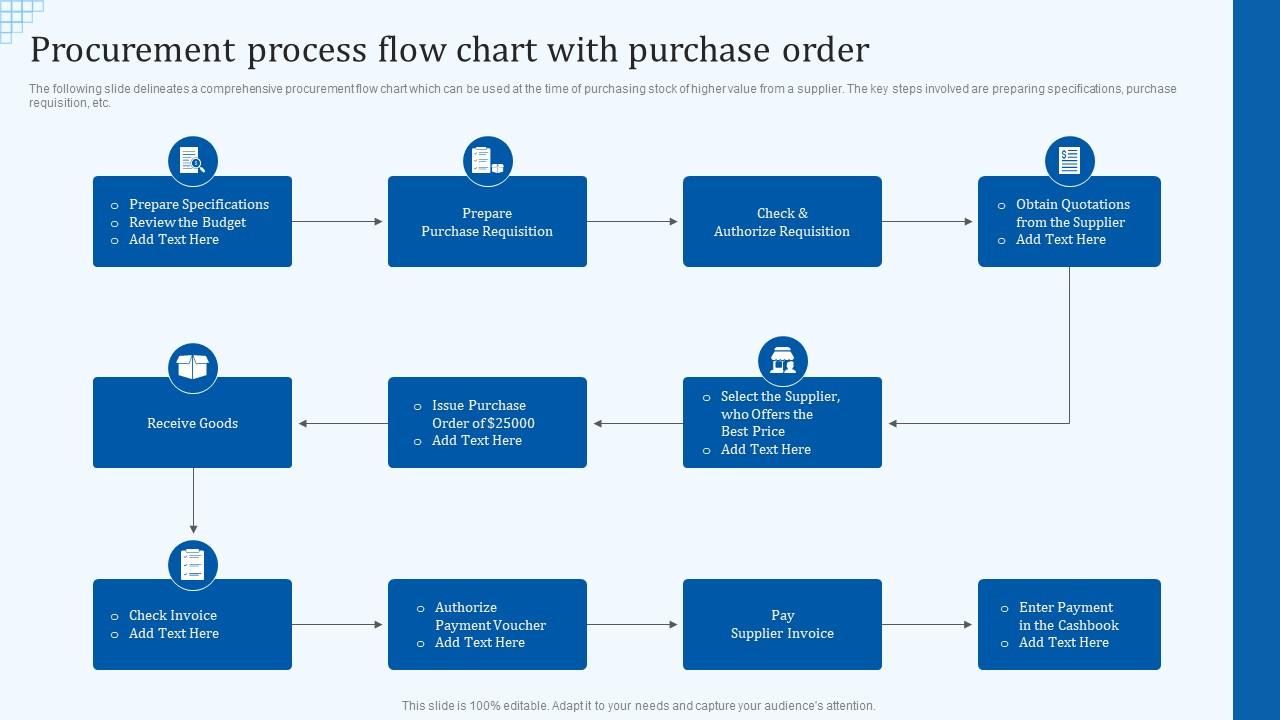
The following slide delineates a comprehensive procurement flow chart which can be used at the time of purchasing stock of higher value from a supplier. The key steps involved are preparing specifications, purchase requisition, etc.
People who downloaded this PowerPoint presentation also viewed the following :
Procurement Process Flow Chart With Purchase Order with all 6 slides:
Use our Procurement Process Flow Chart With Purchase Order to effectively help you save your valuable time. They are readymade to fit into any presentation structure.
FAQs for Procurement Process Flow Chart
So there's basically four main steps: figure out what you actually need, pick your vendor, hammer out the contract, then manage performance ongoing. Honestly, spend the most time on that first part - defining requirements properly. I can't stress this enough because I've seen people rush it and regret it later. Document everything clearly before you even start shopping around. Changing your mind halfway through? That'll cost you. Once you know what you want, research suppliers and evaluate them. Then negotiate terms (this part can drag on forever). Finally, keep tabs on how they're doing throughout the whole relationship. Pretty straightforward process but easy to mess up if you're not careful upfront.
Honestly, picking vendors is probably the most crucial thing you'll do for procurement - everything else flows from there. Good vendors become actual partners who save you money and bring new ideas to the table. Bad ones? You'll spend half your time putting out fires with quality problems and missed deadlines. I learned this the hard way at my last job. Map your key suppliers against what you're trying to achieve as a business. Are you focused on going green? Cost cutting? Getting products to market faster? Your vendors need to actually support those goals, not work against them.
Dude, procurement tech is seriously changing everything. AI handles spend analysis and supplier risk stuff now, which is pretty wild. E-procurement platforms automate most of your sourcing and purchasing - no more manual paperwork hell. Cloud systems let you work from literally anywhere, and automation takes care of boring tasks like PO generation. Honestly, the approval workflows alone will save you hours each week. My advice? Don't try to fix everything at once - that's how you end up overwhelmed. Pick your biggest headache first, then find tech that actually solves that specific problem. Way less stressful that way.
Honestly, you've gotta nail down expectations right from the start - put everything in writing. Performance metrics, deadlines, quality standards, all that stuff. Then don't just disappear until something goes wrong (been there). Regular check-ins are clutch for catching problems early. We had one supplier literally vanish on us mid-project - nightmare fuel. Maybe try a scorecard system to track how they're doing? Sounds boring but it works. The suppliers who feel like actual partners instead of just random vendors always come through better. Oh, and this builds way stronger relationships for next time too.
So the big ones are avoiding conflicts of interest and keeping everything fair between suppliers. Don't take gifts from vendors - learned that one the hard way at my last job! You'll want to document your decisions so they can handle scrutiny later. Fair competition means treating everyone equally and not letting personal relationships mess with your judgment. Keep your evaluation criteria objective and actually follow your company's procurement rules. I know it sounds like a pain when deadlines are breathing down your neck, but transparency throughout the whole process will save you major headaches.
Honestly, procurement and regulatory compliance are basically married to each other. You literally can't buy anything without checking if it meets your industry's rules first - safety stuff, environmental regs, whatever applies to your field. The annoying part? Regulations change all the time, so you're constantly playing catch-up. Your procurement people need to buddy up with compliance officers to check out suppliers properly. Build those regulatory requirements right into your RFPs and contracts from the start. Oh, and create a compliance checklist for your regular purchases - trust me, it'll save you headaches later.
Track your cost savings first - actual spend vs what you budgeted or paid before. Supplier performance matters too: delivery times, quality, how fast they respond when stuff goes wrong. Honestly, purchase-to-pay cycle time is underrated but it'll make your stakeholders way happier. Contract compliance keeps you out of trouble. Oh, and survey people to see if you're actually helping them or just creating more work. Start with maybe 3 metrics though - I made the mistake of tracking everything once and it was a nightmare.
Honestly, dig into your purchase history first - you'll be shocked at how much you're throwing at random vendors. I always start with one spending category instead of trying to tackle everything at once. Track things like delivery times and quality scores for each supplier, then use that data to figure out who's actually worth keeping. The cool part is using analytics to predict when you'll need more stuff so you're not scrambling with expensive rush orders. Once you get the hang of spotting these patterns, picking better suppliers becomes way easier.
Ugh, where do I even start? Supplier delays are the worst - they'll promise you the moon and then show up three weeks late. Budget overruns happen constantly too. Communication between departments? Good luck with that mess. Quality issues drive me absolutely insane because vendors say one thing and deliver something completely different. Paperwork takes forever to process, you've got limited options for specialized stuff, and people always change their minds halfway through. Compliance slows everything down. Honestly though, just build extra time into your schedule and set up solid communication from day one. Trust me on this.
Just build sustainability stuff right into your normal vendor scorecards - carbon footprint, certifications, labor practices, that kind of thing. Your RFP templates need those questions too. Yeah, vendors will grumble about more forms initially but whatever, they'll get over it. For certain categories, set actual minimums like energy efficiency standards or recycled content percentages. Way better than having some separate "green" process that nobody takes seriously. I'd honestly just pick one category to test it out first, then roll it out wider once you've worked out the kinks. Makes it feel less overwhelming.
Dude, so much is changing right now. AI sourcing tools are everywhere, and automation's handling all the boring stuff we used to waste hours on. Manual POs? Come on, that's like using a flip phone in 2024. Supply chain transparency became essential after COVID broke everything. Now everyone wants to know exactly where their stuff comes from. ESG requirements aren't optional anymore either - sustainability boxes have to be checked or you won't even get considered. Honestly though, don't try to overhaul everything at once. Start with basic automation for your regular orders, then gradually tackle the bigger strategic stuff. Way less overwhelming that way.
Honestly, global sourcing changes everything about procurement. Currency swings mess with your budgets. Lead times get crazy long. Quality control becomes this whole thing when suppliers are scattered across different countries. But the cost savings can be huge, plus you get access to specialists you'd never find locally. I'd say your strategy needs way more focus on risk now - like having backup suppliers ready and extra inventory just in case. Oh, and definitely map out where all your current global suppliers are first. That'll show you exactly where you're most vulnerable if something goes wrong.
Negotiation skills are huge - that's where you'll actually save money and not get walked over by suppliers. Contract law is pretty essential since you're constantly reviewing terms and conditions. I'd also get solid at financial analysis so you can properly evaluate bids instead of just picking the cheapest option. Project management keeps everything organized, which honestly saves your sanity. Get certified through CPSM or CIPS if you want to move up - they really do open doors. Don't ignore the relationship side either. You're dealing with people all day, both internally and with vendors, so being able to communicate well matters more than you'd think.
Don't treat risk assessment like some boring checkbox exercise - weave it into every step of procurement. During vendor selection, I dig into their financial health, delivery track record, compliance stuff. Then I build safeguards right into contracts: solid SLAs, penalty clauses, backup suppliers lined up. A risk matrix helps me score vendors on different factors (honestly saves so much headache later). Keep monitoring throughout the contract too since things shift. Make it as automatic as checking references - just part of how you naturally size up suppliers.
Fixed-price is usually your best bet if you know exactly what you want - locks in costs and puts the risk on them. But if your project's gonna evolve or change (and let's be real, most do), time-and-materials gives you way more wiggle room. Cost-plus can work for really complex stuff where nobody knows what they're getting into, though I've seen those spiral out of control fast. Honestly depends on how solid your requirements are. Clear scope? Go fixed-price. Fuzzy or experimental? Time-and-materials will save you headaches later.
-
It's always a delight to see new templates from you! I am extremely pleased with the fact that they are easy to modify and fit any presentation layout in seconds!
-
SlideTeam provides PPTs on every single topic. Their templates suit my job very well. I am very grateful!