


Incoming Quality Control Process Flowchart In Project Management




Try Before you Buy Download Free Sample Product
 Impress Your
 Audience
 100%
100% Editable
 Save Hours
 of Time


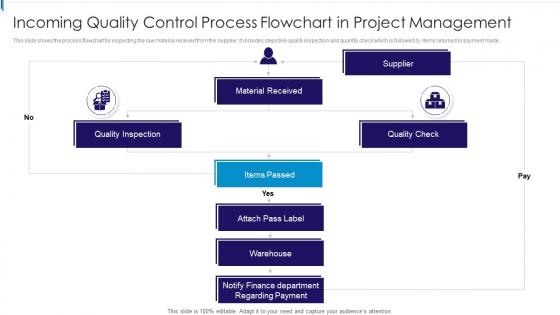
This slide shows the process flowchart for inspecting the raw material received from the supplier. It includes steps like quality inspection and quantity check which is followed by items returned or payment made.
People who downloaded this PowerPoint presentation also viewed the following :
Incoming Quality Control Process Flowchart In Project Management with all 6 slides:
Use our Incoming Quality Control Process Flowchart In Project Management to effectively help you save your valuable time. They are readymade to fit into any presentation structure.





FAQs for Incoming Quality Control Process Flowchart
Track defect rate first - that's your percentage of rejected batches. Also grab supplier performance scores and how long inspections take. Cost of quality matters too, since fixing stuff later costs way more than catching it upfront. Don't just look at snapshots though. Trend data shows you which suppliers are getting better or worse over time. Some teams check inspector accuracy with cross-checks, but honestly that's more advanced. Start with defect rate and supplier scores. Those two will tell you exactly which suppliers are causing headaches so you can prioritize accordingly.
Honestly, skip the boring classroom stuff and get them actually doing inspections right away. Pair newbies with your best inspectors - way more effective than any manual. Have them practice on mock scenarios first, you know, sampling techniques and spotting defects. Cover all your acceptance criteria and tools obviously, but the real magic happens with repetition. Different product types, various failure modes - keep drilling until they don't even think about it. Oh, and don't forget quarterly refreshers or people get sloppy. Trust me on this one.
Honestly, money's gonna be your first headache - you need people and equipment for testing, which isn't cheap. Suppliers will fight you on extra paperwork and slower timelines. Some get genuinely offended when you reject their stuff, it's weird. Your production team will constantly push to rush everything through while you're trying to actually inspect things properly. Super frustrating balance to strike. I'd say start with just your most critical parts first, then slowly expand once you can show it's actually saving money. Way easier than trying to do everything at once.
So automation basically takes over all the boring repetitive stuff - barcode scanning, weight checks, those visual inspections that make your eyes glaze over. Way faster than doing it manually. The cool thing is these systems don't get tired or zone out like we do (especially on Monday mornings, am I right?). You'll spot defects quicker since it's constantly checking everything. Real-time data logging means way less paperwork and fewer mistakes in your records. I'd start with whatever's eating up the most time first - those standardized checks that feel like they take forever. That's where you'll see the biggest difference right away.
Look, supplier quality management is where you stop problems before they even reach your door. Instead of just catching bad stuff at incoming inspection, you're actually working with suppliers upfront - auditing them, setting clear specs, building solid relationships. Way smarter than playing defense all the time, honestly. It's like teaching your friend to cook vs just tasting their disasters afterward. Better suppliers = less time your IQC team wastes on rejecting batches and scrambling with delays. I'd start by mapping out your key suppliers first, see what their processes look like, then figure out where you can actually help them improve.
So basically you set up control charts for your incoming stuff - track defect rates, measurements, whatever matters from each supplier batch. Plot it over time and watch for weird patterns or points going outside your limits. Honestly, catching supplier drift early beats dealing with garbage parts later (trust me on that one). When something looks off - trends, shifts, whatever - you can actually work with them to fix it instead of just tossing batches. Way better than playing defense all the time.
Dude, bad incoming quality control is a nightmare. You let crappy materials through and suddenly your whole production line goes to hell. Teams end up wasting hours on rework and scrap - honestly, it's maddening to watch. Your costs go through the roof because everyone's fixing problems that should've been stopped at the door. Then defective inputs create defective products, which means pissed off customers and your reputation takes a hit. I've seen this happen too many times. Set up strict inspection standards at the beginning or you'll spend forever putting out fires.
Yeah, it's all about what happens when things go wrong. Aerospace and medical device companies inspect literally everything because people die if they mess up - makes sense. Manufacturing usually does random sampling and checks their suppliers instead of testing every single part. Food companies are paranoid about contamination (rightfully so) and those expiration dates. Electronics focuses on making sure stuff actually works and tracking where components came from. Software does code reviews and security checks rather than physical testing, obviously. Really comes down to matching your inspection level to how much a screwup will cost you. Don't go overboard, but also don't be cheap where it actually matters.
Honestly, AI defect detection is crushing it right now - way faster than old-school methods, especially for visual stuff. IoT sensors are clutch too since they monitor materials in real-time before hitting production. Digital twins are popping up more, letting you test scenarios virtually. The speed gains alone make it worthwhile. Oh, and machine learning algorithms catch issues way more consistently than humans can. I'd probably start with AI vision systems for your biggest volume components first - that's where you'll see payoff fastest. Real-time monitoring seriously prevents so many headaches down the line.
Start by sorting your suppliers into risk buckets based on their track record and how critical they are to your process. High-risk ones need way more scrutiny during inspections. Low-risk suppliers? You can ease up on the sampling. Think of it like TSA PreCheck - some people get the fast lane, others get the full treatment. Critical components should automatically get stricter testing protocols. Oh, and definitely keep detailed records of everything because you'll need that data to adjust your risk categories later. I'd honestly just pick one supplier this week and figure out where they'd fit in your risk tiers.
You absolutely need solid version control - can't stress this enough. Always work from the latest specs and block access to old docs. Centralize everything so your team can grab current supplier certs, inspection procedures, and acceptance criteria without hunting around. Trust me, I've watched people waste entire days because they followed outdated rev levels. Link your inspection records directly to the document versions you actually used. Train everyone on finding stuff quickly during inspections - nothing worse than scrambling mid-audit. Run regular cleanouts to dump obsolete files and double-check people are following the controlled docs.
Look at your rejection data first - that's where the gold is. I'd track defect rates by supplier and inspection times, maybe cost stuff too. The patterns you'll find are honestly wild once you dig in. Work with suppliers on fixes based on what you discover. Monthly team reviews help catch process bottlenecks before they get crazy. Don't try fixing everything though - pick your worst headache and start there. Small changes work way better than massive overhauls, trust me on this one.
Look, supplier audits are basically your safety net for catching quality problems before they become your headache. You go check out their processes, equipment, all that stuff - see if they can actually deliver what they promise consistently. It's like doing a background check, honestly. Way better than crossing your fingers and hoping everything works out. Plus you can spot red flags early and help them fix issues before they screw you over. Always audit new suppliers before signing anything, and keep tabs on your critical ones regularly. Trust me on this one.
So there's a few ways to track this stuff. Defect detection rate is probably your biggest one - how many problems you're catching before they ship out. I'd also look at supplier scores and rejection rates for incoming materials. Time-to-resolution matters too because quality issues can really mess up your timeline if they drag on. Oh, and first-pass acceptance by supplier is solid - shows you which vendors actually have their act together. Honestly, I'd start with maybe 2-3 metrics that match whatever's driving you crazy right now, then add more later.
Look, IQC is basically what stops you from getting angry customer calls later. Catching bad materials before they go into production means those problems don't end up in your final product. Think of it as insurance - seriously saves so much trouble down the line. When materials suck, products fail, and that kills customer satisfaction scores. Your brand takes a hit too. Better IQC means more consistent quality, which keeps customers happy and loyal. Oh, definitely track your rejection rates against satisfaction metrics - the connection is pretty obvious once you see the data.
-
It makes easy work of my work presentations. I’ve never had to be nervous about my presentations for meetings.
-
I'm happy to discover your PowerPoint presentations and templates. They met my expectations precisely. Very innovative!