


Manufacturing Quality Control Flow Chart Diagram




Try Before you Buy Download Free Sample Product
 Impress Your
 Audience
 100%
100% Editable
 Save Hours
 of Time


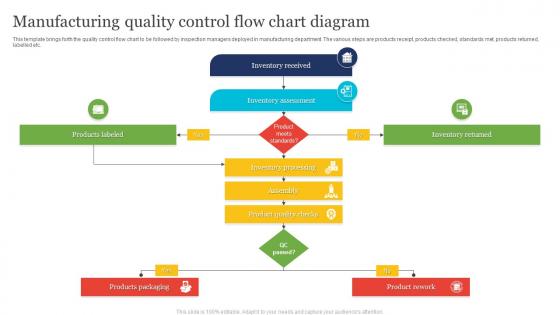
This template brings forth the quality control flow chart to be followed by inspection managers deployed in manufacturing department. The various steps are products receipt, products checked, standards met, products returned, labelled etc.
People who downloaded this PowerPoint presentation also viewed the following :
Manufacturing Quality Control Flow Chart Diagram with all 6 slides:
Use our Manufacturing Quality Control Flow Chart Diagram to effectively help you save your valuable time. They are readymade to fit into any presentation structure.





FAQs for Manufacturing Quality Control
So you'll need four main things: consistent procedures everyone actually follows, inspection points throughout production, documentation (yeah it sucks but saves you during audits), and a process for fixing problems when they pop up. Train your people regularly and get decent measuring equipment. Here's what I'd do first though - map out where defects usually happen in your process. That way you know exactly where to put your inspection checkpoints instead of just guessing. Also make sure your team knows how to use everything properly.
Honestly, SPC is like having an early warning system for your manufacturing line. You set up control charts that track your process data - dimensions, temps, cycle times, whatever matters most. When things start drifting outside normal ranges, you'll catch it right away instead of finding out later when you've got a pile of bad parts. It's way better than just inspecting stuff after it's already made (learned that the hard way). Start with your most critical measurements and use your historical data to set those control limits. Spot the trends early, make adjustments, avoid the headaches.
Honestly, automation's a game changer for QC stuff. Your repetitive tasks get way more consistent, plus everything runs faster. Set up automated inspections and data collection - it'll catch defects before they snowball into real headaches. The best part? Your team can actually focus on complex problems that need human brains instead of mindlessly checking widgets all day. Machines don't get bored or zone out like we do (thank god). I'd start with automating your data logging first - it's usually the easiest win. Then just expand from there once you figure out what clicks.
Dude, ISO 9001 makes you write down literally everything - no more winging it with random processes. Yeah, the paperwork sucks initially, but it actually saves your butt later. You'll need procedures, audits, metrics, all that fun stuff. Your suppliers get held to the same standards though, which cuts way down on defective parts coming in. The real benefit? You stop firefighting and actually improve things systematically. I'd start by mapping what you're doing now - I bet you'll find way more inconsistencies than expected.
Honestly, good training is a game-changer for catching defects early. Your team gets way better at spotting problems before they snowball. When people actually understand why quality standards matter (not just what they are), mistakes drop big time. I've watched so many people butcher equipment simply because no one taught them properly - it's painful to see. Hands-on training works best, especially for your most common issues. Gets everyone aligned on procedures too. Short sentences work. The whole quality-first culture thing happens naturally when people know what they're doing.
Most places rely heavily on SPC charts and basic checklists - they're honestly your easiest wins. Fishbone diagrams are great for when you need to dig into root causes. Unless you're making something super high-end, you'll probably do sampling instead of checking every single part (which makes sense, that'd take forever). Control charts catch problems before they blow up, and Pareto analysis tells you which defects actually matter. I'd start with the SPC stuff first since it's straightforward to roll out and you'll see results pretty quick.
Build RCA right into your QC process - set up automatic triggers when defect rates spike or complaints jump. Don't wait for everything to catch fire first (though we all do this anyway, let's be real). Get your team trained on fishbone diagrams and 5-whys so they actually investigate instead of just writing stuff down. Here's the thing though - you've gotta close the loop. Whatever you find needs to update your actual protocols, not just sit in some report nobody reads. Otherwise you're basically paying people to do fancy documentation while the same problems keep happening.
Dude, supplier quality is everything. Bad materials? Your whole production line goes to hell - more defects, endless rework, everything takes forever. Plus your team will hate life. The worst part is when crappy components make it into your final product. Customers notice that stuff immediately and your reputation tanks. Here's what actually works: set super clear standards with suppliers from day one. Then audit them regularly - I know it's a pain but trust me on this. Way better than dealing with disasters later. Oh, and don't just pick the cheapest option. You'll pay for it eventually.
Look, I always tell people to treat quality control like an investment - because that's what it is. Statistical process control is your friend here. Catch problems early when fixing them costs pennies, not after you've made thousands of duds. The numbers work out way better, trust me. Don't check everything though - that's overkill. Instead, focus on where things actually go wrong most often. Risk-based sampling saves tons of time. I learned this the hard way at my last job, but anyway - find that balance between preventing disasters and not going crazy with processes. Track your quality costs versus what you spend on prevention.
Honestly, time zones are brutal when you're trying to coordinate quality stuff. Different cultures handle things totally differently too - what works in one location bombs somewhere else. Each site swears their method is best (classic). Documentation gets messy fast, and remote auditing? Yeah, that's rough compared to actually being there. Communication breaks down between teams constantly. Local suppliers have their own standards that don't always match up. Training stays inconsistent across locations. My advice? Nail down your core processes first - that's non-negotiable. Then set up solid digital channels for your quality teams. Video calls and shared dashboards honestly make everything smoother.
So TQM basically flips the whole quality thing upside down. Everyone owns it, not just the quality control guys stuck at the end of the line. You're building quality right into each step instead of playing whack-a-mole with defects later. Way smarter approach if you ask me. The operators on the floor usually know where stuff goes wrong anyway, so actually listen to them. Map out your processes first - figure out where problems start. Then measure everything and let people fix issues before they blow up into costly nightmares. It's all about continuous improvement and using real data to make decisions.
Honestly, analytics can catch defects way before they turn into expensive headaches. Real-time monitoring spots weird stuff in your production data - temperature spikes, pressure drops, whatever. Machine learning's pretty solid at picking up tiny variations that people miss, though don't expect miracles. I'd definitely start small, maybe just one production line. Track basics like temp and pressure first. The predictive maintenance thing is huge too - you'll avoid so much downtime when you know equipment's about to crap out. Plus identifying those patterns that cause quality issues? That's where the real money gets saved.
Ugh, non-conformance issues are the worst but here's what works. Quarantine that stuff immediately - seriously, you don't want customers finding problems before you do. Run your root cause analysis to figure out where things went sideways. Maybe you can rework the products if it makes financial sense, or just scrap them if they're toast. Sometimes customers will approve deviations if functionality isn't affected, which honestly surprises me how often that happens. Document everything for your corrective actions. Oh, and set up your system so when one batch has issues, it flags similar ones for review too.
Look, your customers are basically doing free quality testing for you every day. They'll tell you what's actually breaking in real life vs what you think might break in your lab. Set up ways to catch all that feedback - warranty stuff, support calls, even random Twitter complaints. I learned this the hard way at my last job when we kept testing for the wrong things. Take your biggest customer complaints from this month and check if your current tests even look for those problems. Short sentences work. Then rebuild your testing around what people actually care about. It's like having an army of quality inspectors you don't have to pay.
Dude, AI and machine learning are absolutely crushing it right now. They catch defects human eyes miss and can actually predict when quality issues are about to hit. IoT sensors are basically everywhere - tracking temperature, vibrations, you name it. Computer vision for inspections? Getting insanely good. Sometimes it feels like having superpowers on your production line, not gonna lie. Digital twins let you test scenarios virtually before committing. My advice though - don't go crazy trying to implement everything. Pick one or two technologies that actually solve your biggest headaches first.
-
SlideTeam is my one-stop destination for templates. Highly recommended!
-
My search for complete decks ended with SlideTeam. Such a surplus collection of HD PowerPoints. Moreover, their standard and widescreen formats have helped me in delivering bullseye presentations.