


Quality Assurance Flow Chart In Manufacturing Process




Try Before you Buy Download Free Sample Product
 Impress Your
 Audience
 100%
100% Editable
 Save Hours
 of Time


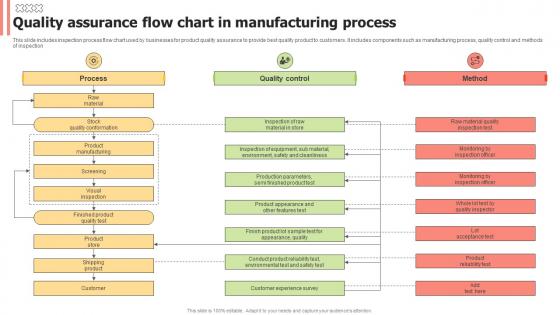
This slide includes inspection process flow chart used by businesses for product quality assurance to provide best quality product to customers. It includes components such as manufacturing process, quality control and methods of inspection
People who downloaded this PowerPoint presentation also viewed the following :
Quality Assurance Flow Chart In Manufacturing Process with all 6 slides:
Use our Quality Assurance Flow Chart In Manufacturing Process to effectively help you save your valuable time. They are readymade to fit into any presentation structure.





FAQs for Quality Assurance Flow Chart
Honestly, start with basic quality standards and some kind of testing process - doesn't have to be fancy at first. Document what you're currently doing so you can spot the big gaps. Automated testing helps a ton once you get going. Regular check-ins and audits will save you headaches later. Training your team is huge though - I've seen so many places skip this and wonder why nothing sticks. Do some risk assessment to figure out where to focus first. The real trick is making QA feel normal, not like extra work everyone dreads. Culture beats process every time.
Dude, you'll save so much time with automated testing. Those repetitive test cases? They run while you're binge-watching Netflix instead of clicking through the same flows for the 50th time. Honestly, there's something weirdly satisfying about waking up to a full test report. Your manual testing becomes way more strategic too - you can hunt for weird edge cases instead of verifying login works. Again. Computers don't get tired or skip steps like we do when it's 4pm on Friday. Just start with whatever flow would break your app if it failed. Build up from there gradually.
User feedback is your lifeline in QA - it shows you what you missed and whether your tests actually match how people use stuff. Don't just wait for complaints though. Set up ways to collect feedback during betas and after releases. Some of the most random bugs come from users doing completely bizarre things you'd never think to test (seriously, people are creative). The trick is gathering it systematically, then feeding those insights back into your test cases. It's like getting free QA help from the real world.
First figure out what standards you actually need to follow - ISO 9001, Six Sigma, maybe FDA stuff if you're in pharma. Then compare your current processes to see where you're falling short. Honestly, audits suck but they'll catch things you miss. Getting certified helps too since it forces you to stay on top of everything. Don't just implement once and forget about it though - that's where most people mess up. Set up reviews every few months to keep things current. Standards change more often than you'd think, so staying updated is half the battle.
Honestly, resistance to change is your biggest enemy - people act like you're asking them to rewire their brains or something. Getting leadership on board is brutal too if they can't see quick results. Resources are always tight, and don't even get me started on documentation when everyone has their own "system." Training drags on forever. Oh, and good luck picking the right metrics without drowning in spreadsheets. My advice? Start with just one department. Get a few wins first, then slowly expand. Way less painful that way.
So CI basically catches bugs way earlier instead of finding everything at the crunch. Every code commit triggers automated tests - saves so much headache later. Your manual testing shifts to weird edge cases and UX stuff rather than basic functionality checks. Though you really need solid test coverage first or you're just fooling yourself. I'd start with automating regression tests since those are usually pretty straightforward. Then expand from there once you get the hang of it.
So honestly, I'd start with tracking defect detection rate - basically how many bugs you're catching before stuff goes live. Defect leakage is huge too (what escapes to production). Test coverage percentage gives you the basics, but defect density is where it gets interesting - shows you quality trends over time, which is kinda addictive to watch once you get into it. Also don't sleep on cycle time metrics. If your test suites take forever to run, your whole team slows down. Pick maybe 3-4 metrics that actually matter to your specific situation first, then build from there.
Look, good QA catches problems before your customers do - that's the whole point. You become their shield against buggy experiences and crappy service. Solid testing means people get consistent, reliable interactions every single time. Less headaches for them = more loyalty for you. Here's what I've learned though - your QA workflows need to actually match how real customers use your stuff, not some perfect lab scenario. Short, targeted tests work better than these massive testing marathons. Focus on the pain points that'll make someone bounce to a competitor immediately.
So basically you focus your testing on the stuff that'll actually break things badly if it goes wrong. Map out where your biggest pain points are first - like what would make users furious or crash everything. Then build your testing around those areas instead of wasting time on low-impact features. Honestly, nobody has the budget to test everything equally anyway. You'll catch the critical bugs way faster this way and your resources go much further. It's just smarter testing - hit the risky spots hard first, then worry about the rest later if you have time.
So it really depends what industry you're in, honestly. Healthcare and aerospace? They're insanely strict because people literally die if something goes wrong. Software teams do way more automated testing and move fast. Manufacturing is all about catching defects before they hit the line - statistical stuff mostly. Food and pharma have regulators breathing down their necks constantly. The big thing is risk tolerance. Some places can mess up and iterate quickly. Others? One mistake and you're done. I'd say figure out how much risk your industry actually accepts, then build around that.
Start with the basics - Selenium or Cypress for web testing, TestRail or Jira for managing your tests. Postman is a lifesaver for API stuff, honestly can't work without it anymore. Performance testing? JMeter's solid, LoadRunner if you've got budget. Oh and definitely get Jenkins or GitHub Actions hooked up for CI/CD - saves so much headache later. I learned this the hard way but pick what actually works for your team's setup, not whatever's trending on tech Twitter.
So basically, when quality becomes everyone's job instead of just the QA team's headache, magic happens. Your devs start writing cleaner code. Issues get caught way earlier - like, before they become real problems. People actually give a damn about user experience, which honestly shouldn't be revolutionary but somehow is? The whole trick is getting leadership to buy in first. Then celebrate when teams find bugs early instead of making them feel bad about it. I've seen companies transform once they stop treating quality like an afterthought. Short version: make it cultural, not just procedural.
Honestly, training your QA team is one of the best investments you can make. Your people will catch way more bugs and actually get why they're doing what they're doing instead of just clicking through tests mindlessly. I've seen teams where everyone's frustrated because their skills are totally outdated - it's brutal for morale. Better training also means less of those annoying back-and-forth conversations with developers (you know the ones). Plus faster work overall. I'd start by figuring out what gaps you've got, then focus on whatever's gonna help your biggest pain points first.
So basically you automate testing right into your development pipeline instead of doing it all manually at the end. Every code push triggers unit tests, integration tests, security stuff - all automatically through CI/CD. Honestly, it's kind of a pain to set up initially but totally worth it. You'll catch bugs way earlier when they're actually fixable without wanting to cry. Makes releases so much smoother too. I'd start by picking your most annoying manual tests to automate first - probably the ones you always forget to run anyway. Build it up from there.
So here's what worked for us - get your QA folks in those planning meetings from day one. They can start writing test cases while devs are still coding, which is honestly way better than scrambling at the end. Daily standups help catch weird stuff early too. Oh and automate those regression tests to run with every build (saves your sanity). You'll still want manual exploratory testing for the new features though. The whole point is making testing happen throughout the sprint instead of this big scary thing at the end. Try it for just one sprint first and you'll probably wonder why you waited so long.
-
What an exhaustive collection of templates you guys have there in slideteam. Impressive!!!
-
SlideTeam is my go-to resource for professional PPT templates. They have an exhaustive library, giving you the option to download the best slide!