Quality assurance program process flow

Quality assurance program process flow
Slide 1 of 2

or

Favourites Favourites

Try Before you Buy Download Free Sample Product

Audience Impress Your
Audience
Editable 100%
Editable
Time Save Hours
of Time
The Biggest Sale is ending soon in
0
0
:
0
0
:
0
0
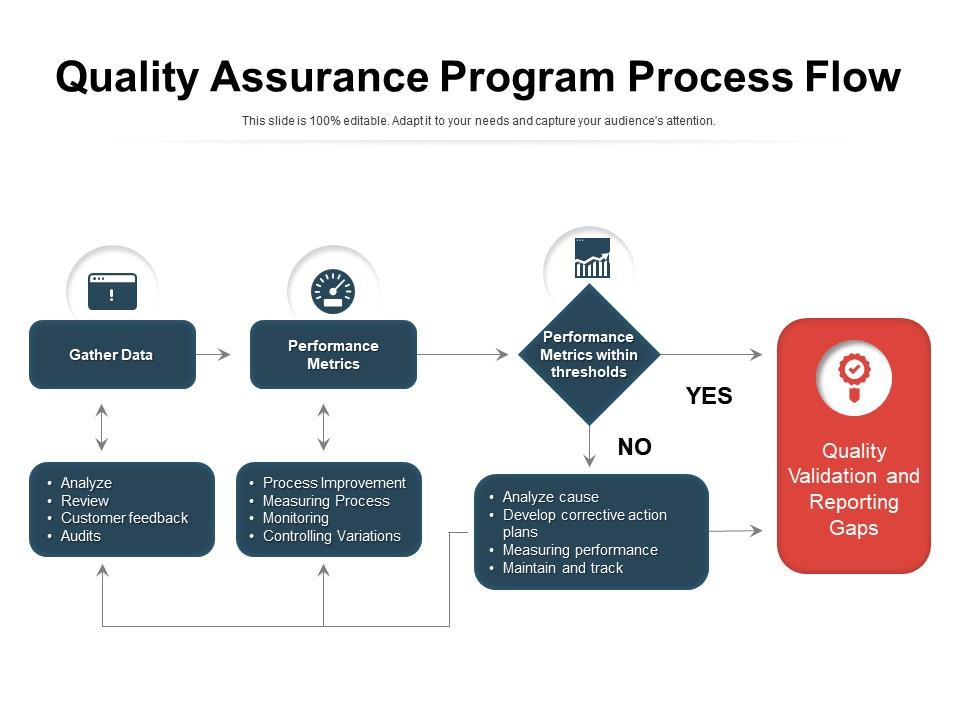
Presenting this set of slides with name Quality Assurance Program Process Flow. The topics discussed in these slides are Data, Performance Metrics, Quality Validation, Reporting Gaps, Performance Metrics Within Thresholds. This is a completely editable PowerPoint presentation and is available for immediate download. Download now and impress your audience.

FAQs for Quality assurance

So basically you wanna start with planning - figure out what quality standards you need and what should get tested. Then design your test cases to cover everything. Honestly, this part saves you so much headache later. Execute the tests next, document any bugs you find, and bug the dev team until they fix stuff. I always end up going back and forth with them way more than expected lol. Finally, write up whether the product's actually ready to ship or not. Don't just randomly poke around though - be systematic about it or you'll miss obvious issues.

Don't wait until the end to think about QA - that's where projects go to die. Build it right into your planning phase and figure out what "done" actually means before anyone touches code. Give specific people QA responsibilities instead of hoping someone will magically handle it. Block out real hours for testing and reviews in your timeline too. Honestly, I've watched so many teams scramble at the last minute because they treated quality like an afterthought. Make it everyone's job, not just something you dump on the QA folks. Regular check-ins during development will save you tons of headaches later.

Honestly, start with defect detection rate - how many bugs you catch vs what customers find. That ratio is everything. Test coverage percentage matters too, but don't obsess over hitting 100% because manual testing is still clutch for UX stuff. I'd also track mean time to resolution and first-pass yield (basically how often features work right the first time). Customer-reported defects per release shows the real business impact. Those are your core metrics. Then maybe add sprint-specific ones if your team's hitting weird roadblocks or whatever.

Honestly, screen recording tools will save your sanity - way better than trying to explain "that button does the weird flickery thing." Get everyone on the same shared testing environments and use something like Jira for bug tracking. Async workflows are huge for remote QA. Set up clear handoff processes between devs and testers. Video check-ins help too since so much context gets lost in Slack. Document way more than you normally would in person - I learned this the hard way. Start by looking at your current process and figure out where communication breaks down most.

Honestly, automation just makes the boring stuff go faster and catches things you'd probably miss anyway. Your tests can run all the time, so bugs get caught early instead of - ugh - right before you're supposed to ship. Way better timing. It frees you up for the weird edge cases that actually need a human brain. Plus automated tests are super consistent, unlike us humans who might skip a step when we're tired or whatever. The repetitive click-through-this-form-fifty-times stuff? Perfect for automation. I'd start there with your most annoying test cases and expand once you get the hang of it.

Dude, QA is totally different depending on what industry you're in. Healthcare and pharma? They go absolutely nuts with documentation because people could literally die. Software companies are more about automated testing and moving fast. Manufacturing loves their statistical controls and preventing defects before they happen. Food industry is obsessed with contamination - makes sense though. The regulatory stuff can get pretty overwhelming depending on where you work. Bottom line is you've got to match your QA approach to whatever your industry cares about most and what happens if things go wrong.

Honestly, the biggest pain is just getting people on board - nobody wants to learn new stuff when they're already drowning. Resource constraints suck too. What really gets me though is how different teams will interpret the same quality standards in completely different ways. It's like they're reading different manuals or something. Training always gets shortchanged, and companies never realize how much time this stuff takes upfront. My advice? Pick one small team first. Show some quick wins, then expand from there. Don't go crazy trying to fix everything at once.

Dude, feedback loops are a game changer - they help you spot problems way earlier. So your QA team finds stuff and tells the devs about it, then devs explain what went wrong back to QA. Creates this whole cycle where everyone gets smarter. Much better than just tossing bugs over the fence and hoping for the best (we've all been there, right?). QA starts noticing patterns they should watch for. Developers actually see how their mistakes affect users. Weekly sync meetings between the teams work really well for this - keeps everyone talking instead of working in silos.

Jira and Azure DevOps are pretty much everywhere for test management and bug tracking these days. TestRail's also solid if you want something more focused. Selenium is hands down the best for web automation - seriously, once you figure it out you'll wonder how you lived without it. Postman handles API testing really well, and JMeter works fine for load testing (though the UI is kinda ugly, not gonna lie). Just pick stuff that plays nice with whatever your dev team's already using. You don't want to be constantly switching between like ten different tools.

Look, feedback loops are everything in QA - you've gotta bake them into each step. Track your defect rates and cycle times, then actually do something with that data (most teams just collect it and forget about it, which drives me nuts). Get input from your team during retros and from customers too. Oh, and don't try to fix everything at once - that's a recipe for burnout. Pick one metric to focus on this quarter and maybe one process that's been bugging everyone. The small wins add up faster than you'd think.

Honestly, just focus on making your docs actually readable and useful. Document test cases with clear steps and expected results - including those weird edge cases you stumble across. Bug reports need solid repro steps, environment info, and screenshots when they help. I swear, some QA teams write these massive documents that nobody ever touches again! Templates are your friend for consistency. Update test plans when requirements change (and they always do). Write everything like you're explaining it to someone completely new to the project. Trust me, you'll appreciate it later when you can't remember why you tested something a certain way.

Honestly, stop just reporting bugs and start explaining why they matter. Developers care way more when they get the business impact, not just "this is broken." I learned this the hard way after watching teams get stuck blaming each other - such a waste of time. Try setting up quick sync meetings or use Slack for updates. If you're in the same office, literally just walk over sometimes. Oh and make a simple bug template so you're not going back and forth asking for details. Pick one thing and try it this week - you'll see the difference pretty fast.

Honestly, QA is a game-changer for keeping customers happy. You catch the broken stuff before it reaches them, which means they actually get what they paid for. Trust me, I've watched companies tank their reputation over preventable screw-ups - it's painful to see. When things work like they should, people trust you more and don't bail for competitors. Plus your happy customers basically become free advertising since they'll tell their friends. Way cheaper than hunting for new customers all the time. Try tracking your defect numbers against satisfaction scores - you'll probably see a clear pattern pretty quick.

Stop testing everything the same way - that's killing your efficiency. Automate the boring stuff first: unit tests, regression suites, all that repetitive work. Focus manual testing on the risky bits that could actually break things or cost money. Get QA involved earlier instead of dumping everything on them at release time. That alone will save you headaches. Set up continuous integration so bugs don't pile up for weeks. Oh, and prioritize based on what actually matters to users, not just because something's on the list. Some features breaking won't end the world.

Start them shadowing experienced QA folks first. Pair testing works great too - they'll learn way faster working next to someone who knows their stuff. Skip the death-by-PowerPoint sessions though, nobody retains anything from those. Bug competitions are surprisingly fun and keep people engaged. Documentation reviews matter more than you'd think since half of QA is actually understanding what you're supposed to test. Oh, and set up rotations so people aren't stuck testing the same feature forever. Prevents those annoying knowledge gaps when someone leaves.

Ratings and Reviews

0% of 100
Review Form
Write a review
Most Relevant Reviews

No Reviews