

Quality Assurance Activities And Processes Powerpoint Presentation Slides




Try Before you Buy Download Free Sample Product
 Impress Your
 Audience
 100%
100% Editable
 Save Hours
 of Time


Every great product needs quality assurance. This means all professionals need PPT sample to brief employees about good quality assurance management. Considering this here we are presenting a pre built quality assurance activities and processes slide presentation. With help of Powerpoint presentation slides included in this visual show you can underline various quality assurance methods as well as why is quality assurance is so important. Not only can this, using this PPT presentation you also depict a clear picture of quality assurance vs quality control. Furthermore, this PPT example supports to share insights about qa and qc requirement, policy and how it can be achieved. Moreover, you can also update your employees about the various technical risks in a quality system for total quality management. Apart from this, presentation templates like benefits of customer focus, involvement of people, process approach, system approach to management, dimensions of quality etc. makes our pictorial show even more stunning. In short, our quality assurance process Powerpoint slide deck has everything you need to kick start a quality assurance activities and processes visual communication. Our Quality Assurance Activities And Processes Powerpoint Presentation Slides let you compete with conviction. You become confident of your conclusions.
People who downloaded this PowerPoint presentation also viewed the following :
Content of this Powerpoint Presentation
Slide 1: This slide introduces Quality Assurance Activities & Processes. State company name and proceed.
Slide 2: This slide shows Agenda. You can add your company agenda and use it accordingly.
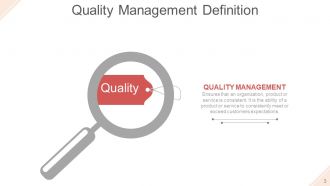
Slide 3: This slide presents Quality Management Definition with magnifying glass imagery.
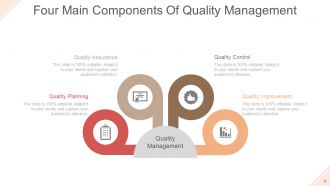
Slide 4: This slide showcases the Four Main Components Of Quality Management- Quality Assurance, Quality Control, Quality Planning, Quality Improvement.
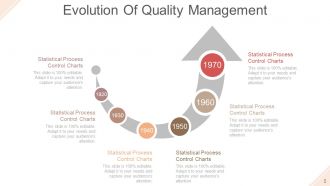
Slide 5: This slide showcases Evolution Of Quality Management with respect to Statistical Process Control Charts.
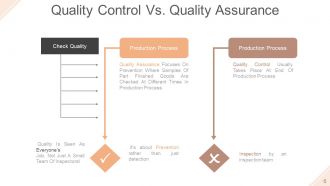
Slide 6: This is Quality Control Vs. Quality Assurance slide. Use it for analysis, comparison etc.
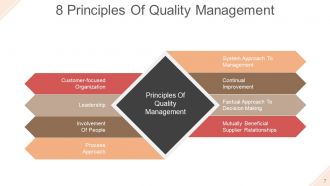
Slide 7: This slide states 8 Principles Of Quality Management namely- Involvement Of People, Process Approach, Leadership, Customer-focused Organization, Factual Approach To Decision Making, Mutually Beneficial Supplier Relationships, Continual Improvement, System Approach To Management.
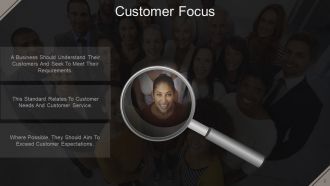
Slide 8: This is Customer Focus slide with magnifying glass imagery. You can add your options and use it accordingly.
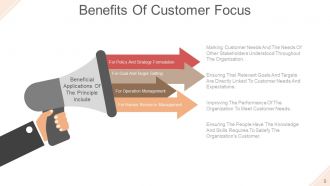
Slide 9: This slide showcases Benefits Of Customer Focus. State them here.
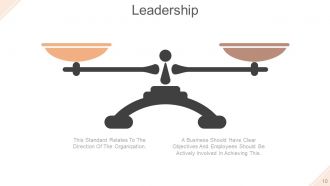
Slide 10: This is a Leadership slide showcased with a balancing scale imagery.
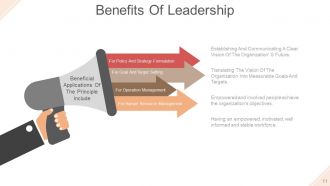
Slide 11: This slide states Benefits Of Leadership.
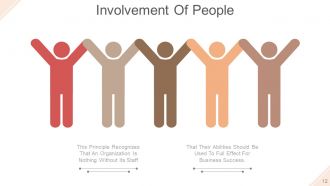
Slide 12: This slide shows Involvement Of People in people silhouettes with- This Principle Recognizes That An Organization Is Nothing Without Its Staff, That Their Abilities Should Be Used To Full Effect For Business Success.
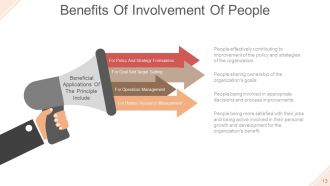
Slide 13: This slide states the Benefits Of Involvement Of People.
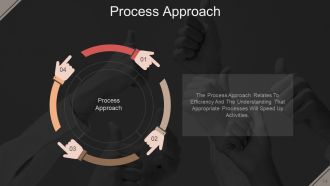
Slide 14: This slide states Process Approach creatively. The Process Approach Relates To Efficiency And The Understanding That Appropriate Processes Will Speed Up Activities.
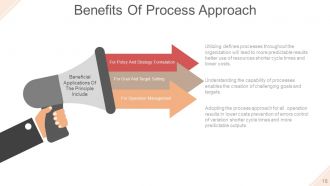
Slide 15: This slide states the Benefits Of Process Approach. Beneficial Applications Of The Principle Include- Utilizing defines processes throughout the organization will lead to more predictable results better use of resources shorter cycle times and lower costs, Understanding the capability of processes enables the creation of challenging goals and targets, Adopting the process approach for all operation results in lower costs prevention of errors control of variation shorter cycle times and more predictable outputs.
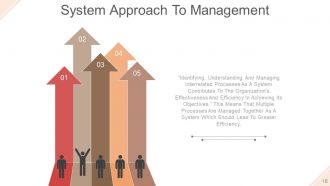
Slide 16: This slide showcases System Approach To Management in people silhoutters and arrow imagery to go with.
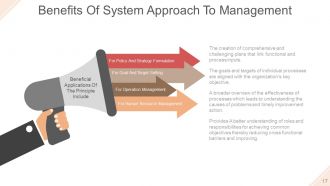
Slide 17: This slide states the Benefits Of System Approach To Management- The creation of comprehensive and challenging plans that link functional and process inputs, The goals and targets of individual processes are aligned with the organization's key objective, A broader overview of the effectiveness of processes which leads to understanding the causes of problems and timely improvement action, Provides A better understanding of roles and responsibilities for achieving common objectives thereby reducing cross functional barriers and improving.
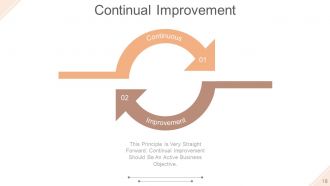
Slide 18: This is Continual Improvement slide. State the two aspects Continuous and Improvement here.
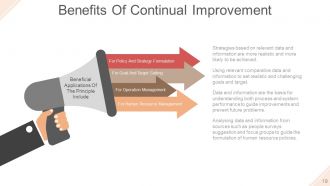
Slide 19: This slide showcases Benefits Of Continual Improvement with- Strategies based on relevant data and information are more realistic and more likely to be achieved, Using relevant comparative data and information to set realistic and challenging goals and target, Data and information are the basis for understanding both process and system performance to guide improvements and prevent future problems, Analysing data and information from sources such as people surveys suggestion and focus groups to guide the formulation of human resource policies.
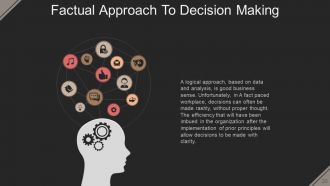
Slide 20: This slide presents Factual Approach To Decision Making with creative human brain imagery with icons. You can modify it as per your need.
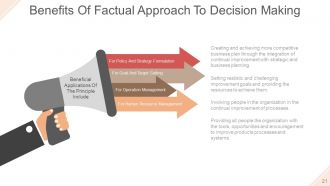
Slide 21: This slide showcases Benefits Of Factual Approach To Decision Making with- Creating and achieving more competitive business plan through the integration of continual improvement with strategic and business planning, Setting realistic and challenging improvement goals and providing the resources to achieve them, Involving people in the organization in the continual improvement of processes, Providing all people the organization with the tools, opportunities and encouragement to improve products processes and systems.
Slide 22: This slide showcases Mutually Beneficial Supplier Relations with human imagery.
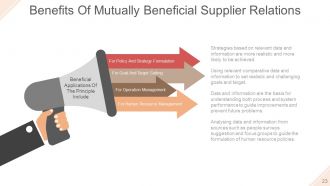
Slide 23: This slide shows Benefits of Mutually Beneficial Supplier Relations with- Strategies Based On Relevant Data And Information Are More Realistic And More Likely To Be Achieved, Using Relevant Comparative Data And Information To Set Realistic And Challenging Goals And Target, Data And Information Are The Basis For Understanding Both Process And System Performance To Guide Improvements And Prevent Future Problems, Analysing Data And Information From Sources Such As People Surveys Suggestion And Focus Groups To Guide The Formulation Of Human Resource Policies, headed under For Policy And Strategy Formulation, For Goal And Target Setting, For Operation Management, For Human Resource Management.
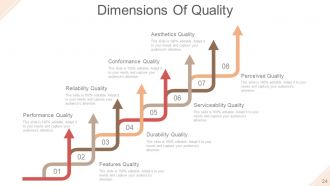
Slide 24: This slide showcases Dimensions Of Quality. Some of them are- Performance Quality, Reliability Quality, Conformance Quality, Aesthetics Quality, Features Quality, Durability Quality, Serviceability Quality, Perceived Quality.
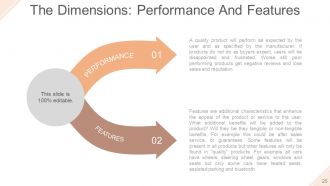
Slide 25: This slide shows The Dimensions: Performance And Features. State them here.
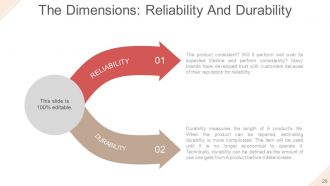
Slide 26: This slide shows The Dimensions: Reliability and Durability-The Product Consistent? Will It Perform Well Over Its Expected Lifetime And Perform Consistently? Many Brands Have Developed Trust With Customers Because Of Their Reputation For Reliability. Durability Measures The Length Of A Product’s Life. When The Product Can Be Repaired, Estimating Durability Is More Complicated. The Item Will Be Used Until It Is No Longer Economical To Operate It. Technically, Durability Can Be Defined As The Amount Of Use One Gets From A Product Before It Deteriorates.
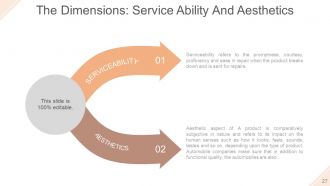
Slide 27: This slide shows The Dimensions: Serviceability And Aesthetics. State these here.
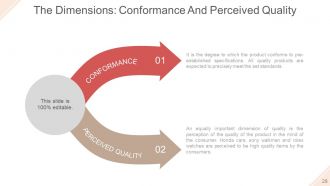
Slide 28: This slide shows The Dimensions: Conformance And Perceived Quality-An equally important dimension of quality is the perception of the quality of the product in the mind of the consumer. Honda cars, sony walkman and rolex watches are perceived to be high quality items by the consumers. It is the degree to which the product conforms to pre- established specifications. All quality products are expected to precisely meet the set standards.
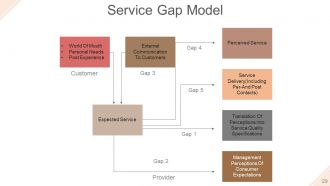
Slide 29: This slide presents the Service GAP Model displaying- Expected Service, Perceived Service, Service Delivery(Including Per-And Post Contacts), Translation Of Perceptions Into Service Quality Specifications, Management Perceptions Of Consumer Expectations, World Of Mouth, Personal Needs, Post Experience, External Communication To Customers, Customer, Provider.
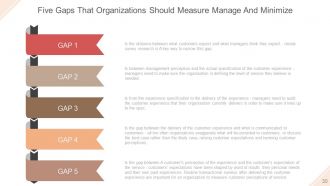
Slide 30: This slide showcases The Five Gaps That Organizations Should Measure Manage And Minimize- GAP 1 Is the distance between what customers expect and what managers think they expect - clearly survey research is A key way to narrow this gap, GAP 2 Is between management perception and the actual specification of the customer experience - managers need to make sure the organization is defining the level of service they believe is needed, GAP 3 Is from the experience specification to the delivery of the experience - managers need to audit the customer experience that their organization currently delivers in order to make sure it lives up to the spec, GAP 4 Is the gap between the delivery of the customer experience and what is communicated to customers - all too often organizations exaggerate what will be provided to customers, or discuss the best case rather than the likely case, raising customer expectations and harming customer perceptions, GAP 5 Is the gap between A customer's perception of the experience and the customer's expectation of the service - customers' expectations have been shaped by word of mouth, their personal needs and their own past experiences. Routine transactional surveys after delivering the customer experience are important for an organization to measure customer perceptions of service.
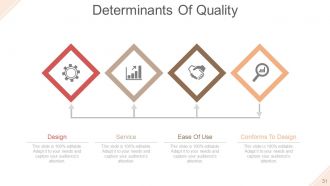
Slide 31: This slide states the four Determinants Of Quality- Design, Ease Of Use, Conforms To Design, Service.
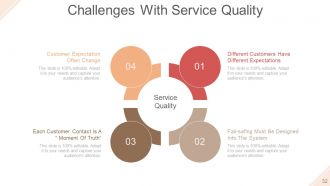
Slide 32: This slide shows Challenges With Service Quality such as- Customer Expectation Often Change, Different Customers Have Different Expectations, Each Customer Contact Is A “ Moment Of Truth”, Fail-safing Must Be Designed Into The System.
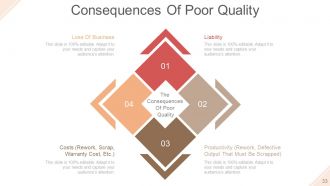
Slide 33: This slide states Consequences Of Poor Quality- Loss Of Business, Liability, Costs (Rework, Scrap, Warranty Cost, Etc.), Productivity (Rework, Defective Output That Must Be Scrapped).
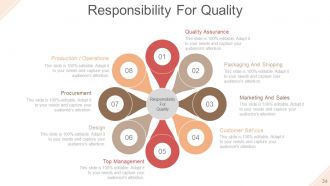
Slide 34: This slide shows Responsibility for Quality with respect to- Quality Assurance, Top Management, Packaging And Shipping, Design, Production / Operations, Customer Service, Procurement, Marketing And Sales.
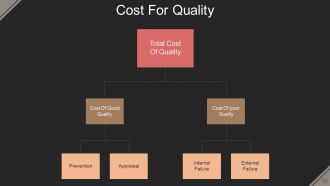
Slide 35: This is Cost For Quality slide showing Total Cost Of Quality in a flow chart form.
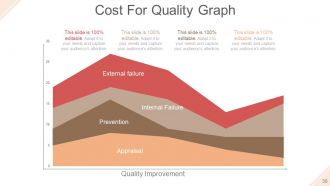
Slide 36: This slide presents Cost For Quality Graph displaying- External failure, Internal Failure, Prevention, Appraisal. Quality Improvement.
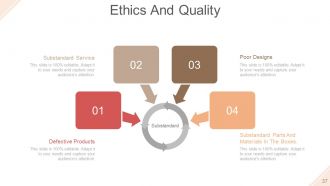
Slide 37: This slide showcases Ethics And Quality of Substandard with respect to- Poor Designs, Substandard Service, Substandard Parts And Materials In The Boxes, Defective Products.
Slide 38: This slide is titled Additional Slides to move forward. You can alter the content as per need.
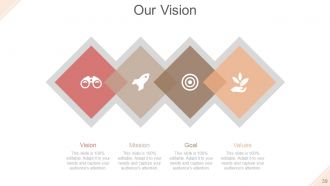
Slide 39: This is Our Vision slide with text boxes. State your vision, mission etc. here.
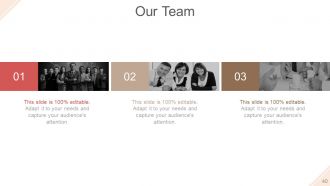
Slide 40: This slide showcases Our Team with Name and Designation to fill.
Slide 41: This is an About Us slide. State team/ company specifications here.
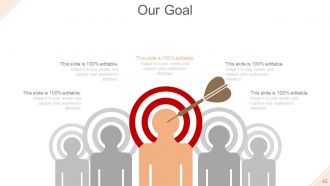
Slide 42: This is Our Goal slide. State your goals here.
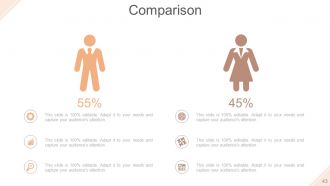
Slide 43: This slide showcases Comparison of two entities in male female chart imagery form.
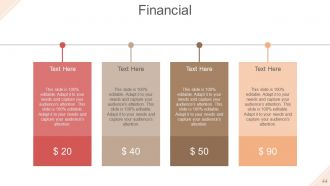
Slide 44: This is a Financial score slide. State financial aspects, information etc. here.
Slide 45: This is a Quotes slide to convey company/ organization message, beliefs etc. You may change the slide content as per need.
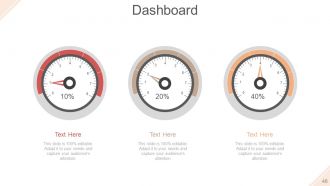
Slide 46: This is Dashboard slide to show information in percentages etc.
Slide 47: This is a Location slide to show global growth, presence etc. on a world map image.
Slide 48: This is a Timeline slide to show growth factors, milestones etc.
Slide 49: This is a Post It slide to mark events, important information etc.
Slide 50: This is a Puzzle pieces image slide to show information, specifications etc.
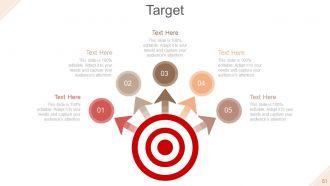
Slide 51: This is a Target image slide. State targets, etc. here.
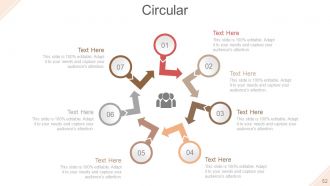
Slide 52: This is a Circular image slide. State specifications, information here.
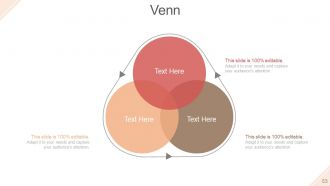
Slide 53: This is a Venn diagram image slide to show information, specifications etc.
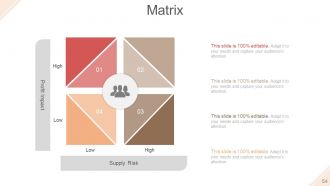
Slide 54: This is a Matrix slide to show information, specifications etc.
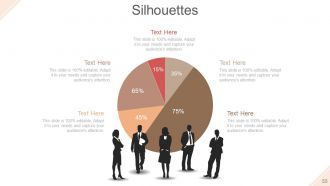
Slide 55: This is a Silhouettes infographic slide to show information, specifications etc.
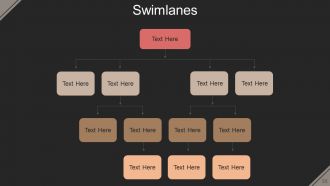
Slide 56: This is a Swimlanes slide to show information, specifications etc.
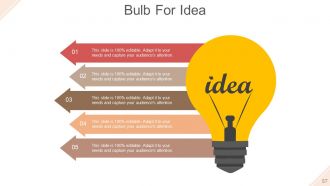
Slide 57: This is a Bulb For Idea image slide to show ideas, innovative information etc.
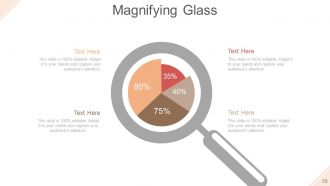
Slide 58: This is a Magnifying Glass image slide to show information, specifications etc.
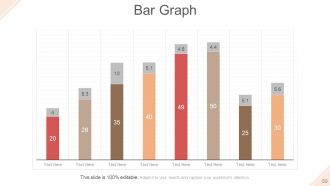
Slide 59: This is a Bar Graph slide to show product/ entity comparison, specifications etc.
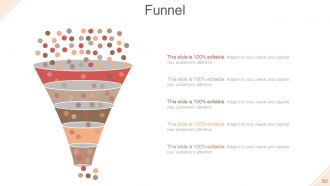
Slide 60: This is a Funnel image slide to show information, funneling aspects, specifications etc.
Slide 61: This is a Thank You slide with Address# street number, city, state, Contact Numbers, Email Address.
Quality Assurance Activities And Processes Powerpoint Presentation Slides with all 61 slides:
Increase the chances of avoiding discord with our Quality Assurance Activities And Processes Powerpoint Presentation Slides. It helps create channels of communication.



FAQs for Quality Assurance Activities And Processes
So QA is all about preventing problems - you're doing it throughout your whole process, setting up good procedures, training people right. QC comes after, when you're actually testing the finished product to catch whatever slipped through. Basically QA is proactive, QC is reactive. They really need each other though - I learned this the hard way at my last job when we skipped proper QA steps. If you can build solid QA practices early on, you won't be scrambling to fix things later with QC.
Honestly, automated testing is a game changer - you can literally run thousands of tests while you sleep. No more human mistakes from tired testers either. The best part? It catches way more bugs than manual testing ever could. I'd start with automating your most boring, repetitive stuff first. Then your team can actually focus on the interesting work like exploratory testing and weird edge cases that need actual human brains. Oh, and regression testing becomes so much easier when you're checking if new code broke old features. Trust me on this one.
Honestly, I'd start with defect density and escape rate - those show you the real damage. Test coverage percentage is solid too, but don't obsess over hitting 100%. Time-to-resolution matters way more than people think because customers get pissed when bugs just sit there. Oh, and definitely track customer satisfaction scores since happy users = job security. Don't try measuring everything right away though. Pick maybe 3 metrics that match whatever's currently broken in your process. You can always add more later once you've got the basics down.
So with Agile, QA stops being this end-of-the-line thing and becomes continuous testing throughout development. Way better than the old waterfall days - trust me on that one. You're testing smaller pieces constantly, which makes bugs so much easier to catch. Plus you actually work WITH developers during sprints instead of getting stuff thrown over the wall to break. The feedback you give actually matters since there's still time to fix things without a total nightmare. Automation happens earlier too. I'd start by figuring out what tests you can automate first.
Okay so user feedback is like your sanity check through the whole QA process - it tells you if your testing actually reflects how people use your stuff in the wild. Beta testing and post-release give you the best insights, though getting feedback on early prototypes can prevent major disasters down the road. Users are weirdly creative at breaking things you never thought possible during internal testing. They'll find edge cases and workflow problems your test cases totally missed. Honestly, the trick is baking feedback into every stage instead of scrambling for it after launch.
Ugh, communication breakdowns are the worst - teams just don't talk to each other. Plus you're always dealing with insane deadlines and requirements that change every five minutes. Honestly feels like whack-a-mole sometimes. Push back hard when timelines are ridiculous by showing them actual numbers. Get clear testing criteria from day one so everyone knows what "done" looks like. Document literally everything because I promise those requirements will shift. Oh, and try to jump into planning early instead of getting the dreaded "can you just quickly test this?" at the end.
Honestly, QA will save your ass by catching bugs when they're still cheap to fix instead of after customers start screaming. You won't be constantly putting out fires in production. Good testing gives everyone confidence during releases - no more staying up all night wondering if you broke everything. It actually speeds up development too since you're not always backtracking to fix stupid mistakes. Plus QA forces teams to communicate better because testers need to really understand what they're testing. Just don't treat it like an afterthought - build it into your sprints from the start.
You definitely need good attention to detail - that's like the main thing since you're getting paid to catch stuff everyone else missed. Learn manual testing basics first, then maybe pick up some automation later (Selenium's pretty popular). Bug tracking tools are essential too. Honestly, communication skills matter way more than people think because you'll be dealing with devs and PMs all the time. Some get cranky when you find their bugs lol. A CS degree helps but isn't mandatory - I know people who switched from totally random careers. Just start with the fundamentals and build from there.
So here's the thing - good QA stops bugs from reaching your users, which saves you from those nightmare post-launch meltdowns. Build multiple layers: unit tests, integration tests, user acceptance testing. Each catches different problems. Trust me, angry customer emails at 9pm on Friday hit different when you could've prevented them. Don't treat QA like something you tack on at the end either. Get your testing team involved during planning, set up automated pipelines early on. You'll do way less crisis management later. It's honestly a sanity saver.
First thing - figure out exactly what you're auditing and why, otherwise you'll just waste time looking at random stuff. Make a solid checklist covering processes, docs, compliance, the works. Talk to key people AND watch them actually do the work - paperwork lies sometimes. I missed huge gaps once by only reading procedures, learned my lesson there! Write down everything as you find it, good and bad. Then rank issues by how much risk they pose. Oh and definitely get the team involved when you're making the improvement plan. They'll actually fix things if they helped create the solution. Makes a huge difference in follow-through.
Honestly, QA changes a lot depending on your industry. Healthcare is super intense - they're triple-checking meds and sterilization because people literally die if you mess up. Finance is similar but for different reasons - one data error can cost millions, so they're obsessed with accuracy and fraud prevention. Manufacturing focuses more on defect rates and keeping processes consistent. The basic ideas are the same everywhere, but your standards and testing methods will be totally different based on what happens when things go wrong. Like, a bug in a video game versus a hospital system? Completely different stakes.
Dude, you NEED to document everything in QA. Trust me on this one - I got burned when a bug came back months later and I had literally nothing written down about how we fixed it originally. Super embarrassing. Documentation gives you that paper trail showing what you tested and when. Plus it helps you spot patterns in bugs, which is actually pretty useful. Don't overthink it though - even basic test logs work. Your future self will thank you, and stakeholders love seeing proof you're being thorough. Start simple and build from there.
Honestly, cross-functional teams are game-changers for catching bugs early. Different perspectives from devs, testers, designers, and product people mean you'll spot issues before they get expensive to fix. Everyone knows the "why" behind decisions too, which cuts down on so much confusion later. Quick feedback loops are huge since nobody's just tossing work over the fence anymore. The trick is making sure people actually speak up about problems - doesn't matter what their job title is. Oh, and those short daily check-ins where anyone can raise quality concerns? Super helpful. I've seen teams miss obvious stuff just because the right person wasn't in the room when decisions got made.
Dude, the QA world is getting wild right now. AI tools can automatically generate test cases and even predict where bugs might pop up before they actually happen. Testing is shifting way earlier in the development process too - which honestly makes so much sense. Cloud platforms are making it cheaper to scale testing without buying tons of hardware. API testing has become super critical since everything's microservices now. There's even visual AI that spots UI problems like humans do, which is pretty neat. My advice? Start playing around with AI-powered automation tools first - that's where you'll see the biggest bang for your buck.
Look, good training basically turns your people into quality detectives - they'll actually know what problems to spot before stuff hits the fan. Your team gets confident with the standards and tools, which honestly makes a huge difference in morale too. Everyone stops working from different playbooks, so you get way fewer of those annoying miscommunication screwups. I'd say start small though - figure out where you're bleeding the most quality-wise and build training around those specific pain points first. Don't try to boil the ocean right away.
-
Qualitative and comprehensive slides.
-
Appreciate the research and its presentable format.