


Quality Management System Powerpoint Presentation Slides






Try Before you Buy Download Free Sample Product
 Impress Your
 Audience
 100%
100% Editable
 Save Hours
 of Time


A Quality Management System (QMS) is a framework that helps organizations to manage their quality assurance and quality control processes. Quality management systems are designed to help organizations to improve their performance and meet their customers' expectations. SlideTeam has put together a comprehensive package of quality assurance ppt templates to help you get up to speed on the basics of quality management. Our templates are easy to use and can be customized to fit your specific needs. Plus, they’re free to download so you can start using them right away! So get started today and see how our quality assurance ppt templates can help you improve your business processes.
People who downloaded this PowerPoint presentation also viewed the following :
Content of this Powerpoint Presentation
Slide 1: This slide introduces Quality Management System . State Your Company Name and begin.
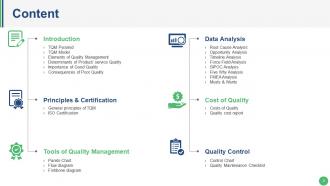
Slide 2: This slide showcases Content with these points- Introduction, Principles & Certification, Tools of Quality Management, Data Analysis, Quality Control, Cost of Quality.
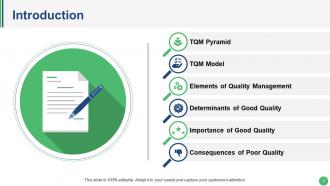
Slide 3: This slide presents Introduction with these following parameters- TQM Pyramid, TQM Model, Elements of Quality Management, Determinants of Good Quality, Importance of Good Quality, Consequences of Poor Quality.
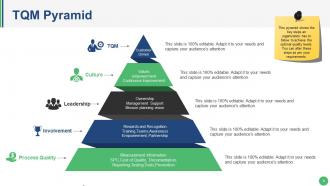
Slide 4: This slide presents TQM Pyramid . This pyramid shows the key steps an organization has to follow to achieve the optimal quality levels. You can alter these steps as per your requirements.
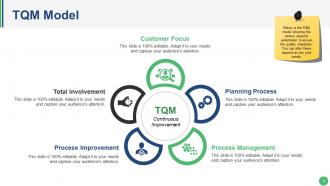
Slide 5: This slide showcases TQM Model with these six parameters- Customer Focus, Planning Process, Process Management, Total Involvement, Process Improvement, TQM, Continuous Improvement, TQM model showing the various aspects undertaken to ensure the quality standards. You can alter these aspects as per your needs.
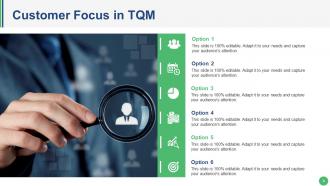
Slide 6: This slide presents Customer Focus in TQM. You can add your options and use as per requirement.
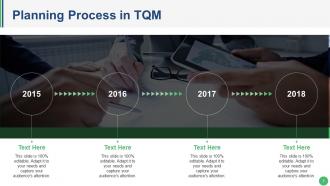
Slide 7: This slide showcases Planning Process in TQM. You can use it with as we have added years in it.
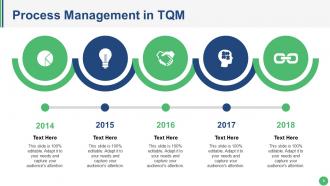
Slide 8: This slide diplays Process Management in TQM. Add the content with five yearly variations.
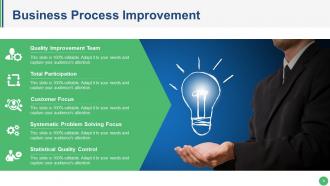
Slide 9: This slide shows Business Process Improvement with these steps to use- Quality Improvement Team, Total Participation, Systematic Problem Solving Focus, Statistical Quality Control, Customer Focus.
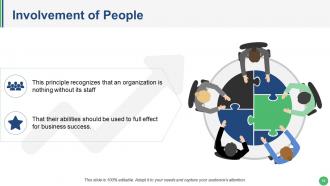
Slide 10: This slide includes Involvement of People and mentioned these two main points- This principle recognizes that an organization is nothing without its staff, That their abilities should be used to full effect for business success.
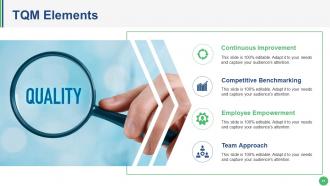
Slide 11: This slide showcases TQM Elements with four elements- Continuous Improvement, Competitive Benchmarking, Employee Empowerment, Team Approach.
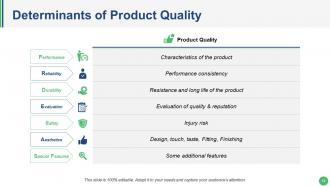
Slide 12: This slide shows Determinants of Product Quality with these factors- Performance, Reliability, Durability, Evaluation, Safety, Aesthetics, Special Features, Product Quality.
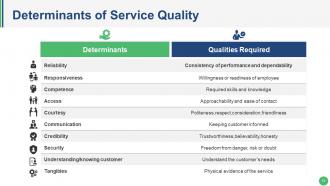
Slide 13: This slide showcases Determinants of Service Quality with these two points to consider- Determinants, Qualities Required.
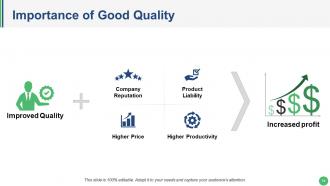
Slide 14: This slide presents Importance of Good Quality with these factors- Improved Quality, Product Liability, Company Reputation, Higher Productivity, Higher Price, Increased profit.
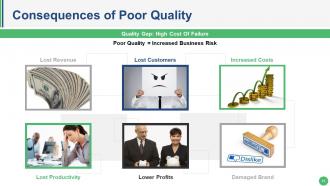
Slide 15: This slide displays Consequences of Poor Quality with these six elements- Lost Revenue, Lost Customers, Increased Costs, Lost Productivity, Lower Profits, Damaged Brand.
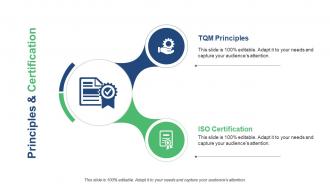
Slide 16: This slide shows Principles & Certification with these two factors- TQM Principles, ISO Certification.
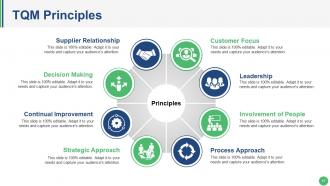
Slide 17: This slide presents TQM Principles with these features you can use- Principles & certifications, Customer Focus, Leadership, Involvement of People, Process Approach, Strategic Approach, Continual Improvement, Decision Making, Supplier Relationship.
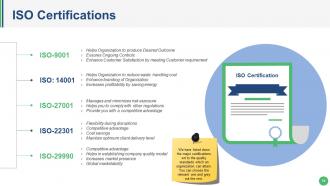
Slide 18: This slide shows ISO Certifications. We have listed down the major certifications wrt to the quality standards which an organization can attain. You can choose the relevant one and grey out the rest.
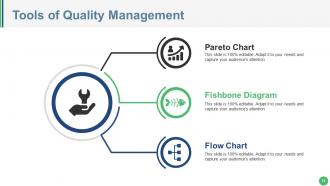
Slide 19: This slide displays Tools of Quality Management with these three parameters- Pareto Chart, Fishbone Diagram, Flow Chart.
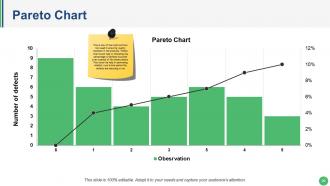
Slide 20: This slide showcases Pareto Chart with Number of defects and observation. This is one of the most common tool used in ensuring quality standard in the products. Pareto chart would help in indicating the percentage of defects occurred over a period of few observations. This would be help in estimating whether over a time period the defects are reducing or not
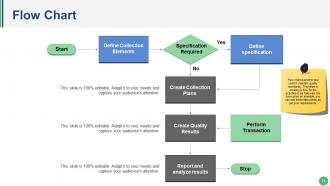
Slide 21: This slide presents Flow Chart. Flow chart is another tool used in maintain quality standards. This helps in creating a flow for the activities to be followed. We have given an example, you can edit these data points as per your requirements.
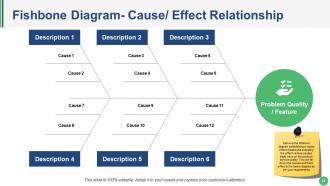
Slide 22: This slide showcases Fishbone Diagram- Cause/ Effect Relationship. This is the fishbone diagram establishing a cause effect relationship indicating the effect various causes might have on the product/ service quality. You can list down the causes and there effect in the below diagram as per your requirements.
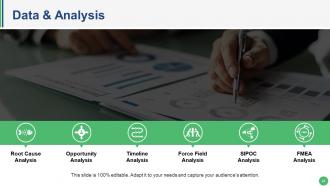
Slide 23: This slide Data & Analysis with the data we have presented- Root Cause Analysis, Opportunity Analysis, Timeline Analysis, Force Field Analysis, FMEA Analysis, SIPOC Analysis.
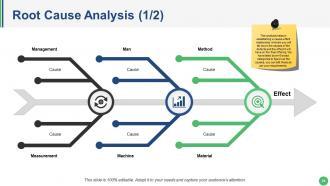
Slide 24: This slide presents Root Cause Analysis. This analysis helps in establishing a cause-effect relationship wherein you will list down the causes of the defects and the effect it will have on the final offering. We have listed down 6 broad categories to figure out the causes, you can edit these as per your requirements.
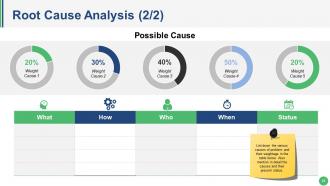
Slide 25: This slide showcases Root Cause Analysis . List down the various causes of problem and their weightage in the table below. Also mention in detail the causes and their present status.
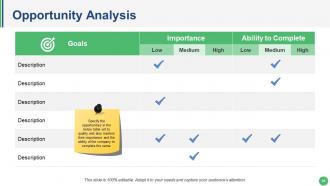
Slide 26: This slide presents Opportunity Analysis. Specify the opportunities in the below table wrt to quality and also mention their importance and the ability of the company to complete the same.
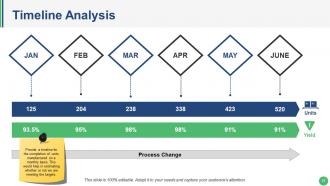
Slide 27: This slide displays Timeline Analysis.Provide a timeline for the completion of units manufactured on a monthly basis. This would help in estimating whether or not we are meeting the targets.
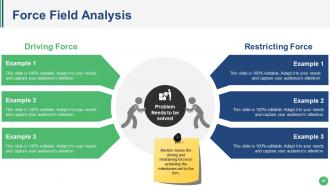
Slide 28: This slide showcases Force Field Analysis. Mention below the driving and restraining forces in achieving the milestones set by the firm.
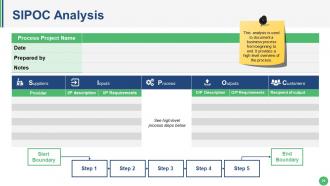
Slide 29: This slide showcases SIPOC Analysis. This analysis is used to document a business process from beginning to end. It provides a high level overview of the process.
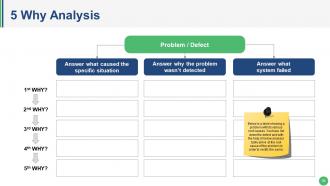
Slide 30: This slide shows 5 Why Analysis. This is a table showing a problem with its various root causes. You have list down the defect and with the help of below analysis table arrive at the root cause of the problem in order to rectify the same.
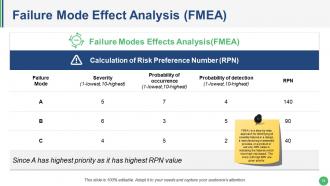
Slide 31: This slide presents Failure Mode Effect Analysis (FMEA). approach for identifying all possible failures in a design, a manufacturing or assembly process, or a product or service. RPN helps in indicating the failures which have high risk impact. The one’s with high RPN are given priority.
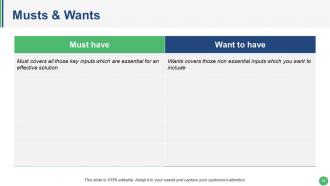
Slide 32: This slide shows Musts & Wants. You can add the data in this as your requirement.
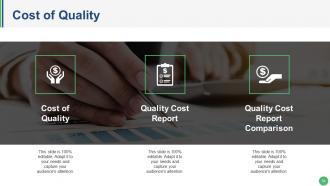
Slide 33: This slide displays Cost of Quality with these three factors- Quality Cost Report, Cost of Quality, Quality Cost Report Comparison.
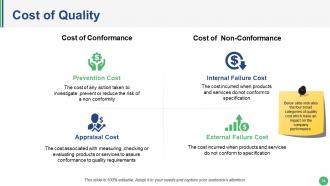
Slide 34: This slide presents Cost of Quality.we have listed in slide indicates the four broad categories of quality cost which have an impact on the company performance.
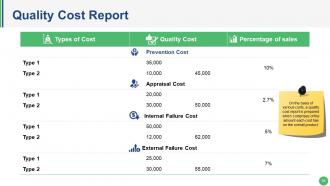
Slide 35: This slide showcases Quality Cost Report . On the basis of various costs, a quality cost report is prepared which comprises of the amount each cost has on the overall product.
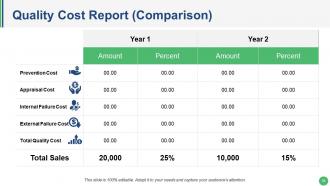
Slide 36: This slide presents Quality Cost Report (Comparison). You can add your information as you require.
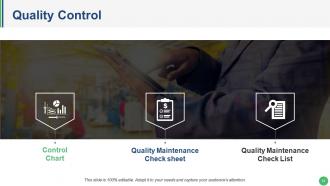
Slide 37: This slide shows Quality Control with these three parameters- Quality Maintenance Check sheet, Quality Maintenance Check List, Control Chart.
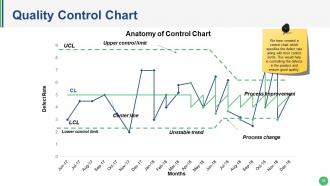
Slide 38: This slide presents Quality Control Chart.We have created a control chart which specifies the defect rate along with their control limits. This would help in controlling the defects in the product and ensure good quality.
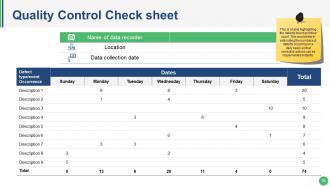
Slide 39: This slide displays Quality Control Check sheet. This is a table highlighting the defects found and their count. This would help in estimating the numbers of defects occurring on a daily basis so that corrective actions can be implemented instantly.
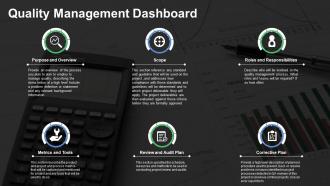
Slide 40: This slide shows Quality Management Dashboard. You can add the information as per your own requirement.
Slide 41: This slide shows Coffee Break image.
Slide 42: This slide displays the title Charts & Graphs.
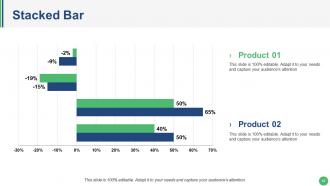
Slide 43: This slide shows a Stacked bar graph in terms of percentage and years for comparison of Product 01, Product 02.
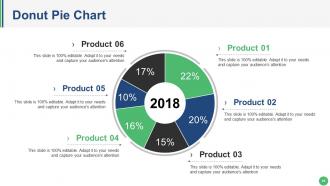
Slide 44: This slide presents Donut Pie Chart. You can comapare the product and business.
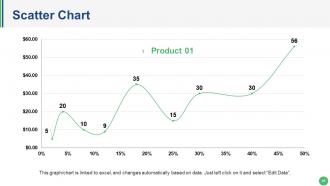
Slide 45: This slide shows Competitive Analysis with Scatter Chart/Radar Chart to compare.
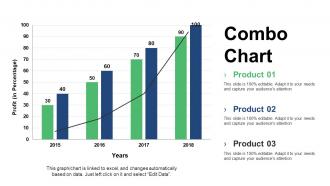
Slide 46: This slide presents Combo Chart. You can analyse the dat awith this.
Slide 47: This slide is titled Additional slides to proceed forward.
Slide 48: This is Our mission slide with imagery and text boxes to go with.
Slide 49: This is Our team slide with names and designation.
Slide 50: This is an About us slide to state company specifications etc.
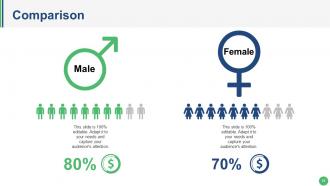
Slide 51: This slide is showing Comparison with male and female.
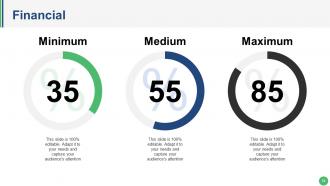
Slide 52: This slide presents Financial scores to display.
Slide 53: This is a Business Quotes slide to quote something you believe in.
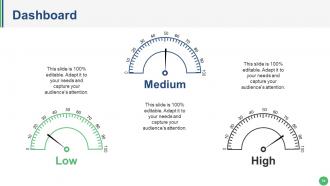
Slide 54: This is a Dashboard slide to show- Strategic System, Success, Goal Process, Sales Review, Communication Study.
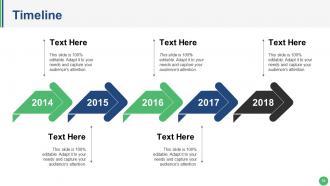
Slide 55: This is a Timelines slide to show- Plan, Budget, Schedule, Review.
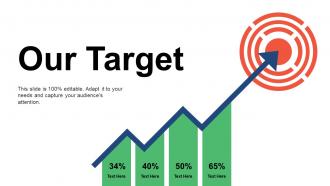
Slide 56: This is a Target slide. State your targets here.
Slide 57: This is a Location slide of World map to show global presence, growth etc.
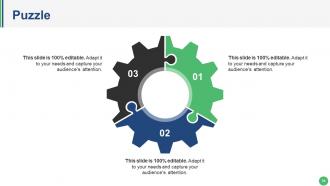
Slide 58: This is a Puzzle image slide to show information, specification etc.
Slide 59: This slide shows a Mind map for representing entities.
Slide 60: This slide displays a Bulb or idea image.
Slide 61: This is a Thank You image slide with Address, Email and Contact number.
Quality Management System Powerpoint Presentation Slides with all 61 slides:
Build belief in being able to achieve with our Quality Management System Powerpoint Presentation Slides. They are good confidence boosters.










FAQs for Quality Management System
You'll need documented processes and clear quality objectives first. Management reviews should happen regularly, plus set up customer feedback loops and corrective action procedures. Employee training is huge here - most places totally botch this part by just checking boxes instead of actually teaching people. Don't forget risk management and continuous improvement processes. Proper record-keeping matters too, along with internal audits to spot problems early. My advice? Map your current processes before doing anything else. Find your biggest gaps first rather than trying to build everything simultaneously. Way less overwhelming that approach.
So here's the thing - a QMS helps you figure out what customers actually want and deliver it consistently. You catch problems before they hit your customers, handle complaints way faster, and keep improving based on feedback. Most companies honestly just wing it with customer requirements (big mistake). Standardized processes mean more reliable products, which builds trust over time. Instead of scrambling to fix things after they go wrong, you're getting ahead of issues. I'd start by looking at where you interact with customers most and figuring out where things usually fall apart.
Honestly, leadership makes or breaks the whole thing. I've watched so many QMS programs turn into fancy binders that nobody touches because the bosses didn't really care. You need leaders who actually show up and talk about why quality matters - not just say it's important once and disappear. They've got to put money behind it too. Short sentences work better here, but the real trick is getting them to model what they're asking for. People see right through fake commitment. If your leadership isn't genuinely bought in from day one, you're basically wasting everyone's time. Everything else falls into place after that.
Track your defect rates, customer complaints, and how long processes actually take - that's your solid data foundation. But honestly? Numbers alone won't tell you if things are actually working. Get feedback from your team and customers too, since they're the ones dealing with your system daily. Start by measuring where you are now, then watch for trends instead of obsessing over single data points. I'd set up monthly tracking for your biggest metrics and review them in management meetings. Oh, and audit findings are super telling - they usually catch stuff before it becomes a real problem.
Honestly, the worst part is people just hate change - especially when it means more paperwork. Leadership often won't back you up either. Resource allocation becomes this nightmare because you're spending money on stuff that doesn't show results right away. Training everyone properly? Good luck with that. Oh, and once the initial excitement dies down, keeping momentum is really tough. When you actually map out your current processes, you'll realize how messy everything really is (which is kind of embarrassing). Start with just one department though. Get some quick wins there, then use those stories to convince the rest of the company it's worth doing.
Think of a QMS as your cheat code for staying compliant. Most frameworks like ISO 9001 already cover what regulators want - documented procedures, risk management, that whole deal. Pretty smart design, honestly. Instead of panicking before audits, you're basically ready all the time since compliance gets baked into your regular workflow. I'd start by checking your current regulatory stuff against your QMS processes. You'll probably spot some gaps, but at least you'll know where you stand. Way better than flying blind and hoping for the best when inspection time rolls around.
Honestly, the biggest win is cutting out all that duplicate work - no more managing overlapping systems that basically do the same thing. Your audits get way simpler, paperwork shrinks, and your team won't be scratching their heads about which process to follow. I've seen companies save serious money just from not having to pay for separate training and audits anymore. Plus when your standards actually work together instead of fighting each other, staying compliant becomes so much easier. My advice? Map out what you're already doing first - I bet you'll find way more overlap than you think.
So continuous improvement is like the engine that keeps your QMS running smoothly. Basically you're always gathering info - audit results, what customers are saying, how your processes are actually performing. Then you dig into what's broken or could work better. That whole Plan-Do-Check-Act thing sounds boring but honestly works pretty well once you get into the rhythm. Pick some improvement goals, make changes, see what happens, then adjust. Don't try to fix everything at once though - that's a recipe for chaos. Start with whatever process is driving people crazy and expand from there.
So most QMS systems use process mapping to see how workflows actually function - super helpful for spotting gaps. Root cause analysis is big too, like fishbone diagrams and that stuff. PDCA cycles are honestly game-changers once you get the hang of them. Statistical process control tracks your quality metrics, and risk matrices catch problems early. Internal audits are necessary but kinda tedious. Document control systems... ugh, they're vital but such a headache to keep updated. Oh, and if you're starting fresh? Definitely begin with process mapping. Shows you exactly where things are breaking down.
Honestly, your QMS is only as good as the people using it. Trained employees who actually care? They'll catch problems early and follow processes correctly. But if people don't understand the system or feel disconnected from it, you're basically paying for fancy paperwork nobody reads. I'd focus on hands-on training sessions - not boring PowerPoints, but stuff people can actually use. Also, let your team give input on the processes they're stuck with every day. When people feel heard, they're way more likely to buy in. Oh, and short bursts of training work better than those marathon sessions everyone zones out during.
Look, documentation is literally the backbone of your QMS - it proves you're actually doing what you claim. Clear procedures mean everyone follows the same steps. Records show auditors (and you) that processes are working consistently. It's like leaving breadcrumbs for future you, honestly. Can't figure out what went wrong without proper docs. You won't replicate successes either, and audits? You'll bomb them for sure. My advice? Start with your most critical processes first. Don't go crazy trying to document everything at once - that's a fast track to burnout city.
Honestly, tech makes QMS way less painful. Automate document control first - that's where you'll see the biggest win. No more hunting through folders or missing calibration dates because everything sends alerts automatically. Real-time audit tracking is a game changer too. I love how digital workflows kill all that paper shuffling, and the data analytics actually help you catch issues early instead of playing catch-up. Cloud access means your team isn't tied to their desks either. Don't go crazy though - start with just document management and build from there.
Honestly, the biggest thing is making sure it actually matches your industry's compliance stuff - manufacturing vs healthcare systems are totally different. Your team has to actually want to use it though, which sounds obvious but I've seen so many companies buy expensive software that just sits there unused. Check how it plays with your current tools, whether it can grow with you, and the vendor's support is actually crucial (trust me on that one). Oh and don't just look at the sticker price - there's always hidden costs. I'd definitely test drive your top few options first before pulling the trigger.
So QMS basically weaves risk management into your everyday work through systematic processes. Document controls, regular audits, corrective actions - they all catch problems before they explode. People actually start reporting issues instead of sweeping them under the rug (which honestly happens way too often). Your data starts showing you trends and weak spots you wouldn't have noticed otherwise. The best part? Risk management becomes second nature instead of panic mode when something goes wrong. I'd start by mapping out your current processes to see where the risks naturally live - makes it way easier to tackle.
So yeah, there are tons of industry-specific QMS standards that go way beyond basic ISO 9001. Healthcare uses ISO 13485 for medical devices. Automotive has ISO/TS 16949, aerospace follows AS9100, and food safety goes with ISO 22000 or HACCP - honestly, the acronyms can get overwhelming. But here's the thing: they all build on those core quality principles you already know, just with extra stuff thrown in. Like aerospace needs crazy traceability requirements, medical devices need sterile processing protocols. First step is figuring out which standard actually applies to your industry, then you can see how it's different from regular ISO 9001. Way better than trying to make everyone fit the same mold.
-
Use of different colors is good. It's simple and attractive.
-
Attractive design and informative presentation.
-
Good présentation thanks
-
Good presentation. Thanks
-
Good template
-
i like it, thank u