


Agile Approach To Quality Assurance Powerpoint Presentation Slides





Try Before you Buy Download Free Sample Product
 Impress Your
 Audience
 100%
100% Editable
 Save Hours
 of Time


Quality assurance process test and retest the item with each newly added element inside each run. Grab our professionally designed Agile Approach to Quality Assurance template. This presentation has explained how quality assurance can help grow businesses by delivering quality products to their customers. Further, the Agile approach to quality assurance PPT familiarizes readers with the problems experienced by the organizations due to poor-quality products and late deliveries. This PowerPoint presentation also provides information about the life cycle of the quality assurance process, its stages, the testing methodologies, and how to implement it in an organization. It also includes a pre-built slide that will assist you in conducting a Quality Assurance training program. Lastly, this presentation showcases the positive change in the companys growth after implementing the Agile approach to the quality assurance model. The pre-developed charts explain the drastic change in the companys profits, loss, revenue, and the status of ongoing software projects post Agile approach to Quality assurance model implementation. Customize this 100 percent editable template now.
People who downloaded this PowerPoint presentation also viewed the following :
Content of this Powerpoint Presentation
Slide 1: This slide introduces Agile Approach to Quality Assurance. State Your Company Name and begin.
Slide 2: This is an Agenda slide. State your agendas here.
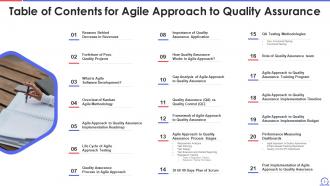
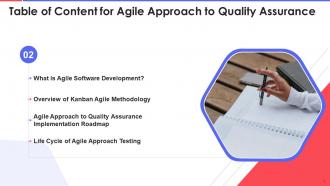
Slide 3: This slide presents Table of Content for the presentation.
Slide 4: This slide highlights title for topics that are to be covered next in the template.
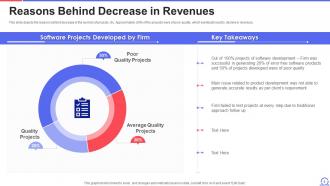
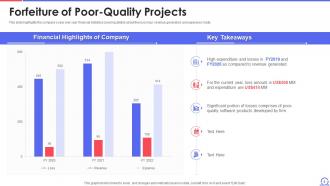
Slide 5: This slide depicts the reasons behind decrease in the number of projects.
Slide 6: This slide highlights the company’s year over year financial statistics covering details about the loss.
Slide 7: This slide shows title for topics that are to be covered next in the template.
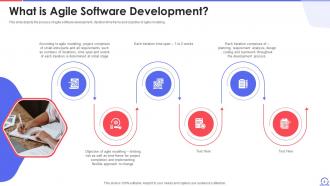
Slide 8: This slide depicts the process of agile software development , iteration time frame and objective of agile modeling.
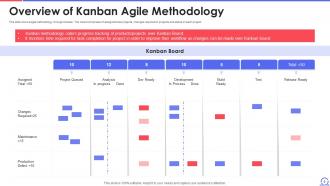
Slide 9: This slide showcases agile methodology through Kanban.
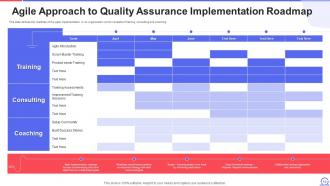
Slide 10: This slide defines the roadmap of the agile implementation in an organization.
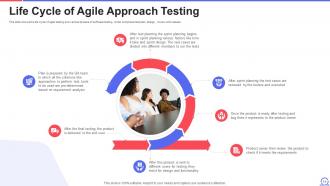
Slide 11: This slide shows the life cycle of agile testing and various phases of software testing.
Slide 12: This slide shows title for topics that are to be covered next in the template.
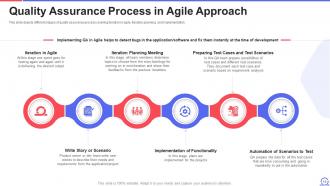
Slide 13: This slide depicts different stages of quality assurance process covering iteration in agile, iteration planning and implementation.
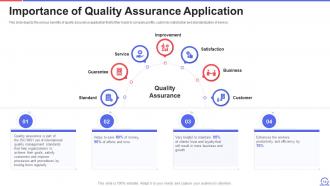
Slide 14: This slide presents various benefits of quality assurance application that further leads to company profits.
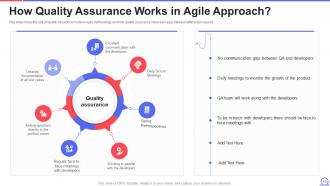
Slide 15: This slide displays role of Quality Assurance model in Agile methodology and how Quality Assurance make work easy.
Slide 16: This slide shows title for topics that are to be covered next in the template.
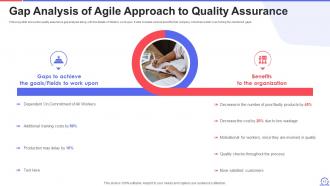
Slide 17: This slide represents Gap Analysis of Quality Assurance Process.
Slide 18: This slide shows title for topics that are to be covered next in the template.
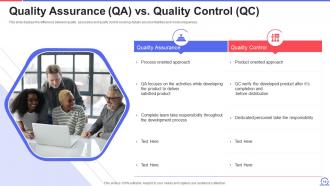
Slide 19: This slide displays the difference between quality assurance and quality control.
Slide 20: This slide shows title for topics that are to be covered next in the template.
Slide 21: This slide presents Framework of Agile Quality Assurance Process.
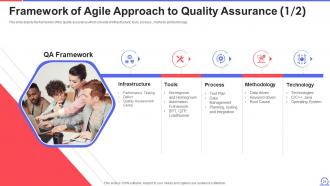
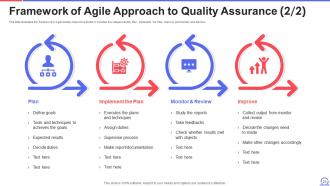
Slide 22: This slide illustrates the framework of Agile Quality Assurance Model.
Slide 23: This slide shows title for topics that are to be covered next in the template.
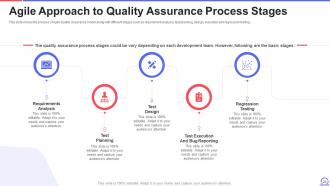
Slide 24: This slide presents process of Agile Quality Assurance model along with different stages.
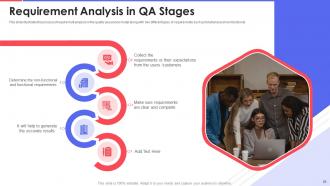
Slide 25: This slide displays Requirement Analysis in Quality Assurance Stages.
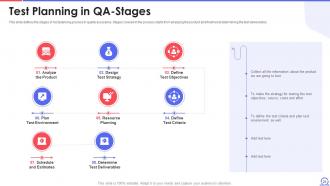
Slide 26: This slide defines the stages of test planning process in quality assurance.
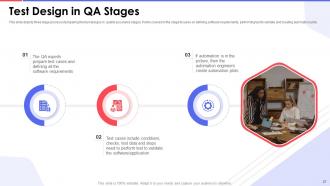
Slide 27: This slide depicts three stage process of preparing the test designs in quality assurance stages.
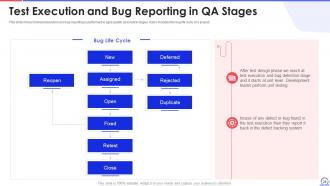
Slide 28: This slide showcases Test Execution and Bug Reporting in Quality Assurance Stages.
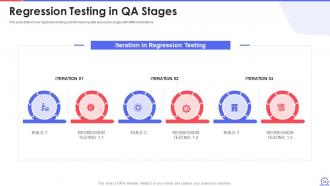
Slide 29: This slide defines how regression testing is performed in quality assurance stages with different iterations.
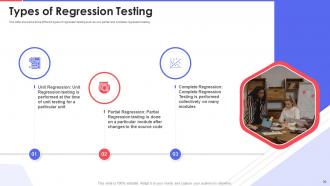
Slide 30: This slide shows the three different types of regression testing such as unit, partial and complete regression testing.
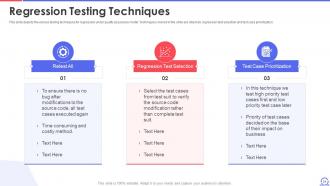
Slide 31: This slide depicts the various testing techniques for regression under quality assurance model.
Slide 32: This slide shows title for topics that are to be covered next in the template.
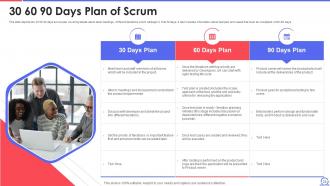
Slide 33: This slide depicts the 30 60 90 days scrum plan covering details about team meetings, different iterations which will begin in first 30 days.
Slide 34: This slide shows title for topics that are to be covered next in the template.
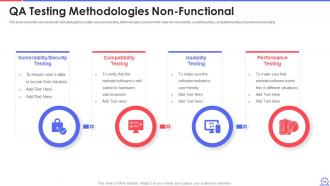
Slide 35: This slide represents Quality Assurance Testing Methodologies - Non-Functional.
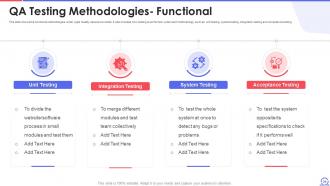
Slide 36: This slide shows the functional methodologies under Agile Quality assurance model.
Slide 37: This slide shows title for topics that are to be covered next in the template.
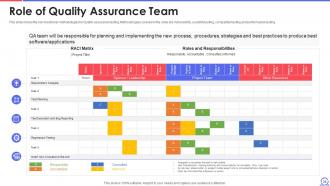
Slide 38: This slide presents RACI Matrix used to assign different roles and responsibilities to be performed.
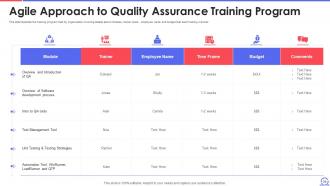
Slide 39: This slide displays Training Program for Agile Quality Assurance Process.
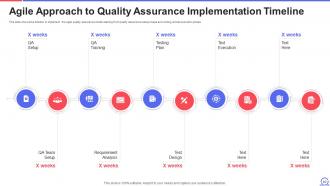
Slide 40: This slide represents Timeline for Agile Quality Assurance Process Implementation.
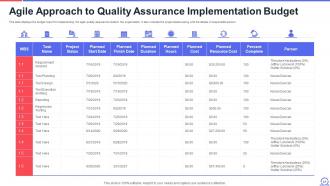
Slide 41: This slide showcases Budget for Agile Quality Assurance Process Implementation.
Slide 42: This slide shows title for topics that are to be covered next in the template.
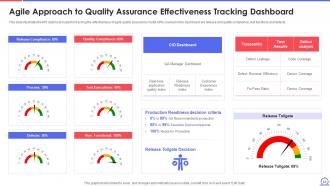
Slide 43: This slide presents Dashboard for Tracking the Agile Quality Assurance Process Effectiveness.
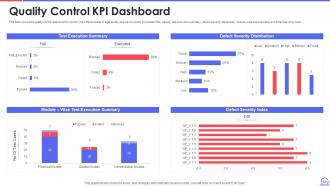
Slide 44: This slide shows the quality control dashboard to monitor the effectiveness of agile quality assurance.
Slide 45: This slide shows title for topics that are to be covered next in the template.
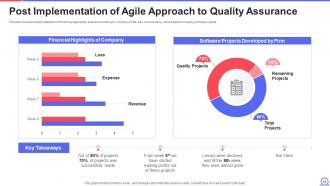
Slide 46: This slide presents impact statistics of introducing agile quality assurance model upon company profits.
Slide 47: This slide displays Icons for Agile Approach to Quality Assurance.
Slide 48: This slide is titled as Additional Slides for moving forward.
Slide 49: This is an Idea Generation slide to state a new idea or highlight information, specifications etc.
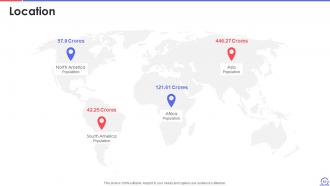
Slide 50: This is a Location slide with maps to show data related with different locations.
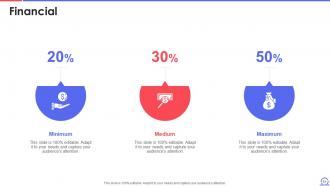
Slide 51: This is a Financial slide. Show your finance related stuff here.
Slide 52: This is a Comparison slide to state comparison between commodities, entities etc.
Slide 53: This slide contains Puzzle with related icons and text.
Slide 54: This is Our Goal slide. State your firm's goals here.
Slide 55: This is a Timeline slide. Show data related to time intervals here.
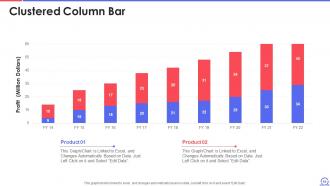
Slide 56: This slide provides Clustered Column chart with two products comparison.
Slide 57: This slide shows Post It Notes. Post your important notes here.
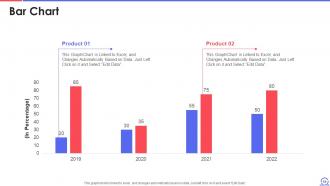
Slide 58: This slide presents Bar chart with two products comparison.
Slide 59: This is a Thank You slide with address, contact numbers and email address.
Agile Approach To Quality Assurance Powerpoint Presentation Slides with all 64 slides:
Use our Agile Approach To Quality Assurance Powerpoint Presentation Slides to effectively help you save your valuable time. They are readymade to fit into any presentation structure.









FAQs for Agile Approach To Quality Assurance
So agile QA basically flips everything upside down. Instead of testing at the end, you're jumping in early - like, way early in the development cycle. The whole team owns quality now, not just you (though let's be real, some devs still think testing is optional). You'll be sitting in sprint planning meetings, chatting directly with developers and product folks. Automation becomes your best friend since releases happen constantly. Oh, and feedback loops are everywhere - you're constantly adjusting based on what you learn. Honestly, once you get used to being this involved in the process, going back to waterfall feels weird.
Basically you're part of the dev team from the start instead of getting stuff thrown over the fence at the end. Testing happens throughout each sprint - you'll be working with developers while they're actually coding. Way different from old school QA where you'd just check if the finished product worked. Now you write test cases early, do exploratory testing all the time, catch problems immediately. The feedback loop is so much tighter. You can actually shape the product instead of just finding what's already broken. Honestly beats those waterfall days where everything was pure chaos at the end!
So instead of having QA and devs working in separate bubbles, agile puts testers right on the development teams. They're in all the daily meetings, sprint planning, the whole thing. Testing happens while features are being built, not after everything's done - which honestly just makes way more sense. Bugs get caught super early when they're easy to fix. Developers get feedback right away instead of weeks later. I've seen teams where QA and devs actually pair up while coding new features. Sounds weird but it works really well - way fewer issues make it to production that way.
So CI is pretty much what saves your butt in Agile QA. Every time someone commits code, it automatically runs all your tests and catches bugs right away. Way better than waiting until sprint end to test everything - that's just asking for chaos. You get feedback in minutes instead of days, which is clutch because you can actually remember what you just wrote. Unit tests, integration tests, sometimes UI tests all fire off automatically. Oh and definitely set it up to block bad deployments. Trust me, future you will thank present you for that one. It's like having a safety net that actually works.
Honestly, you've gotta bake testing into every sprint right from the start - don't try adding it later. Developers write unit tests while they're coding, then layer on integration and UI tests as stuff gets built. The magic happens when your CI/CD automatically runs everything on each commit. Manual testing? Total bottleneck if you ask me. Let QA focus on the framework and weird edge cases instead. But here's the thing - make sure test failures actually stop deployments. Otherwise people just ignore them. Once broken tests = no release, you'll be shocked how fast quality jumps up.
Honestly, focus on three big ones: defect discovery rate, test automation coverage, and how fast you fix bugs once they're found. Track the ratio of bugs you catch vs what customers report - that's your real testing scorecard right there. Sprint velocity for QA is fine I guess, but people manipulate those numbers constantly. What actually matters? How healthy your automated tests are and lead time for fixes. Those directly hit your shipping speed. Oh, and measure this stuff weekly or you'll miss the patterns. You'll spot your real bottlenecks pretty quick that way.
Honestly, you've gotta stop treating QA like this separate thing that happens after dev work. Write your test cases during sprint planning instead of waiting. Get those regression tests automated so they're running all the time - sounds like extra work but I promise it's not. Pair up with devs from the start on making code actually testable. I used to hate this approach but it works way better. Hook up your CI/CD to block deployments when tests fail. That way you're never the person holding up releases. Once QA flows with development instead of after it, you catch problems early when they're cheap to fix.
Honestly, try behavior-driven development first - write your test cases in plain language so everyone actually gets what you're testing. Risk-based testing is huge too. Focus on the stuff that'll break in production instead of testing everything equally. Pair testing with devs changed my whole workflow, no joke. You catch problems before they become actual problems. Keep everything modular since requirements will definitely shift mid-sprint (they always do). Oh, and make your test cases lightweight. Heavy documentation just slows you down when things change. Start with BDD scenarios on your next story - you'll see the difference right away.
Oh man, technical debt is such a pain but you gotta make it visible first. Put those items right in your backlog with real numbers - like "this broken test wastes 2 hours every sprint." I've watched teams just ignore it until everything completely falls apart (learned that lesson the hard way). Get your product owner to set aside maybe 15-20% of sprint time for fixing this stuff. Hit the big problems first: flaky automated tests, messy code that breaks constantly, CI/CD issues. Honestly, just treat debt like any other story. Estimate it, rank it, and actually block out time to deal with it instead of always pushing it off.
Focus on the critical user paths first - work with your devs to map those out. The test pyramid approach is solid: tons of unit tests, some integration tests, minimal UI tests on top. Honestly, I used to way overthink coverage metrics. Don't chase that 100% number, just hit the business-critical stuff that actually matters. Write tests while you're coding, not after (learned that the hard way). Do regular retrospectives to catch gaps you missed. Oh, and definitely start linking your test cases to user stories this sprint - makes everything way clearer.
Honestly, feedback loops are game-changers for QA. You're catching bugs during development instead of weeks later when everything's already built. Daily check-ins with devs about testability? Do it. Your testing strategy becomes way more flexible when you're getting constant input from stakeholders and users throughout each sprint. Retrospectives are clutch too - they show you what's actually working and what's just wasting time. The whole point is preventing defects instead of playing catch-up later. Oh, and shorter feedback cycles = fewer headaches for everyone involved.
Honestly? Your biggest headache will be the mindset shift. Teams get weird about shorter testing cycles and way less documentation. QA being involved from the start instead of swooping in at the end really throws people off. Start with getting everyone bought into shared quality ownership - that's huge. Test automation needs to happen early (like, immediately). Get devs and QA talking from day one, not just passing stuff back and forth. Focus on feedback instead of being the quality police. Oh, and patience. Give people time to adjust and celebrate the small stuff. Change is hard.
So basically you want to get your QA folks involved way earlier instead of dumping everything on them at the end. Have them jump into story planning sessions and help write acceptance criteria from the get-go. Code reviews, pair testing while devs are actually building stuff - all that good stuff. Yeah, it feels like extra work at first (I won't lie), but finding bugs early beats the hell out of scrambling later. Oh, and automate tests as you build features, not after. The whole idea is baking quality in rather than trying to slap it on afterwards. Just try it with one sprint first - don't go crazy.
So here's the thing - cross-functional teams totally fix that annoying problem where QA gets blamed for everything at the end. When your testers are sitting right there with developers every day, bugs get caught super early. Developers actually think about testing while they code (crazy concept, right?). Your QA folks can jump into planning meetings and call out potential issues before they become headaches. Quality stops being just one team's job. Honestly, if you haven't embedded testers directly into dev teams yet, that's probably your best first move.
Honestly, just document what actually matters. I learned this the hard way after wasting tons of time writing specs nobody ever read. Now I do "just enough" - capture acceptance criteria, major decisions, stuff that'll save your future self from going "wtf was I thinking?" Document as you build, not before. Automated test descriptions are gold for this. Quick wiki updates during retros work too. My rule is simple: will this help someone (including me) understand this feature in 3 months? No? Then skip it and ship. Living docs beat heavy upfront planning every time.
-
The content is very helpful from business point of view.
-
Best Representation of topics, really appreciable.