

Agile Project Management Frameworks Powerpoint Presentation Slides




Try Before you Buy Download Free Sample Product
 Impress Your
 Audience
 100%
100% Editable
 Save Hours
 of Time


Agile planning and framework refer to software development methodologies based on the concept of iterative development. Here is a professionally designed template on Agile Project Management Frameworks that covers details on agile planning and development methodologies and their frameworks. This proposal will come in handy for product developers who intend to produce the right product by gradual and regular delivery of small chunks of functionality through small cross functional self organizing teams. The template provides details on the essential components of agile planning, the agile planning process, the agile work management solution template, etc. It also includes information on the agile development principles, process, lifecycle, software development, etc. Further, firms can cover agile methodology and frameworks for Scrum, Kanban, crystal, etc., in the proposal. It also includes details on the Agile Scrum Methodology such as Lean Software Development, Extreme Programming XP, Dynamic Systems Development DSDM, Feature Driven Development FDD, etc. Lastly, this template covers the framework for business agility, scaled agile enterprise framework, scaled agile framework, team and technical skill, and scaled agile roadmap framework. Download our 100 percent editable and customizable project management ppt templates and book a free demo with our expert team. Get access now.
People who downloaded this PowerPoint presentation also viewed the following :
Content of this Powerpoint Presentation
Slide 1: This slide introduces Agile Project Management Frameworks. State Your Company Name and begin.
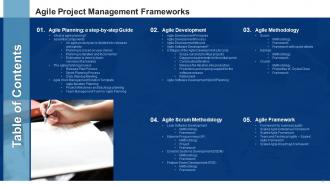
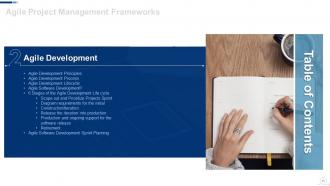
Slide 2: This slide presents Table of Content for the presentation.
Slide 3: This slide exhibits title for 'Agile planning - A step-by-step guide'.
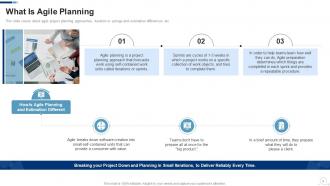
Slide 4: This slide covers about agile project planning approaches, iteration or springs and estimation differences etc.
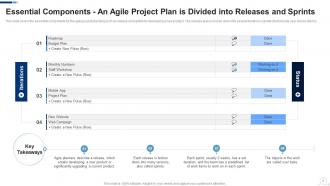
Slide 5: This slide covers the essential components for the agile project planning.
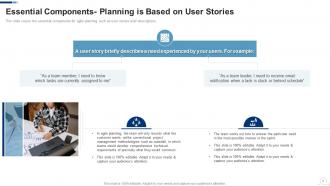
Slide 6: This slide covers the essential components for agile planning such as user stories brief descriptions.
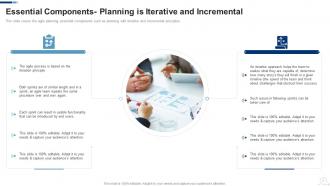
Slide 7: This slide covers the agile planning essential components such as planning with iterative and incremental principles.
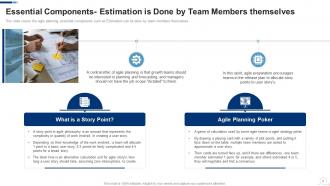
Slide 8: This slide covers the agile planning essential components such as Estimation can be done by team members themselves.
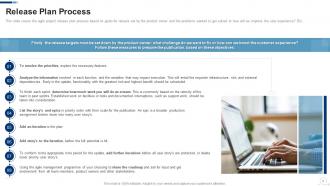
Slide 9: This slide covers the agile project release plan process based on goals.
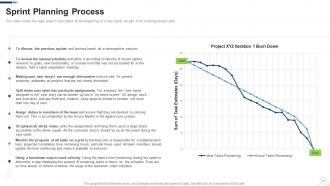
Slide 10: This slide covers the agile project team plans at the beginning of a new sprint, as part of an existing release plan.
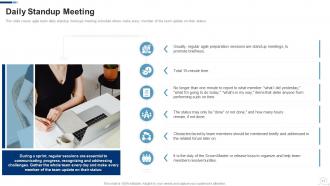
Slide 11: This slide covers agile team daily standup mockups meeting schedule.
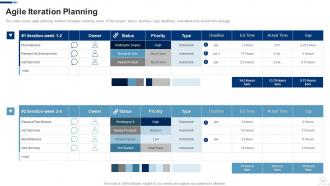
Slide 12: This slide covers agile planning iteration template including owner of the project, status, etc.
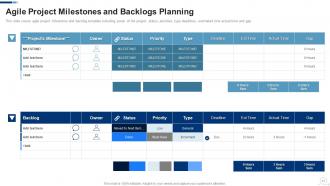
Slide 13: This slide covers agile project milestones and backlog template including owner of the project, etc.
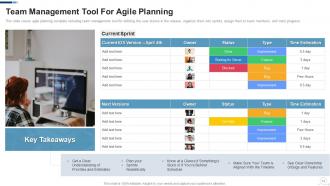
Slide 14: This slide covers agile planning template including team management tool for defining the user stories.
Slide 15: This slide depicts title for 'Agile development'.
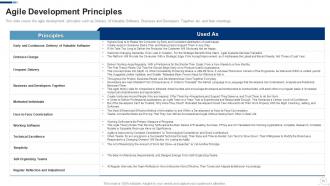
Slide 16: This slide covers the agile development principles such as Delivery of Valuable Software, Business and Developers Together etc.
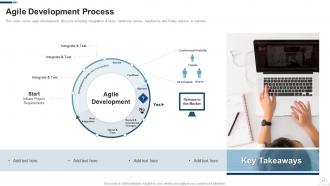
Slide 17: This slide covers agile development lifecycle including integration & tests, iterations, etc.
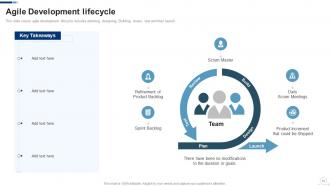
Slide 18: This slide covers agile development lifecycle includes planning, designing, Building, etc.
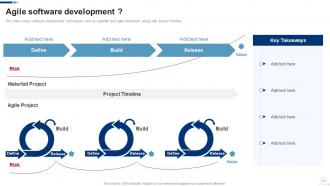
Slide 19: This slide covers software development techniques such as waterfall and agile framework along with project timeline.
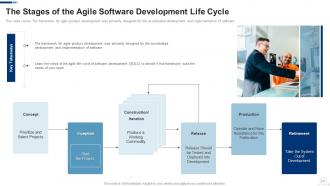
Slide 20: This slide covers the framework for agile product development.
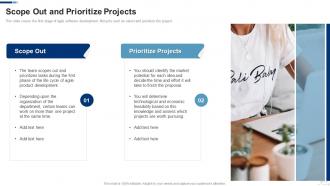
Slide 21: This slide covers the first stage of agile software development lifecycle such as select and prioritize the project.
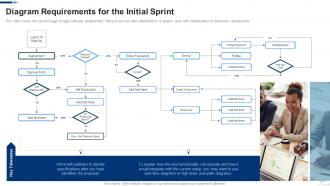
Slide 22: This slide covers the second stage of agile software development lifecycle such as after identification of project, etc.
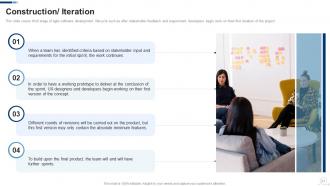
Slide 23: This slide covers third stage of agile software development lifecycle such as after stakeholder feedback and requirement developers.
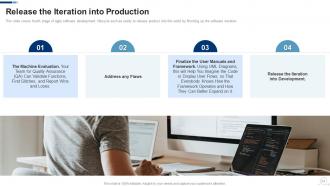
Slide 24: This slide covers fourth stage of agile software development lifecycle such as ready to release product into the world.
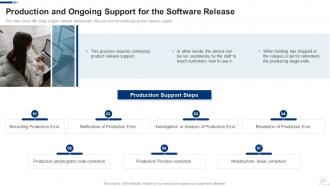
Slide 25: This slide covers fifth stage of agile software development lifecycle such as continuing product release support.
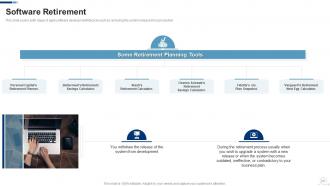
Slide 26: This slide covers sixth stage of agile software development lifecycle such as removing the system release from production.
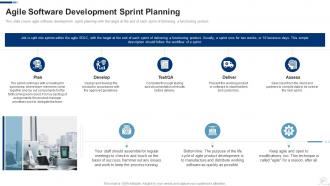
Slide 27: This slide covers agile software development sprint planning with the target at the end of each sprint of delivering a functioning product.
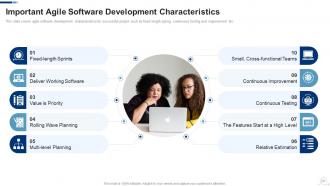
Slide 28: This slide covers agile software development characteristics for successful project such as fixed length spring, etc.
Slide 29: This slide depicts title for 'Agile Methodology'.
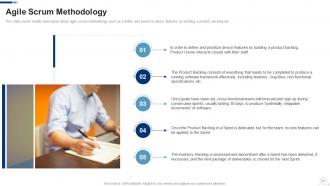
Slide 30: This slide covers details description about agile scrum methodology such as it define and prioritize device features.
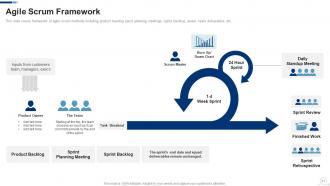
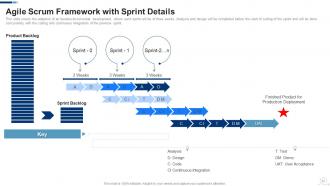
Slide 31: This slide covers framework of agile scrum methods including product backlog sprint planning meetings, etc.
Slide 32: This slide covers the adaption of an Iterative-Incremental development.
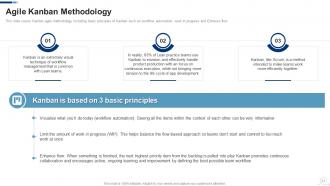
Slide 33: This slide covers Kanban agile methodology including basic principles of Kanban such as workflow automation, etc.
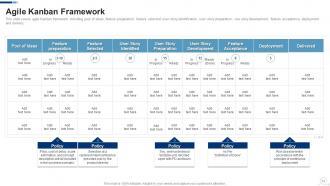
Slide 34: This slide covers agile Kanban framework including pool of ideas, feature preparation, feature selected, etc.
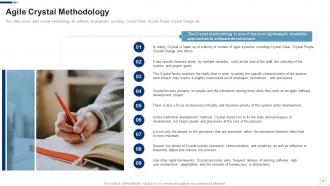
Slide 35: This slide covers agile crystal methodology for software development including Crystal Clear, Crystal Purple, Crystal Orange etc,
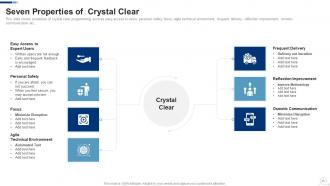
Slide 36: This slide covers properties of crystal clear programming such as easy access to users, personal safety, etc.
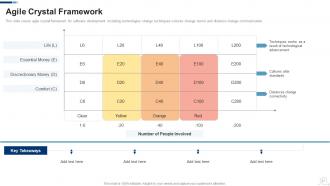
Slide 37: This slide covers agile crystal framework for software development.
Slide 38: This slide depicts title for 'Agile Scrum Methodology'.
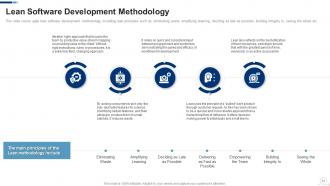
Slide 39: This slide covers agile lean software development methodology including lean principles.
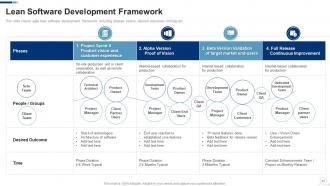
Slide 40: This slide covers agile lean software development framework including phases, teams, desired outcomes, timings etc.
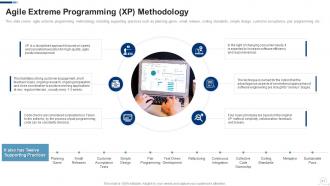
Slide 41: This slide covers agile extreme programming methodology including supporting practices.
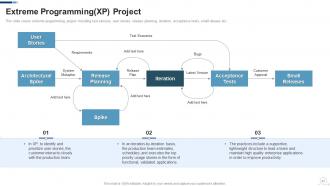
Slide 42: This slide covers extreme programming project including test sensors, etc.
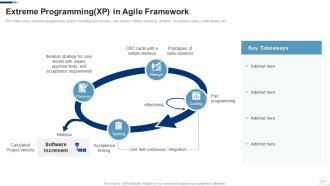
Slide 43: This slide covers extreme programming framework including planning, design, coding, testing, release etc.
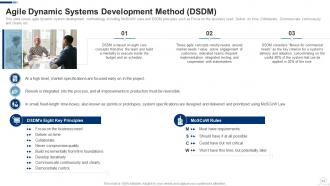
Slide 44: This slide covers agile dynamic system development methodology including MoSCoW rules and DSDM principles.
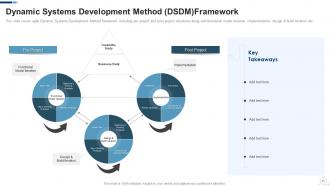
Slide 45: This slide covers agile Dynamic Systems Development Method framework including pre project and post project situations.
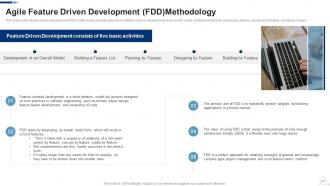
Slide 46: This slide covers feature driven development (FDD) methodology including five basic activities.
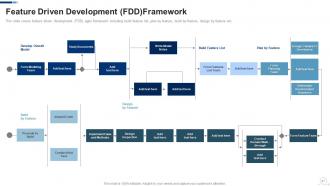
Slide 47: This slide covers feature driven development (FDD) agile framework including build feature list, etc.
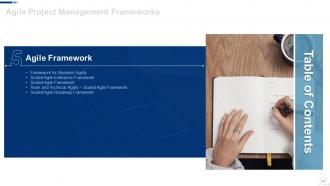
Slide 48: This slide shows title for 'Agile Framework'.
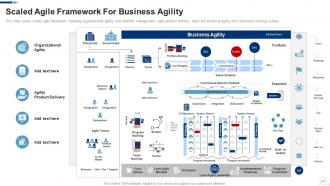
Slide 49: This slide covers scaled agile framework including organizational agility, lean portfolio management, etc.
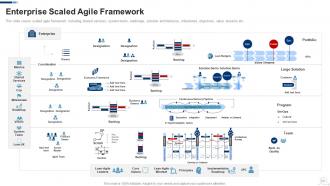
Slide 50: This slide covers scaled agile framework including shared services, system team, roadmaps, etc.
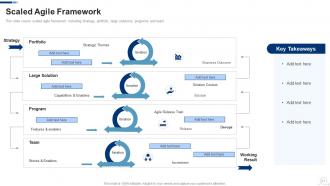
Slide 51: This slide covers scaled agile framework including strategy, portfolio, large solutions, programs and team.
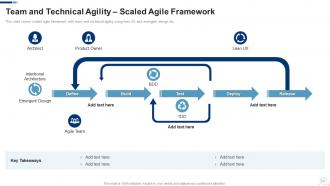
Slide 52: This slide covers scaled agile framework with team and technical agility using lean UX and emergent design etc.
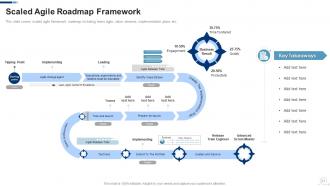
Slide 53: This slide covers scaled agile framework roadmap including leans agile, value streams, implementation plans etc.
Slide 54: This slide shows Icons for Agile Project Management Frameworks.
Slide 55: This slide is titled as Additional Slides for moving forward.
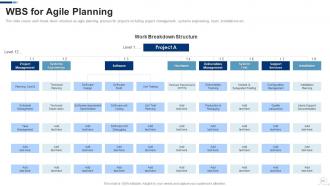
Slide 56: This slide represents work break down structure as agile planning process for projects.
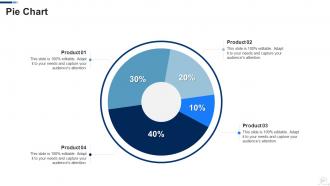
Slide 57: This slide shows Pie Chart with data in percentage.
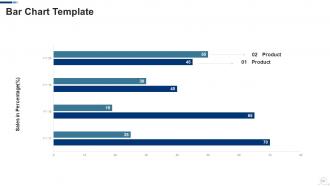
Slide 58: This slide presents Bar chart with two products comparison.
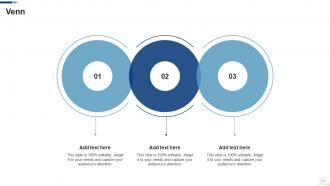
Slide 59: This slide depicts Venn diagram with text boxes.
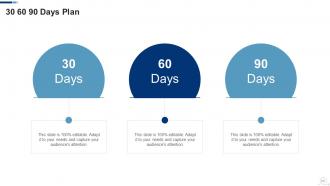
Slide 60: This slide provides 30 60 90 Days Plan with text boxes.
Slide 61: This is an Idea Generation slide to state a new idea or highlight information, specifications etc.
Slide 62: This slide shows Post It Notes. Post your important notes here.
Slide 63: This is a Timeline slide. Show data related to time intervals here.
Slide 64: This is Our Goal slide. State your firm's goals here.
Slide 65: This is a Thank You slide with address, contact numbers and email address.
Agile Project Management Frameworks Powerpoint Presentation Slides with all 70 slides:
Use our Agile Project Management Frameworks Powerpoint Presentation Slides to effectively help you save your valuable time. They are readymade to fit into any presentation structure.







FAQs for Agile Project Management Frameworks
Basically it's about putting people first and actually talking to each other instead of hiding behind endless docs. Ship working stuff fast and often - like every couple weeks if you can. Teams should be able to make their own calls without waiting for approval from five different managers (which honestly saves everyone's sanity). Customer feedback beats perfect planning every time. Don't try to build everything at once - figure out the smallest thing that'd actually be useful and start there. Oh, and ditch those massive requirement documents. Nobody's reading that anyway.
So Scrum's all about those fixed sprints - usually 2-4 weeks with set roles and meetings. Kanban? More like a continuous flow thing where work just moves through board columns. Scrum means you're locked into deliverables each sprint, plus regular retrospectives. Way more structure. Kanban's super flexible (maybe too flexible honestly) - you just limit work in progress and keep things moving smoothly. Got a team that thrives on routine and deadlines? Scrum's probably better. But if you're constantly putting out fires or priorities keep shifting, Kanban might save your sanity. Really depends on your chaos level.
So Scrum has three main roles you need to know. Your Product Owner handles what gets built - they're basically the customer's voice and manage that backlog mess. Development Team does the actual building (usually like 3-9 people who can handle different stuff). Then there's the Scrum Master who's more of a coach than a boss - they run meetings and clear roadblocks. Honestly, the Scrum Master role gets misunderstood a lot. The whole thing works because everyone's accountable to each other instead of some traditional manager setup. Just make sure you define these roles clearly upfront or you'll have chaos later.
Honestly, the regular check-ins are what make the biggest difference - daily standups, sprint planning, all that stuff keeps everyone actually talking instead of working in silos. Everything's visible on those project boards too, which is clutch because you're not constantly wondering if someone's stuck or behind. The whole iterative thing means problems come up fast instead of hiding until the end (learned that one the hard way). Retrospectives are solid for fixing team issues before they get weird. I'd say start with just doing quick daily standups if you aren't already - seriously, even 15 minutes changes everything about how synced up your team feels.
So basically you're adding Lean's waste-cutting mindset to your regular Agile sprints. Pretty cool combo actually - you'll spot bottlenecks way faster and cut out all those annoying handoffs that bog teams down. Focus gets razor-sharp on what customers actually want. Fair warning though, it can feel like drinking from a firehose at first with all the principles flying around. The sweet spot? Use Lean's flow concepts to clean up your standups and retros. I'd start by mapping your current process - you'll probably laugh at some of the obvious time-wasters hiding in there.
XP is solid when requirements keep changing and you need quality code quickly. Works great for small teams (2-12 people) sitting together where customer input matters a lot. The pair programming and test-driven stuff really pays off on critical apps - like anything customer-facing where bugs cost money. Yeah, it feels overwhelming at first with all the practices they throw at you. But that's kinda the whole idea, right? Small teams doing important work with fuzzy requirements that'll definitely shift? XP's worth trying. Just be ready for the intensity.
Honestly, agile is pretty smart about this - it forces you to reflect constantly. After each sprint (which are super short, like 1-4 weeks), teams do retrospectives where they hash out what sucked and what worked. Daily standups catch problems before they snowball too. The whole thing is basically one big feedback loop that never stops. I mean, instead of waiting months to realize you're building the wrong thing, you're course-correcting weekly. Oh, and those frequent demos with stakeholders? Game changer for staying aligned. If you're not doing weekly retros yet, start there - that's honestly where most of the improvement happens.
Jira's probably your best bet for tracking stories and sprints - everyone uses it. Confluence handles docs pretty well too. Slack or Teams for daily chats, obviously. Half the agile magic happens in random message threads anyway, which is kinda funny if you think about it. Trello's great for visual stuff, and Azure DevOps works if you're already in the Microsoft world. Miro's clutch for retros and brainstorming sessions. GitHub handles your code repos. Don't go overboard though - start with what your team knows and add tools when you actually hit pain points.
Honestly, forget obsessing over story points - customer satisfaction matters way more. I'd track velocity and sprint completion rates, sure, but also check if you're actually shipping working software to users regularly. Team morale is huge too. Are people happy? Getting better from retrospectives? How fast do you respond when priorities shift? The real question is whether you're solving actual problems, not just cranking out features. I always tell teams to do regular stakeholder check-ins about value, not just "did we finish everything." Oh, and track how often stakeholders give positive feedback - that's gold.
Honestly, the hardest part isn't the process stuff - it's getting people out of their comfort zones. Some folks just love their silos and hate all the extra collaboration that comes with agile. Plus you'll get pushback on the whole "shorter cycles" thing, especially from higher-ups who want everything planned six months out. Oh, and don't get me started on stakeholders who freak out about less documentation! I'd say pick one small project first. Get a few wins, then slowly roll it out to other teams. The mindset shift is real though - people have to totally rethink how they approach deadlines and feedback.
Yeah, Agile totally works for remote teams! You just gotta adapt it a bit. Daily standups become video calls - or honestly, I love doing async updates in Slack when people are in different time zones. Way less painful than getting everyone up at 6am, you know? Sprint planning moves to tools like Miro or Mural for the collaborative stuff. The biggest thing is being way more deliberate about communication since you can't just walk over to someone's desk. Document your decisions clearly. Make those sprint boards super visible to everyone. Oh, and definitely nail down your communication rules with the team first - that's huge.
Dude, feedback is literally the heartbeat of Agile. You're doing demos and user testing constantly - like every sprint - to make sure you're not building garbage nobody wants. The beauty is you can pivot fast when users tell you something sucks. Short sprints mean you're adjusting every week or two instead of building for months just to find out you totally missed what people actually needed. Honestly, I've seen too many teams skip this part and wonder why their "amazing" feature gets zero adoption. Course-correction happens quick, which saves everyone's sanity.
Ditch the hourly estimates - they're trash for dev work. Story points or t-shirt sizing work way better since you're dealing with so much uncertainty. Get your team doing planning poker where everyone shows estimates at once (prevents people from just copying each other). Focus on how complex stuff is relative to other tasks, not actual time. Don't worry when you're totally wrong at first - literally every team is garbage at this initially! After a few sprints your velocity evens out and that's where things click. Then just track what you actually finish vs. what you planned and use that to get better at future estimates.
Honestly, you gotta be ruthless about boundaries from day one. I always put everything on a visible board - what's in the sprint vs what's not. No exceptions. New requests? Straight to the backlog, doesn't matter who's asking. Your stakeholders will push back at first, but they'll learn that "not now" isn't the same as "never." Just means we'll prioritize it properly next time around. Oh and do those retrospectives - you'd be amazed how quickly you'll spot the scope creep patterns once you start looking for them.
Dude, agile is actually pretty cool for innovation stuff. You work in these short 2-week sprints, so if something sucks you can pivot fast instead of being stuck with a bad plan for months. Daily standups and retrospectives give your team space to throw out random ideas and catch issues early. The whole "working software over documentation" thing means you're actually building real stuff instead of writing endless specs - way more fun honestly. Oh and the constant feedback loop keeps things interesting, unlike those boring waterfall projects that drag on forever. Just start small with those 2-week cycles.
-
Design layout is very impressive.
-
The Designed Graphic are very professional and classic.