


Agile Methodology IT Powerpoint Presentation Slides





Try Before you Buy Download Free Sample Product
 Impress Your
 Audience
 100%
100% Editable
 Save Hours
 of Time


This PowerPoint presentation gives a brief idea about the problems an organization faces with the Waterfall model and implements Agile Methodology in software development projects. In this Agile Methodology PowerPoint Presentation, we have covered the importance of agile methodology, an overview of agile methodology, Agile Software Development, and Agile Manifesto. In addition, this Agile Scrum Methodology PPT contains the various Agile Methodologies Frameworks such as Scrum, Extreme Programming, Kanban, Lean, Crystal, DSDM, and ASD. Also, the Agile Development Methodology PPT presentation includes the training and budget for Agile adoption, the Agile Implementation section that contains Agile best practices, roles, responsibilities, RACI Matrix, the implementation process, and matrices for effective use of Agile. Furthermore, this Software Development Methodologies template caters to a comparison between the Agile and Waterfall model, methods to expand the Agile impact, 30 60 90 days plan, a roadmap, and a dashboard for Agile team management. Lastly, this Agile Methodology deck includes the post implementation impact of Agile Methodology on business. Get access to this powerful template now.
People who downloaded this PowerPoint presentation also viewed the following :
Content of this Powerpoint Presentation
Slide 1: This slide introduces Agile Methodology (IT). State Your Company Name and begin.
Slide 2: This slide states Agenda of the presentation.
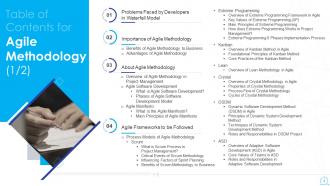
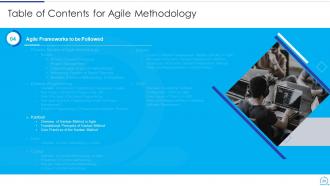
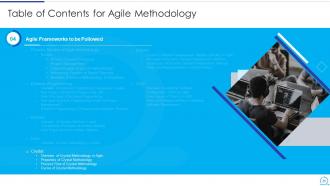
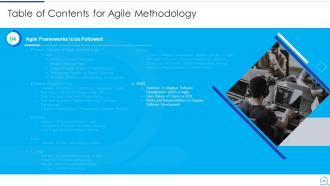
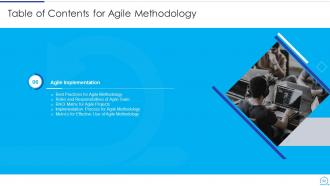
Slide 3: This slide presents Table of Content for the presentation.
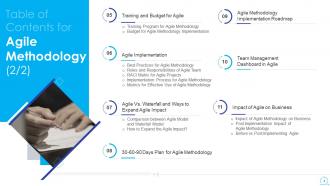
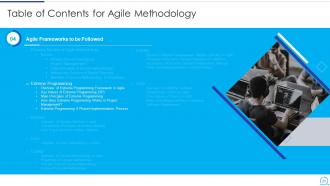
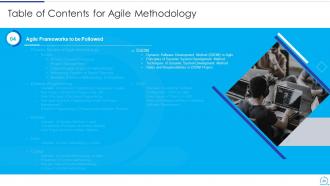
Slide 4: This is another slide continuing Table of Content for the presentation.
Slide 5: This slide highlights title for topics that are to be covered next in the template.
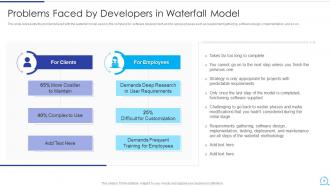
Slide 6: This slide displays Problems Faced by Developers in Waterfall Model.
Slide 7: This slide highlights title for topics that are to be covered next in the template.
Slide 8: This slide displays Benefits of Agile Methodology to Business.
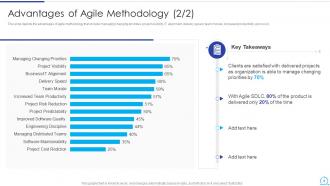
Slide 9: This slide depicts the advantages of agile methodology that include managing changing priorities, project visibility, etc.
Slide 10: This slide highlights title for topics that are to be covered next in the template.
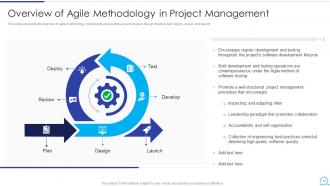
Slide 11: This slide represents Overview of Agile Methodology in Project Management.
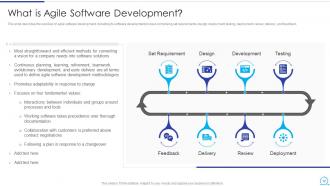
Slide 12: This slide describes the overview of agile software development.
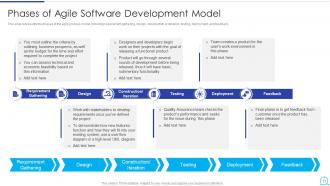
Slide 13: This slide showcases Phases of Agile Software Development Model.
Slide 14: This slide highlights title for topics that are to be covered next in the template.
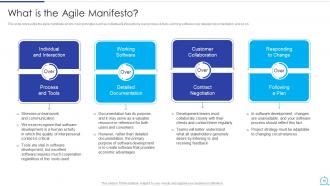
Slide 15: This slide represents the agile manifesto and its main principles such as individual & interactions.
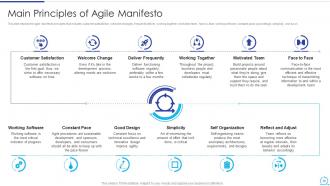
Slide 16: This slide depicts the agile manifesto principles that includes customer satisfaction, welcome changes, frequently deliver, etc.
Slide 17: This slide highlights title for topics that are to be covered next in the template.
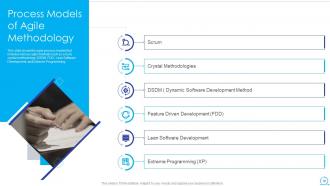
Slide 18: This slide shows the agile process models that includes various agile methods such as scrum, crystal methodology, DSDM, etc.
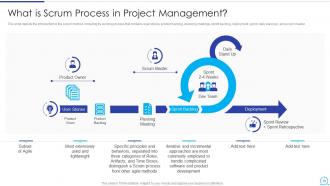
Slide 19: This slide depicts the introduction to the scrum method, including its working process.
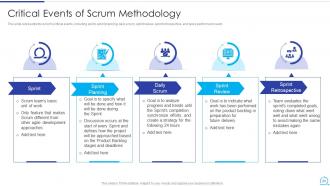
Slide 20: This slide represents Critical Events of Scrum Methodology.
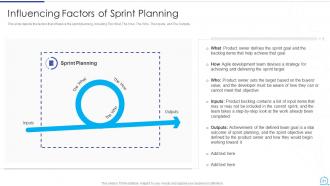
Slide 21: This slide showcases the factors that influence the sprint planning.
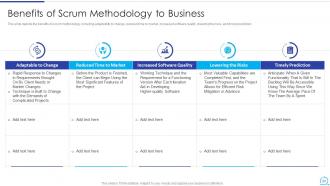
Slide 22: This slide shows Benefits of Scrum Methodology to Business.
Slide 23: This slide highlights title for topics that are to be covered next in the template.
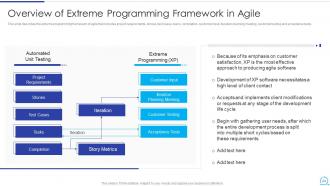
Slide 24: This slide presents Overview of Extreme Programming Framework in Agile.
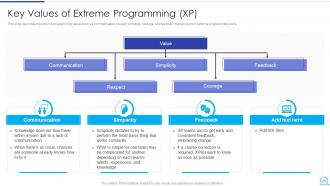
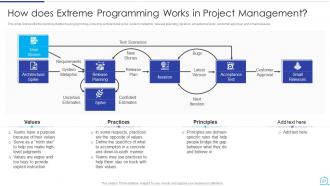
Slide 25: This slide describes the extreme programming values such as communication, respect, simplicity, etc.
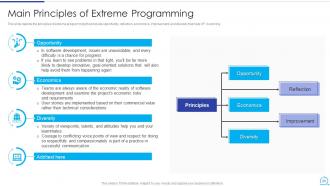
Slide 26: This slide depicts the principles of extreme programming that include opportunity, reflection, economics, etc.
Slide 27: This slide represents the working of extreme programming, including architectural spike, system metaphor, etc.
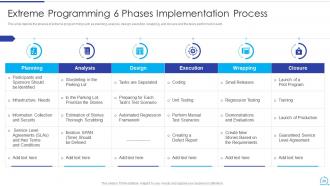
Slide 28: This slide showcases Extreme Programming 6 Phases Implementation Process.
Slide 29: This slide presents Table of Content for the presentation.
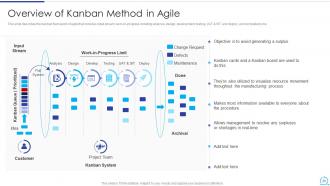
Slide 30: This slide describes the Kanban framework of agile that includes input stream.
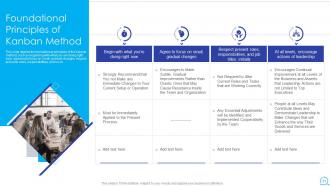
Slide 31: This slide depicts the foundational principles of the Kanban method.
Slide 32: This slide showcases Core Practices of the Kanban Method.
Slide 33: This slide highlights title for topics that are to be covered next in the template.
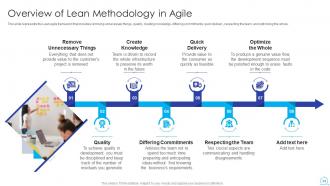
Slide 34: This slide represents the Lean agile framework that includes removing unnecessary things.
Slide 35: This slide highlights title for topics that are to be covered next in the template.
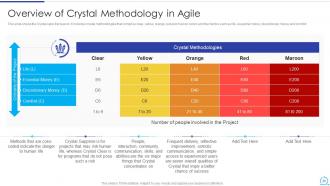
Slide 36: This slide presents Overview of Crystal Methodology in Agile.
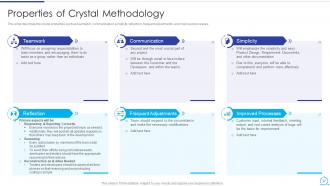
Slide 37: This slide describes the crystal properties such as teamwork, communication, simplicity, etc.
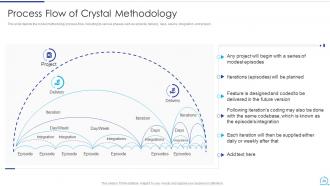
Slide 38: This slide depicts the crystal methodology process flow, including its various phases such as episode, delivery, days, etc.
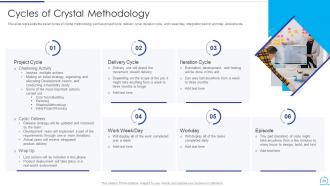
Slide 39: This slide represents the seven cycles of crystal methodology such as project cycle, delivery cycle, iteration cycle, etc.
Slide 40: This slide highlights title for topics that are to be covered next in the template.
Slide 41: This slide showcases Dynamic Software Development Method (DSDM) in Agile.
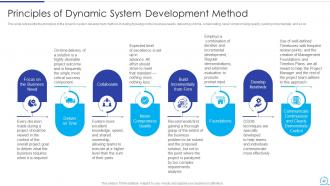
Slide 42: This slide shows Principles of Dynamic System Development Method.
Slide 43: This slide shows Techniques of Dynamic System Development Method.
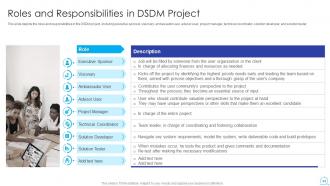
Slide 44: This slide presents Roles and Responsibilities in DSDM Project.
Slide 45: This slide highlights title for topics that are to be covered next in the template.
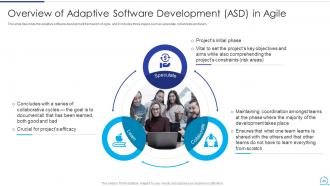
Slide 46: This slide displays Overview of Adaptive Software Development (ASD) in Agile.
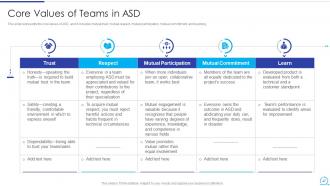
Slide 47: This slide represents the core values of ASD, and it includes mutual trust, mutual respect, mutual participation, etc.
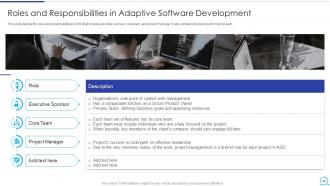
Slide 48: This slide showcases Roles and Responsibilities in Adaptive Software Development.
Slide 49: This slide highlights title for topics that are to be covered next in the template.
Slide 50: This slide describes the training program for the agile methodology that includes teams modules to be covered.
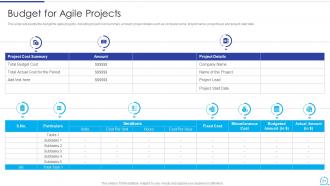
Slide 51: This slide represents the budget for agile projects, including project cost summary, amount, and project details.
Slide 52: This slide highlights title for topics that are to be covered next in the template.
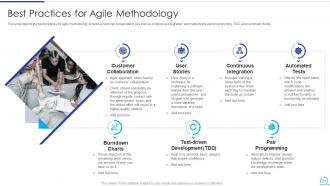
Slide 53: This slide showcases Agile approach relies heavily on customer collaboration.
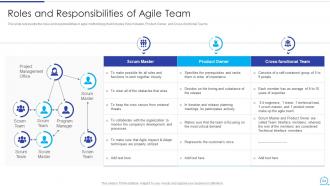
Slide 54: This slide represents the roles and responsibilities in agile methodology.
Slide 55: This slide presents RACI matrix for the agile projects that shows the responsibilities of product owner.
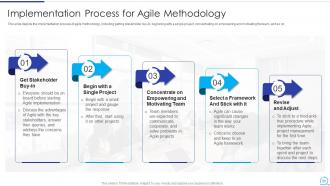
Slide 56: This slide displays Implementation Process for Agile Methodology.
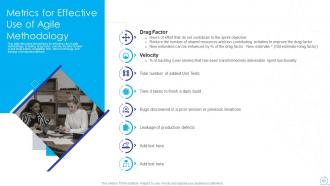
Slide 57: This slide represents Metrics for Effective Use of Agile Methodology.
Slide 58: This slide highlights title for topics that are to be covered next in the template.
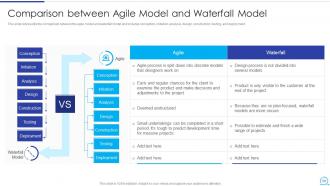
Slide 59: This slide shows Comparison between Agile Model and Waterfall Model.
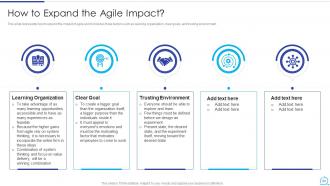
Slide 60: This slide represents how to expand the impact of agile and it includes three factors such as learning organization, clear goals, and trusting environment.
Slide 61: This slide highlights title for topics that are to be covered next in the template.
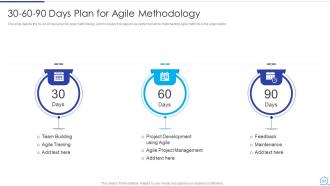
Slide 62: This slide showcases 30-60-90 Days Plan for Agile Methodology.
Slide 63: This slide highlights title for topics that are to be covered next in the template.
Slide 64: This slide displays Agile Methodology Implementation Roadmap.
Slide 65: This slide highlights title for topics that are to be covered next in the template.
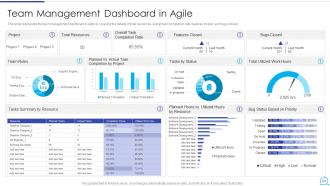
Slide 66: This slide represents the team management dashboard in agile by covering the details of total resources.
Slide 67: This slide highlights title for topics that are to be covered next in the template.
Slide 68: This slide depicts the impact of agile methodology on business.
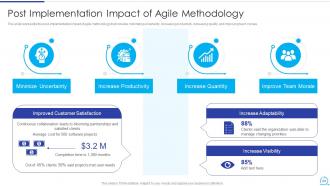
Slide 69: This slide showcases Post Implementation Impact of Agile Methodology.
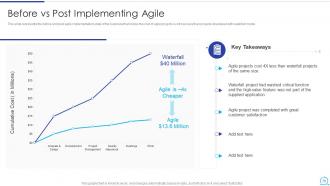
Slide 70: This slide represents the before and post agile implementation state of the business.
Slide 71: This slide displays Icons for Agile Methodology (IT).
Slide 72: This slide is titled as Additional Slides for moving forward.
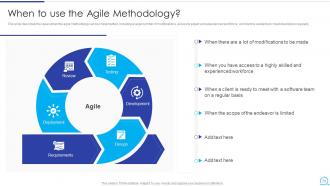
Slide 73: This slide describes the cases when the agile methodology can be implemented.
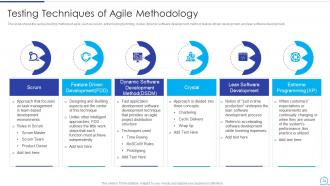
Slide 74: This slide shows the various testing methods of agile, such as scrum, extreme programming, crystal, etc.
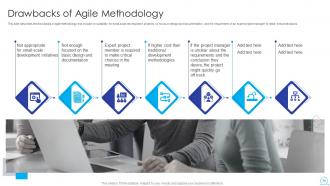
Slide 75: This slide describes the drawbacks of agile methodology that include no suitability for small-scale development projects.
Slide 76: This is About Us slide to show company specifications etc.
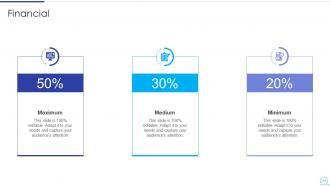
Slide 77: This is a Financial slide. Show your finance related stuff here.
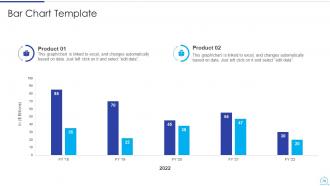
Slide 78: This slide presents Bar chart with two products comparison.
Slide 79: This slide displays Mind Map with related imagery.
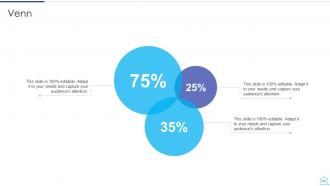
Slide 80: This slide depicts Venn diagram with text boxes.
Slide 81: This slide contains Puzzle with related icons and text.
Slide 82: This is an Idea Generation slide to state a new idea or highlight information, specifications etc.
Slide 83: This is a Timeline slide. Show data related to time intervals here.
Slide 84: This is Our Target slide. State your targets here.
Slide 85: This is a Thank You slide with address, contact numbers and email address.
Agile Methodology IT Powerpoint Presentation Slides with all 90 slides:
Use our Agile Methodology IT Powerpoint Presentation Slides to effectively help you save your valuable time. They are readymade to fit into any presentation structure.



















FAQs for Agile Methodology IT
So Agile basically has four core ideas: people matter more than rigid processes, actual working software beats endless docs, collaborating with customers trumps strict contracts, and being flexible is better than sticking to some master plan no matter what. Instead of planning everything upfront like waterfall (which honestly feels kinda outdated now), you work in short sprints with tons of feedback. Way less stressful! You'll iterate fast, pivot when needed, and keep stakeholders in the loop the whole time. The mindset shift is huge - change becomes your friend, not the enemy. I'd say start with 2-week sprints to get the hang of it.
Daily standups are game-changers - everyone just shares what they're doing and calls out any roadblocks. Sprint reviews and retros give people space to actually speak up without drama. Honestly, our best fixes came from retros where people finally said what was bugging them. Cross-functional teams mean you're always talking instead of hiding in your corner (which I used to do way too much). Start with just the daily standups if you're testing it out. You'll be shocked how much clearer everything gets when you know what's really happening.
So the main ones you'll run into are Scrum and Kanban - SAFe too if you're at a bigger company. Scrum's all about those structured sprints and daily check-ins, which is solid when you need predictable timelines. Kanban's more about visualizing your workflow and not taking on too much at once. Way less stressful when things keep changing, honestly. SAFe tries to scale everything up but gets pretty bloated (learned that the hard way). If your team thrives on structure, go Scrum. Need flexibility? Start with Kanban - you can always switch later.
Dude, agile is all about those short sprints - like 1-2 weeks max. You're constantly getting feedback instead of building something for months just to find out it's completely wrong (been there, it sucks). Daily standups help catch problems early, and sprint reviews let you pivot fast when priorities change. The whole thing works like mini-experiments where you can mess up small instead of spectacularly. Customer input gets baked in immediately rather than at the very end when it's expensive to fix. Honestly, it beats the hell out of those waterfall projects where you're locked into decisions from day one.
Honestly, agile's great for catching problems before they blow up. Those short sprints mean you're constantly checking what's working. Daily standups surface blockers early - yeah, they can get boring but they actually help. Your stakeholder demos happen so often that if you're building the wrong thing, you'll know fast. When risks pop up, you can pivot instead of finding out everything's broken at the end. Oh, and do proper retrospectives if you're not already - that's honestly where you'll get the best insights about what might go sideways.
Track your velocity and sprint burndowns first - that's the basic stuff. But honestly, customer satisfaction scores matter way more than perfect story point tracking. Time-to-market improvements are solid wins too. Don't skip team happiness surveys even though they sound kinda cheesy - cranky developers write terrible code, trust me. Defect rates and code review times tell you if you're actually shipping quality stuff. Oh, and how often you're delivering working software versus just... talking about it. Start with maybe 3 metrics max or you'll get stuck in measurement hell.
Honestly, just listen to their concerns first - don't brush them off. Most resistance comes from fear or they've been burned before. Get the skeptics involved in planning sessions so they feel like they have some control instead of stuff being dumped on them. Training's crucial because half the time people just think Agile is some corporate buzzword they don't get. Quick wins help build momentum early on. The cultural shift takes forever though, so be patient. Oh, and if leadership isn't actually backing this thing, you're basically screwed - your team will pick up on that immediately.
Think of Agile ceremonies as your team's heartbeat - they sync everyone up. Stand-ups catch problems early, retrospectives help you learn from mistakes (and wins), and sprint planning makes sure nobody's building random stuff. Yeah, it feels like meeting hell initially. But honestly? They prevent massive headaches later. The trick is keeping them short and focused - nobody needs a 30-minute standup about Karen's cat drama. Treat them like essential check-ins, not "optional if you're free" meetings. Your team's focus will get so much better. Trust me on this one.
Yeah, Agile cuts way down on documentation compared to waterfall stuff. You're not writing those massive requirements docs that sit in some folder forever. Instead you focus on user stories, quick sprint notes, basic specs - things people actually use. Face-to-face talks matter more than perfect documentation. I mean, you still document big decisions and technical bits, but you ask yourself "does this actually help us ship?" before spending hours writing it. Way less paperwork upfront, way more building actual software. It's honestly refreshing after dealing with those 50-page project plans nobody ever reads.
Skip the boring theory stuff and jump straight into workshops where people actually DO things. Pair your newbies with someone who's lived through Agile before - nothing beats learning on real work. Weekly retros are clutch for catching problems early (trust me on this one). Don't try implementing everything at once though - I've watched teams crash and burn that way. Just start with standups and user stories, then build from there. Your leadership better be cheerleading this transition too. Oh, and celebrate those little victories! You'll need the morale boost when things inevitably get messy.
Honestly, SAFe is what all the big companies go crazy for, but it's usually way too much. LeSS and Scrum of Scrums are solid alternatives though. You basically get multiple Agile teams running coordinated sprints - kinda like having several bands play the same song without stepping on each other. The trick is keeping those core Agile vibes while adding enough structure so teams don't go rogue. My advice? Don't dive into the deep end. Pick one framework and test it with maybe 2-3 teams first. Way easier than trying to transform your whole company overnight and dealing with that chaos.
Honestly, the biggest pain points are people hating change and having zero clue what their new roles actually are. Plus everyone expects magic overnight results - spoiler alert, that won't happen. Your stakeholders will probably freak out about the whole "figure it out as we go" thing since they're used to seeing every detail planned out from day one. I'd say start with solid training for your team, be super upfront about how messy the transition will be, and maybe just pilot with one group first? Get decent scrum masters who won't let things fall apart. Oh, and give it like 3-6 months minimum to actually stick.
Dude, Agile is so much better for keeping customers happy. You're shipping working stuff every few weeks instead of disappearing for months. They can actually play with features and tell you what sucks before it's too late. Sprint reviews are clutch - customers feel like they're part of the process instead of just waiting around hoping you don't mess up their vision. When priorities shift (and trust me, they will), pivoting is way easier. Honestly, those regular check-ins where they can touch and test everything? Game changer. Just don't skip the demos.
Honestly, get yourself an Agile coach - they're total game-changers. Your team will hit those weird roadblocks that no manual talks about, and coaches help you figure out the messy reality of actually doing Scrum. They'll catch bad habits before they stick and push your team through those awkward conversations about fixing processes. The mentoring part builds up your internal people so you're not just blindly following steps. You actually get why you're doing things. Oh, and don't try to coach everyone at once - figure out who needs the most help first and start there.
Honestly? Jira's probably your best bet if you don't mind the steep learning curve - that thing can be a beast to figure out at first. Azure DevOps is solid too for sprint planning and backlog stuff. Trello's way more chill if you want something visual and simple. Remote teams definitely need Slack or Teams for standup calls and random check-ins throughout the day. But here's the thing - pick whatever your team will actually stick with. I've seen teams choose the "best" tool then abandon it after two weeks. Better to start simple and add complexity later when you need it.
-
Thank you to SlideTeam. This presentation is exactly what I was looking for and is one of the reasons I subscribed immediately. It has made my life so much easier.
-
“Easy to use. I always wanted to have a quick search for products and SlideTeam has helped me have it.”
-
“Thank you to the SlideTeam. Your presentations look really skillful and have made my life so much easier.”