


Agile Playbook Template Powerpoint Presentation Slides




Try Before you Buy Download Free Sample Product
 Impress Your
 Audience
 100%
100% Editable
 Save Hours
 of Time


Agile playbook enables development teams to manage software development life cycle and current state assessment. It ensures teams and stakeholders align with goals associated with the pilot project. Here is an efficiently designed Agile Playbook template covering best practices for deploying agile. The template covers an agile overview in terms of fundamental principles of the agile manifesto, critical phases in the agile product development lifecycle, and agile project management workflow. The agile development strategies include agile framework and practices through scrum and Kanban. Essential components of agile such as product vision board, work prioritization, agile sprints, user story, etc., are presented over the deck. Agile project events such as release planning, iteration planning, and valuable meetings associated with agile project management are captured. Agile progress tracking is managed through a software development timeline roadmap, schedule planning, work breakdown structure, and overall progress tracking. The playbook covers information about the agile team along with key people involved. The cost estimation analysis is done by managing the agile project budget. The agile project progress is tracked through dashboards. Download it now.
People who downloaded this PowerPoint presentation also viewed the following :
Content of this Powerpoint Presentation
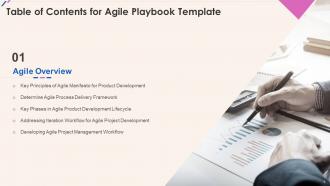
Slide 1: This slide introduces Agile Playbook Template. State Your Company Name and begin.
Slide 2: This is an Agenda slide. State your agendas here.
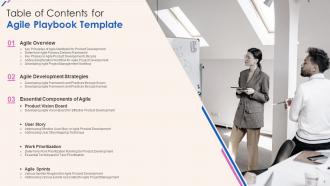
Slide 3: This slide presents Table of Content for the presentation.
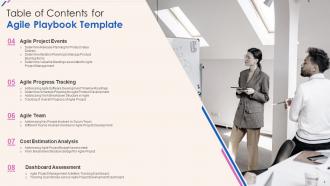
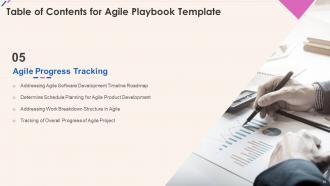
Slide 4: This is another slide continuing Table of Content for the presentation.
Slide 5: This slide highlights title for topics that are to be covered next in the template.
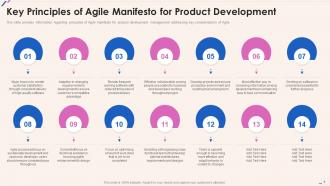
Slide 6: This slide shows Key Principles of Agile Manifesto for Product Development.
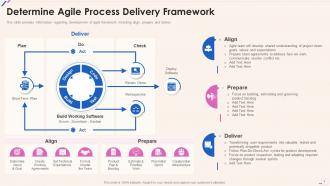
Slide 7: This slide presents Determine Agile Process Delivery Framework.
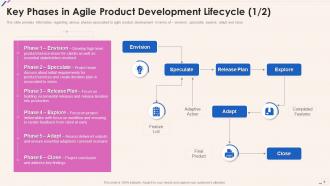
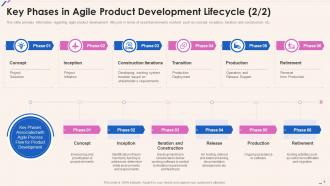
Slide 8: This slide displays Key Phases in Agile Product Development Lifecycle.
Slide 9: This is another slide continuing Key Phases in Agile Product Development Lifecycle.
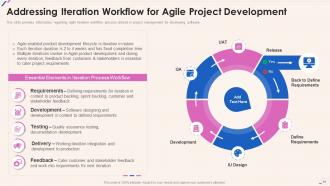
Slide 10: This slide represents Addressing Iteration Workflow for Agile Project Development.
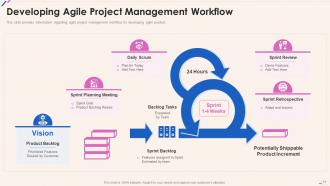
Slide 11: This slide showcases Developing Agile Project Management Workflow.
Slide 12: This slide highlights title for topics that are to be covered next in the template.
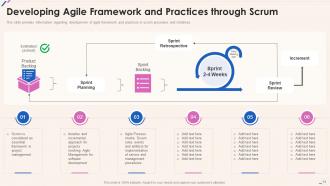
Slide 13: This slide shows Developing Agile Framework and Practices through Scrum.
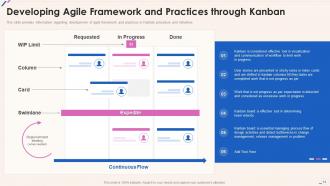
Slide 14: This slide presents Developing Agile Framework and Practices through Kanban.
Slide 15: This slide highlights title for topics that are to be covered next in the template.
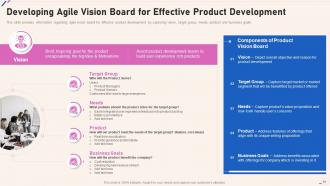
Slide 16: This slide displays Developing Agile Vision Board for Effective Product Development.
Slide 17: This slide highlights title for topics that are to be covered next in the template.
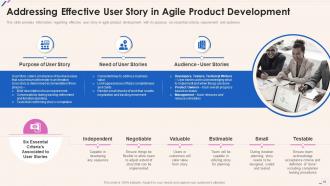
Slide 18: This slide represents Addressing Effective User Story in Agile Product Development.
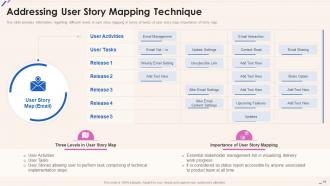
Slide 19: This slide provides information regarding different levels in user story mapping in terms of levels of user story.
Slide 20: This slide highlights title for topics that are to be covered next in the template.
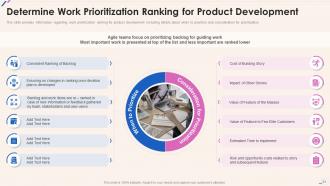
Slide 21: This slide represents Determine Work Prioritization Ranking for Product Development.
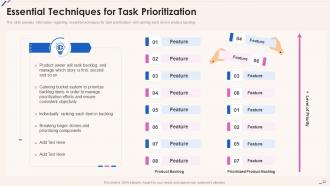
Slide 22: This slide provides information regarding essential techniques for task prioritization.
Slide 23: This slide highlights title for topics that are to be covered next in the template.
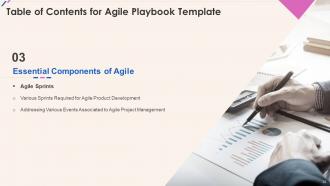
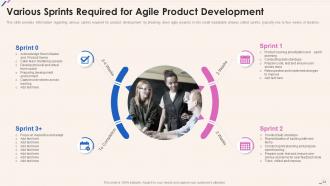
Slide 24: This slide showcases Various Sprints Required for Agile Product Development.
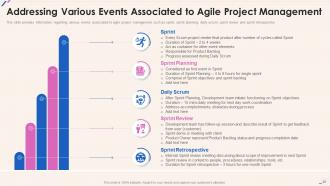
Slide 25: This slide shows Addressing Various Events Associated to Agile Project Management.
Slide 26: This slide highlights title for topics that are to be covered next in the template.
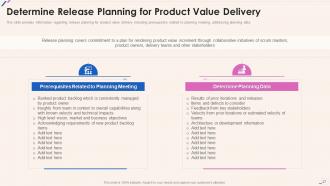
Slide 27: This slide presents Determine Release Planning for Product Value Delivery.
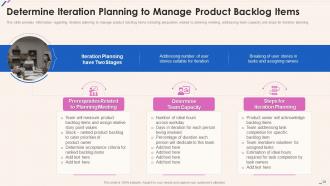
Slide 28: This slide displays Determine Iteration Planning to Manage Product Backlog Items.
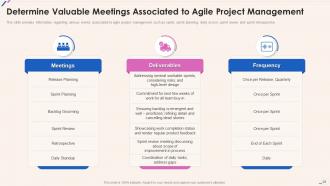
Slide 29: This slide represents Determine Valuable Meetings Associated to Agile Project Management.
Slide 30: This slide highlights title for topics that are to be covered next in the template.
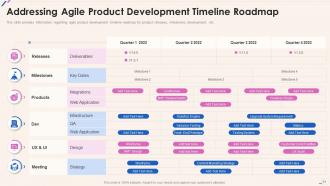
Slide 31: This slide showcases Addressing Agile Product Development Timeline Roadmap.
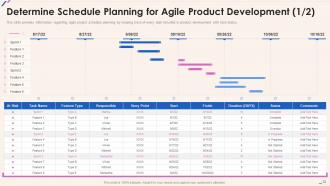
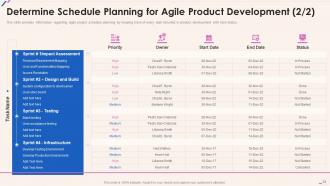
Slide 32: This slide shows Determine Schedule Planning for Agile Product Development.
Slide 33: This is another slide continuing Determine Schedule Planning for Agile Product Development.
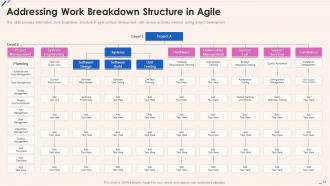
Slide 34: This slide presents Addressing Work Breakdown Structure in Agile.
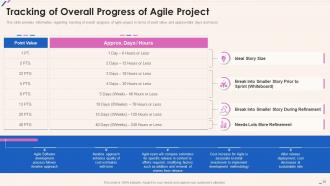
Slide 35: This slide displays Tracking of Overall Progress of Agile Project.
Slide 36: This slide highlights title for topics that are to be covered next in the template.
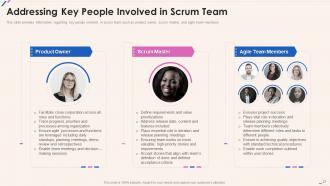
Slide 37: This slide presents Addressing Key People Involved in Scrum Team.
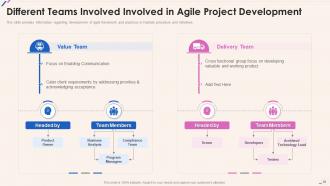
Slide 38: This slide represents Different Teams Involved Involved in Agile Project Development.
Slide 39: This slide highlights title for topics that are to be covered next in the template.
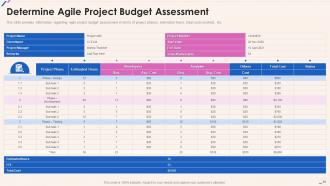
Slide 40: This slide showcases Determine Agile Project Budget Assessment.
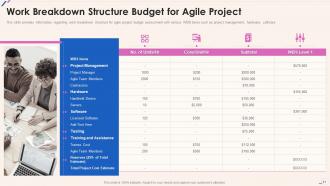
Slide 41: This slide shows Work Breakdown Structure Budget for Agile Project.
Slide 42: This slide highlights title for topics that are to be covered next in the template.
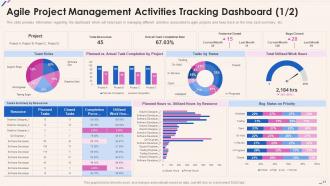
Slide 43: This slide presents Agile Project Management Activities Tracking Dashboard.
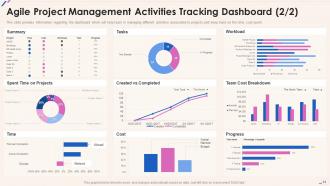
Slide 44: This is another slide continuing Agile Project Management Activities Tracking Dashboard.
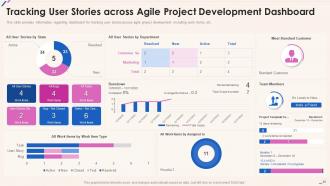
Slide 45: This slide displays Tracking User Stories across Agile Project Development Dashboard.
Slide 46: This slide showcases Icons for Agile Playbook Template.
Slide 47: This slide is titled as Additional Slides for moving forward.
Slide 48: This is Our Mission slide with related imagery and text.
Slide 49: This is Our Team slide with names and designation.
Slide 50: This is About Us slide to show company specifications etc.
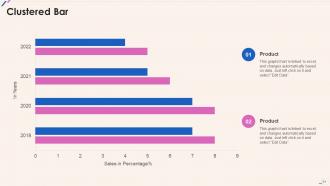
Slide 51: This slide provides Clustered bar chart with two products comparison.
Slide 52: This is Our Target slide. State your targets here.
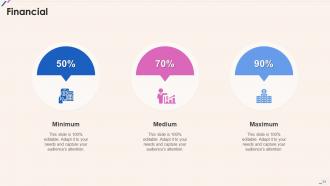
Slide 53: This is a Financial slide. Show your finance related stuff here.
Slide 54: This slide shows Post It Notes. Post your important notes here.
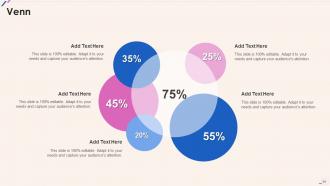
Slide 55: This slide depicts Venn diagram with text boxes.
Slide 56: This slide contains Puzzle with related icons and text.
Slide 57: This is a Comparison slide to state comparison between commodities, entities etc.
Slide 58: This is a Thank You slide with address, contact numbers and email address.
Agile Playbook Template Powerpoint Presentation Slides with all 63 slides:
Use our Agile Playbook Template Powerpoint Presentation Slides to effectively help you save your valuable time. They are readymade to fit into any presentation structure.












FAQs for Agile Playbook Template
Start with the obvious stuff - sprint planning, standups, retrospectives. That's your basic rhythm right there. Roles, definition of done, and backlog grooming are must-haves too. Don't skip estimation techniques (trust me on this one). Communication protocols matter more than you'd think, plus whatever tools you're actually using and escalation steps for when everything goes to hell. Templates for user stories help a ton. Oh, and acceptance criteria - almost forgot that. Honestly though, build it around what's actually breaking for your team. No point having a perfect playbook that doesn't solve real problems.
Honestly, it's like having a cheat sheet for your whole team. You document stuff like how you run standups or deal with blockers, so nobody's constantly asking "wait, how do we do this again?" New people can actually figure out what's going on without bugging everyone with questions. The best part? When your team helps update it, everyone actually cares about following the process. I'd start small - just write down one thing you guys already do well. Oh, and it gives you consistent ceremonies and roles so there's less confusion about who does what. Way less "what are we supposed to be doing" moments.
Look, forget those cookie-cutter templates everyone pushes. Your team's size and experience level should drive everything - the ceremonies, roles, all of it. Most teams screw up by copy-pasting instead of actually thinking about their workflow. Customize the retrospective formats and definition of done stuff to fit your culture and tech stack. Oh, and don't treat it like it's set in stone - that's huge. Schedule monthly reviews to fix what's broken. Honestly, the teams that iterate on their process are the ones that don't hate agile six months later.
So basically it's like your team's cheat sheet for what works and what doesn't. After each retro, you dump in the lessons learned and solutions that actually helped. Way better than crossing your fingers hoping someone remembers that thing from three sprints ago! You'll start seeing patterns emerge - like why deployments keep breaking on Fridays (spoiler: they always do). It becomes this living document where your team can look up "oh right, we fixed this exact problem before." Honestly, it beats starting from scratch every time something goes sideways.
Honestly, you HAVE to get your stakeholders involved from the start - they're the ones who'll actually use this thing. I've watched so many playbooks collect dust because someone built them in a vacuum. Get them helping you write sections and test stuff out as you go. Their pain points matter way more than whatever sounds good on paper. Schedule feedback sessions throughout (not just at the end when it's too late). Otherwise you'll end up with something that looks perfect but nobody wants to follow. Trust me on this one.
Don't make metrics an afterthought - build them right into your playbook sections from the start. Each ceremony needs its own KPIs: velocity trends for sprint planning, burn-down charts for standups, retrospective action completion rates. I've watched so many teams try to add metrics later and it just doesn't work. Pick both leading indicators (story points committed) and lagging ones (features delivered). Honestly, less is more here - stick to 3-5 metrics that'll actually change how people work. Just weave the metric collection steps into whatever workflow templates you're already using.
Don't treat your playbook like it's set in stone - that's the biggest mistake I see. Teams spend forever creating these massive documents, then never touch them again. Keep yours short and actually useful, not some 50-page monster nobody will read (trust me on this one). You also can't just dump it on people. Get everyone involved in building it from day one. Otherwise they'll ignore it completely. Make it flexible for your specific situation, not some generic template. Oh, and review it regularly during retros - what worked, what didn't, all that stuff. It should evolve as your team does.
Honestly, it's a lifesaver. New hires get your team's processes, sprint schedule, definition of done - all that stuff that normally takes forever to pick up. No more constant "wait, how do we do this again?" interruptions (which drives me nuts tbh). You can throw in your specific tools and weird team habits too. People can just check it instead of bugging you with the same questions over and over. Oh, and definitely update it when things change or it becomes useless fast.
Yeah, pretty much any Agile framework works - Scrum, Kanban, SAFe, whatever you're using. Templates are usually flexible since they focus on the basic stuff like ceremonies and roles instead of being super rigid about one approach. Honestly? Don't overthink it. Start with what your team already knows and just tweak the template sections to match your current setup. The whole point is making it work for you guys, not cramming your process into some perfect textbook framework. I've seen teams waste weeks trying to make everything "proper" when they could've just started with what felt natural.
Your Agile Playbook can totally save you here - document how you'll actually run standups across time zones (this is harder than it sounds). Pick specific tools for different convos and create protocols so you're not drowning in pointless meetings. I'd start with your biggest remote headaches first, then build playbook sections around those. Include stuff like keeping team culture alive virtually and giving quieter people real ways to speak up. Async decision-making needs its own rules too. The trick is making these remote practices just as solid as your old in-person ones were.
Honestly, I'd grab some sprint planning and user story templates to go with that Agile Playbook. Jira or Trello work well for tracking stuff digitally - Azure DevOps too if your company's into that. Burndown charts are where it's at though, they make everything so clear visually. Oh, and don't forget estimation templates like planning poker cards. Daily standup formats help too. The real trick? Pick templates your team will actually use consistently. I've seen so many nice documents just sit there doing nothing because people found them too complicated or whatever.
Oh man, totally make that playbook a living thing. Update it every quarter based on what's actually happening in your sprints - not just what sounds good on paper. Add new stuff when your team finds something that clicks. Toss out the dead weight that isn't working anymore. I swear, most teams write these things once and then never touch them again, which is such a waste. Set a calendar reminder or you'll definitely forget (I learned this the hard way). Pull in feedback from retrospectives and make sure it matches your current team setup. Trust me, future you will appreciate it.
Oh man, cultural stuff is huge for Agile - probably the most underestimated thing ever. Like, some teams won't speak up in standups because of hierarchy expectations, while others need way more documentation than the "just talk it out" approach. High-context cultures especially need clearer communication structures. You can't just copy-paste the same ceremonies everywhere and expect magic. I'd honestly start by just asking your team how they prefer to communicate and work together. Then tweak your processes around that. Makes such a difference when you're not fighting against people's natural work styles.
Honestly, get your team leads on board first - they'll sell it way better than any top-down memo. Make it ridiculously easy to find stuff (seriously, if someone has to hunt through three menus, they'll just make something up instead). Show people real examples where following the playbook would've saved their butts. Like that time when... well, you know what I mean. Quick training sessions work better than long boring ones. Oh, and actually listen when people complain about what's missing or confusing. You'll probably be wrong about what they actually need versus what sounds good on paper.
Set up regular check-ins like sprint retros and weekly pulse surveys. Also carve out time in stand-ups for playbook feedback. Make it dead simple for people to share thoughts - maybe a Slack channel or anonymous suggestion box (those actually work better than you'd think). Do quarterly reviews where everyone can suggest changes or call out broken stuff. Here's the big one though: when someone gives feedback, actually do something about it and tell the team what changed. Otherwise people just stop caring and won't bother next time.
-
It saves your time and decrease your efforts in half.
-
Perfect template with attractive color combination.