


Agile Project Management Lean Agile Project Management Playbook





Try Before you Buy Download Free Sample Product
 Impress Your
 Audience
 100%
100% Editable
 Save Hours
 of Time


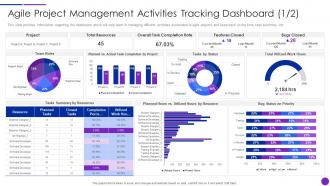
This slide provides information regarding the dashboard which will help team in managing different activities associated to agile projects and keep track on the time, task summary, etc.
People who downloaded this PowerPoint presentation also viewed the following :
Agile Project Management Lean Agile Project Management Playbook with all 6 slides:
Use our Agile Project Management Lean Agile Project Management Playbook to effectively help you save your valuable time. They are readymade to fit into any presentation structure.





FAQs for Agile Project Management Lean Agile
Okay so Agile has four core ideas: people matter more than rigid processes, actually working software beats endless documentation, collaborating with customers trumps strict contracts, and adapting to change instead of sticking to some perfect plan you made months ago. Traditional project management is like "let's plan everything upfront and pray nothing changes" - which honestly never works anyway. Agile does short 2-week sprints with daily check-ins instead. Way more realistic! Your team can actually pivot when users want something different. Just try those short sprints first and you'll see what I mean.
Honestly, Agile just makes everyone talk way more - daily standups, sprint planning, all that stuff becomes routine instead of something you forget to do. You catch problems super early because people are always updating each other on what's blocking them. The cross-functional teams thing actually works too, breaks down those weird department walls where nobody talks to each other (which drives me crazy). Sprint reviews keep stakeholders happy since they see progress regularly. If you're just starting out, try daily standups first - even that small change will totally shift how your team communicates. Way less guessing what people need.
So the main ones are Scrum, Kanban, and SAFe. Scrum's got those sprint cycles with specific roles - Scrum Master, Product Owner, all that. Pretty structured but solid for complicated stuff. Kanban's way more chill, just focuses on seeing your workflow and not overloading people with too much at once. No strict timelines. I'm kinda biased toward Kanban since it doesn't make you feel trapped in these rigid boxes, you know? SAFe is what big companies use when they're trying to do agile with like 50 teams. Start with Scrum if you want rules, Kanban if flexibility matters more.
Honestly, MoSCoW prioritization works great for this - you rank features as Must/Should/Could/Won't have based on business value. But here's the thing about changing requirements: don't fight them! Agile was literally built for this chaos. I handle changes through sprint reviews where stakeholders see progress and request tweaks, plus daily standups catch problems early. Keep your backlog flexible so you can reprioritize each sprint. First step? Accept that your original plan will totally change. Then just focus on delivering the highest-value stuff first. Works every time.
So the Product Owner is your go-between for business and dev teams - they decide what gets built and why. They handle the product backlog, write user stories, and keep priorities straight. Basically the "voice of the customer" who can actually make decisions without dragging everyone through meeting hell (which is honestly a godsend). Requirements come from stakeholders, then they turn those into real tasks the team can work with. Oh, and make sure yours is actually around and has decision-making power - I've seen projects die waiting for approval on tiny stuff.
Hey! So you'll want to get stakeholders involved way beyond just those sprint reviews. Have them jump into planning sessions and give feedback during demos. Weekly check-ins work better than dailies - those get pretty tedious for outside people. Show them visual stuff like burndown charts so they can actually see what's happening. Here's the thing though - you've got to actually USE their feedback or they'll get super frustrated feeling like you're just going through the motions. Start by figuring out who your main stakeholders are, then set up whatever meeting rhythm actually works with their crazy schedules.
So we track progress through sprint reviews and burndown charts - shows you how much work gets done each sprint. Daily standups help catch problems early, which is clutch. Most people use Jira or Azure DevOps (Trello works too if you want something simpler). Jira's honestly kind of a beast to learn but worth it. Retrospectives are huge for improving your process between sprints. Oh, and velocity measurements help you predict future sprints better. The whole point is everyone sees the same data so there's no confusion about where things stand. I'd start with basic burndown charts first - don't overcomplicate it.
Honestly, the biggest pain points are gonna be cultural pushback and everyone fumbling through the new processes. Your team's used to waterfall's structured phases, so daily standups and short sprints will feel like chaos initially - but that's expected. Less documentation throws people off too, plus the whole collaborative thing where everyone has input instead of just following orders. My advice? Get proper training lined up first, maybe bring in a good Scrum Master if you can swing it. Oh, and definitely pilot it on one project before rolling it out everywhere. Going all-in immediately is a recipe for disaster.
Honestly, agile is pretty smart about risk management. You're catching problems early instead of getting blindsided later. Each sprint surfaces issues fast - way better than the old waterfall days where everything blew up at the end. Daily standups are actually useful for this (I know, shocking). Your team can spot red flags before they become disasters. Since you're shipping working software regularly, stakeholders see what's happening and can pivot if things look off. Retrospectives help too - you'll learn from the mess-ups. Pro tip: bake risk conversations into sprint planning from day one.
Oh man, iterative development is a lifesaver! You build stuff in tiny pieces and get feedback super fast. Honestly, it's way better than spending months on something only to find out users hate it. Each round, you're improving based on what people actually tell you - not just what you think they want. Plus your team won't get confused about priorities, and if things change (they always do), you can switch direction without losing your mind. Pro tip: tackle the scariest features first so you know early if your idea's gonna work.
Honestly, video calls are your best friend here - daily standups, planning sessions, all of it. Yeah, screen fatigue sucks but seeing faces actually matters more than I thought it would. Keep your Jira or whatever updated religiously, like make it THE place everyone checks. Document everything since you can't just tap someone on the shoulder anymore. Oh, and set clear expectations for response times or you'll go crazy waiting. The tricky part? Recreating those random hallway chats. We do virtual coffee breaks and have random Slack channels for memes and stuff. Sounds cheesy but it works.
Oh retrospectives! So after each sprint wraps up, your team basically sits down and does a "what the hell just happened" session. Talk through what went smoothly and what made everyone want to pull their hair out. The trick is actually picking 1-2 things to fix next time instead of just complaining (though honestly, some complaining helps). Like if your standups are becoming novels or you're constantly waiting on other teams. Create a vibe where people won't get roasted for being real about problems. That's when you actually make progress instead of repeating the same mistakes forever.
Yeah, Agile totally works outside software! The main ideas - quick iterations, constant feedback, team collaboration - you can use anywhere. Marketing teams do 2-week campaign sprints and pivot fast based on results. Healthcare uses it for patient care stuff, which honestly makes so much sense. Even those daily check-ins are super useful. Instead of waiting months for some perfect final thing, you deliver value in small chunks. Figure out what your "deliverables" actually are, then chop them into testable pieces you can improve on. It's way less stressful than the old "launch and pray" approach.
Focus on just enough docs to actually meet your needs - not what you think you're supposed to have. User stories, acceptance criteria, sprint summaries work great because they guide development AND check the compliance boxes. Honestly, this approach felt weird at first, but it really does work. Automate whatever you can from your project tools, and bake documentation into your Definition of Done. Figure out which compliance stuff you truly can't skip, then find the simplest way to hit those requirements. Way less painful than drowning in upfront paperwork.
Okay so definitely start with velocity and burndown charts - they're super easy to set up and you'll immediately see your team's rhythm. Burndown shows if you're gonna hit your sprint goals or crash and burn. Track cycle time too, like how long stuff takes from start to finish. Lead time is gold for stakeholders since it shows conception to customer delivery. Oh and don't ignore the squishy stuff - team happiness surveys and retro feedback matter way more than people think. Capacity utilization and post-release bugs are worth watching but honestly, velocity and burndown will give you the biggest bang for your buck right away.
-
Very unique and reliable designs.
-
Thank you for offering such fantastic custom design services. The team is really helpful and innovative. In a very short time, I received my personalized template.