


Quality Control Plan For Manufacturing Process Quality Assurance Plan And Procedures Set 3




Try Before you Buy Download Free Sample Product
 Impress Your
 Audience
 100%
100% Editable
 Save Hours
 of Time


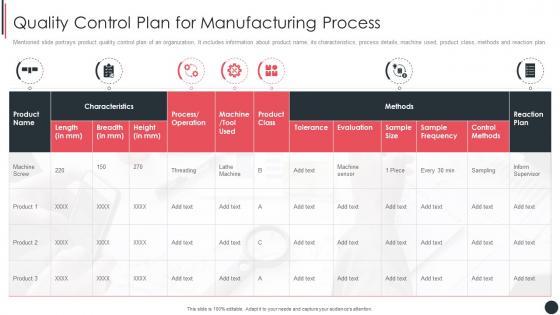
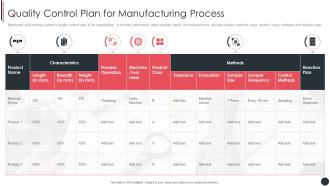
Mentioned slide portrays product quality control plan of an organization. It includes information about product name, its characteristics, process details, machine used, product class, methods and reaction plan.
People who downloaded this PowerPoint presentation also viewed the following :
Quality Control Plan For Manufacturing Process Quality Assurance Plan And Procedures Set 3 with all 6 slides:
Use our Quality Control Plan For Manufacturing Process Quality Assurance Plan And Procedures Set 3 to effectively help you save your valuable time. They are readymade to fit into any presentation structure.





FAQs for Quality Control Plan For Manufacturing Process Quality Assurance Plan And
Start by mapping out what you're already doing - that's honestly the easiest first step. Then add clear quality standards for your deliverables and set up inspection checkpoints throughout the process. Make sure someone's actually responsible for each piece (this gets messy fast otherwise). Your acceptance criteria need to be super specific - vague stuff kills these plans every time. Build in a solid process for fixing things when they go wrong, because they will. Oh, and don't forget documentation requirements and regular reviews to keep everything current. Sounds like a lot but it's pretty straightforward once you break it down.
Honestly, first thing you gotta do is figure out what regulations actually apply to your stuff. FDA for food/pharma, ISO for manufacturing, HIPAA if you're dealing with health data - that kind of thing. Each industry's totally different in terms of how strict they are. Map those requirements straight into your QC processes and paperwork. Definitely get someone who knows your industry's compliance stuff involved, whether it's someone internal or you hire a consultant. Train your team on the specific standards too. I learned this the hard way - you can't just wing it with generic processes. Research what you're actually required to do first, then build everything around those must-haves.
Look, data analysis is what makes or breaks your QC plan. Without it, you're just guessing where problems might pop up instead of knowing where they actually are. I'd grab at least 3-6 months of production data first - that's your foundation for setting realistic control limits and figuring out sampling frequencies. Historical patterns show you which processes are your biggest headaches (trust me, it's never what you expect). The numbers also give you solid baseline metrics to work from. Too many plans crash because someone built them on hunches rather than real data. Don't be that person.
Honestly, tech is a game-changer for QC stuff. IoT sensors can watch your processes 24/7, and AI spots patterns way better than we do manually. Real-time dashboards on the cloud let you see everything at once - super helpful. Your team will love digital checklists on mobile apps instead of dealing with paper forms that always get lost (been there!). Predictive analytics catches problems before they cost you big money. I'd start small though - just pick one area where manual tracking is driving you crazy and go digital there first.
Okay so first thing - set up quality standards that actually make sense, not some wishy-washy "do good work" garbage. Check in regularly during the process instead of waiting until everything's done and you're screwed. Write down everything, even the obvious stuff (you'll thank me later when someone asks "wait, why do we do this again?"). Train people properly and explain the why behind each step. Nobody likes following random rules. Oh and honestly? The most crucial part is updating your plan based on what's really happening, not whatever fantasy timeline you started with.
Honestly, you've got to connect your quality stuff directly to what executives actually care about - money, basically. Don't just track defect rates by themselves. Show how they impact customer retention or warranty costs instead. Trust me, those C-suite folks couldn't care less about your process control charts, but mention that quality improvements cut returns by 15%? Now you're speaking their language. Also, make sure whatever quality targets you set actually help with their bigger goals - like expanding into new markets or whatever. It's all about translating quality wins into the metrics they're already obsessing over.
Mix quantitative stuff with qualitative - that's your sweet spot. Defect rates and customer satisfaction scores are obvious picks. First-pass yield and rework percentages too. Process capability indices are clutch if you're in manufacturing, honestly shows whether your processes can actually hit the specs. Cycle time and cost of quality round it out nicely. Here's the thing though - don't go crazy with metrics. Pick maybe 5-7 max that actually connect to your quality goals. I'd start with whatever your customers care about most, then figure out the rest from there. Works way better than just tracking random stuff.
Get your team in on this from the start - don't just dump a finished plan on them. Have them spot the quality issues in their own areas first. They know where stuff goes wrong better than you do. Run some workshops where different departments can actually talk through what realistic standards look like. I've watched so many QC plans crash and burn because someone wrote them alone in their office! Pick quality champions from each area, then let everyone review and suggest changes before you lock it down. Oh and honestly? This whole approach just works better than the top-down thing.
Honestly, your biggest headache will be people pushing back - nobody likes change, even when it's good for them. Resources and training always fall short too. Then you've got messy processes, documentation that's all over the place, and management who approved everything but aren't really behind it (classic, right?). Different departments interpret quality standards however they want, which creates chaos. Start with small pilot programs first - you need some quick wins to prove it works. Lock down executive support before going company-wide or you're screwed. Deal with the people drama first, then fix the process stuff.
So basically build in regular check-ins - like monthly or quarterly sit-downs where your team digs into defect patterns, customer complaints, all that stuff. The trick is actually using this feedback to change your processes instead of just making reports nobody reads (we've all been there). Give your frontline people a direct way to call out problems they're seeing. Connect your inspection data to real improvements. Oh and make sure it's not some static document - it should evolve as you learn what works and what doesn't. Think of it as your QC plan that actually grows with you.
Honestly, you NEED that paper trail - it's what saves your butt during audits when they want proof you followed everything correctly. Memory is garbage when you're juggling ten different processes, trust me on this. Good records help you spot patterns when stuff goes sideways and make training new people way smoother. Real-time documentation beats trying to piece things together later (learned that the hard way). Without it, you can't tell what's actually working or make smart changes to improve things. It's basically the difference between making educated decisions and just winging it.
Look, officially you're supposed to check your QC plan yearly, but that's cutting it close. Quarterly makes way more sense if your industry moves fast or regulations keep shifting. Update it whenever you hit new regs, process changes, complaints, audit findings - basically when your risks change. Nobody wants to be frantically updating everything the night before an audit (been there, not fun). Just set those calendar reminders now and treat it like changing your oil. Oh, and if you're dealing with FDA stuff, they're particularly picky about this.
Look, customer feedback is your reality check for whether your QC plan actually works. Yeah, you might have amazing processes on paper, but if people are still mad about the same stuff? You're missing something big. Their complaints show you exactly where your quality checks are failing. I've seen companies ignore this and just keep making the same mistakes over and over - it's painful to watch. Short bursts of customer anger usually point to specific problems your internal testing missed. Set up quarterly reviews using their feedback to fix your checkpoints. Trust me, it's way better than finding out problems exist when angry emails start flooding in.
Honestly, just focus on the basics first - don't overcomplicate it. Figure out where defects hurt you most (money or angry customers) and start there. Simple checklists work way better than expensive software when you're starting out. Pick someone to be your quality person who can catch problems and write stuff down. I've seen too many companies create these elaborate plans that nobody actually uses. Better to have something simple that you'll actually stick with. Track the stuff that really matters, keep it consistent, then add more later once you've got the hang of it.
Honestly, hands-on training beats reading manuals every time - people just retain way more when they're actually doing the procedures. I'd start with interactive workshops where they practice the real stuff, then have experienced team members shadow the newbies for a bit. Quick reference guides at their workstations are clutch too. Regular refresher sessions help since protocols change (we learned that the hard way at my last job). Test them with practical scenarios before letting them loose on their own. Oh, and checklists are your friend - keeps everyone on track without having to memorize everything.
-
Thanks to SlideTeam, we have an ideal template to present all the info we need to cover. Their slides give our numbers and projections a more clear and enchanting look.
-
The pricing page of this website is very sorted. I felt no pain while buying the PPTs.