


History Timeline Showing Evolution Of Quality Quality Assurance Plan And Procedures Set 2




Try Before you Buy Download Free Sample Product
 Impress Your
 Audience
 100%
100% Editable
 Save Hours
 of Time


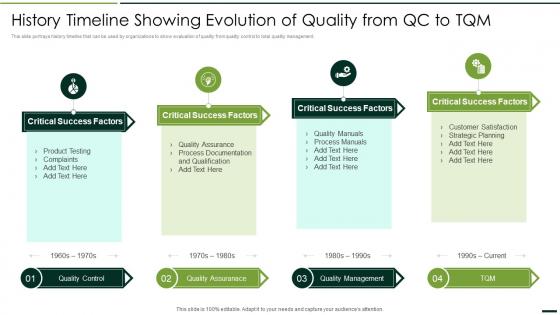
This slide portrays history timeline that can be used by organizations to show evaluation of quality from quality control to total quality management.
People who downloaded this PowerPoint presentation also viewed the following :
History Timeline Showing Evolution Of Quality Quality Assurance Plan And Procedures Set 2 with all 6 slides:
Use our History Timeline Showing Evolution Of Quality Quality Assurance Plan And Procedures Set 2 to effectively help you save your valuable time. They are readymade to fit into any presentation structure.





FAQs for History Timeline Showing Evolution Of Quality Quality Assurance Plan And
Dude, the testing world has changed so much. We went from doing everything manually to automating like crazy. Then Agile hit in the 2000s and flipped everything. Around 2010-2015, CI/CD and DevOps became huge - totally changed where QA sits in the process. Now we've got AI tools doing stuff that used to take forever. The speed is honestly insane sometimes. Shift-left testing is pretty standard now too, plus everyone's doing API-first approaches. But here's the thing - QA isn't just about catching bugs anymore. It's way more about preventing them from happening in the first place.
Automation completely flipped QA on its head. Instead of clicking through the same boring tests over and over, you get to do the interesting stuff - exploratory testing, hunting down weird edge cases, actually thinking about how users will break things. The automated tests handle all that repetitive regression work. Honestly, I wish this had happened sooner because catching bugs early in development is so much better than finding them after everything's "done." You basically go from being a bug finder to a bug preventer, which feels way more valuable. Start with automating whatever manual tests make you want to bang your head against the wall.
Honestly, AI is changing QA in some crazy ways. Test case generation happens automatically now, and bug detection catches stuff we'd totally miss. Machine learning gets better over time by studying your code patterns and past failures - it's actually pretty smart about predicting where things might break. Regression testing used to be such a pain, but AI handles it way more efficiently than doing it manually. The testing cycles are insanely faster now too. My advice? Don't go overboard right away. Just grab one AI testing tool for your current project and see how it feels. You can always expand from there once you get the hang of it.
So basically, ISO and CMMI are like the rulebooks most QA teams use now. ISO 9001 gives you solid quality management foundations. CMMI helps mature your dev processes, though it can be a real pain sometimes - super heavy. These frameworks made QA way more systematic than before, which is good. Most clients expect you to have ISO standards at minimum now. Your org should probably get aligned with them if you haven't already. Oh, and everything's way more measurable these days because of this stuff. Makes tracking improvements actually possible.
Ugh, the speed thing is brutal - you're cramming tests into these tiny sprints but can't let bugs slip through. Requirements change constantly too, which drives me nuts. Half the time you're testing incomplete features while dealing with CI breaking every other day. Documentation? Always outdated because devs keep changing stuff. You'll be automating tests like crazy but still need manual testing for the weird edge cases. Oh and forget that old "test at the end" approach - now QA has to be involved from day one. It's chaotic but you get used to the madness.
Dude, user feedback has totally flipped QA on its head. We used to just test everything at the end, but now you're getting real insights from actual users way earlier in development. Beta programs, user acceptance testing, A/B tests - they're all just part of the normal flow now. It's wild how much people will share if you actually listen to them. Quality isn't just about squashing bugs anymore either. Does your product actually fix someone's problem? That's what matters. Oh, and definitely build those feedback loops into your testing cycles if you haven't - trust me on this one.
So with DevOps, QA isn't this separate thing that happens at the end anymore - it's baked into everything. Your tests run continuously, catching bugs way earlier. Honestly, it's a game changer when teams actually do it right. Developers and QA work together from the start instead of throwing code over the wall. Way faster releases too. The whole "testing phase bottleneck" thing becomes less of a nightmare. Oh, and definitely start by automating your most critical tests first - easiest place to see quick wins without going crazy trying to automate everything at once.
Focus on defect detection rates first - how many bugs you're catching vs what customers find. Test coverage percentages matter too. Time-to-market is critical because nobody wants QA slowing everything down. Track escaped defects and customer satisfaction scores. Honestly, trends over time tell you way more than just looking at numbers from one sprint. Oh, and don't go crazy with metrics right away. Pick 3-4 that your stakeholders actually care about and build from there. You can always add more later once you've got the basics down.
Honestly, AI and machine learning are about to flip QA on its head. Start playing with AI-powered testing tools now - seriously, even just messing around will give you a huge advantage. Automated test generation is getting crazy good, plus predictive bug detection and smart test prioritization are becoming the norm. Shift-left testing's evolving fast with better integration tools. Cloud-native platforms will finally solve those nightmare setup issues we all hate. API testing automation is blowing up too since everything's microservices now. I probably sound like a broken record about AI, but it's genuinely the biggest shift I've seen in years.
Oh man, this is such a real thing! Japan's all about that Kaizen mindset - prevent problems before they happen. Germans? They document EVERYTHING and follow processes to a T. Meanwhile we Americans are usually rushing to ship fast, sometimes cutting corners on thoroughness (guilty as charged lol). Asian teams tend to test collaboratively while Western cultures do more solo verification work. Honestly, if you're working with international teams, take time upfront to understand how they approach QA. It'll save you headaches later when processes clash.
So QA basically catches all the broken stuff before customers see it - saves you from angry "why doesn't this work??" emails. Better testing means you ship products that actually work like people expect them to. We find some absolutely ridiculous bugs during testing that would've been embarrassing honestly. It builds trust when things just... work. Support tickets drop too. I'd start by looking at what customers complain about most, then see where your testing is weak in those areas. You'll probably find some obvious fixes that'll boost your satisfaction scores pretty quick.
Honestly, you can't avoid automation testing anymore - it's just the reality now. API testing and some coding skills are essential too (Python or JavaScript are solid choices). Cloud platforms? Yeah, you'll need those as well. Communication matters way more than people think since you're always working with devs and PMs. CI/CD pipelines are where everything happens these days - manual testing alone won't cut it. Everything's moving left in the development cycle, so QA's getting more integrated. My advice? Pick one automation framework first and actually get good at it before jumping around. Trust me on that one.
Dude, you literally can't stay still in QA anymore. Tech moves way too fast - skills from two years ago already feel ancient. AI testing tools are everywhere now, which is kinda wild if you think about it. Your team needs to block out time weekly for learning new frameworks and automation stuff. Online courses, messing around with tools, whatever works. The webinar thing gets old fast though, not gonna lie. Pick one skill gap that's bugging you most and start there. Otherwise you'll just get overwhelmed trying to learn everything at once.
Oh nice question! Toyota's the gold standard here - they basically flipped QA from "catch problems later" to "prevent them from happening." Everyone owns quality, not just one team. Amazon does something similar with their delivery obsession thing. Netflix went totally crazy and started doing chaos engineering instead of regular testing (which sounds terrifying but apparently works?). Microsoft ditched their old waterfall approach for DevOps with continuous testing built right in. Honestly, I'd start with Toyota since their stuff works across pretty much any industry. Their whole philosophy will give you a good framework for whatever transformation you're planning.
Stop treating QA like some final checkpoint - that's where teams screw up. Get your testers involved right from sprint planning and code reviews. Have them write test cases while you're still figuring out requirements. Automate tests so they run with every single build. Cross-train people too - devs should write basic tests, QA needs to get the ops side. I mean, we had one project where QA didn't even know how deployment worked and it was a mess. Break down those walls between teams. Make quality everyone's job, not just something you dump on QA at the end.
-
“I've always gotten excellent slides from them and the customer service is up to the mark.”
-
Fantastic collection of visually appealing PowerPoint templates. They certainly uplift the look of the presentation.