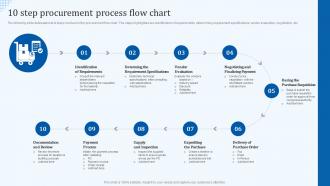
10 Step Procurement Process Flow Chart

Rating:
80%
10 Step Procurement Process Flow Chart
Slide 1 of 6
Favourites Favourites

Try Before you Buy Download Free Sample Product

Audience Impress Your
Audience
Editable 100%
Editable
Time Save Hours
of Time
The Biggest Sale is ending soon in
0
0
:
0
0
:
0
0
Rating:
80%
The following slide delineates list of steps involved in the procurement flow chart. The steps highlighted are identification of requirements, determining requirement specifications, vendor evaluation, negotiation, etc. Presenting our set of slides with name 10 Step Procurement Process Flow Chart. This exhibits information on ten stages of the process. This is an easy-to-edit and innovatively designed PowerPoint template. So download immediately and highlight information on Payment Process, Supply And Inspection, Expediting The Purchase.

FAQs for 10 Step Procurement

So basically you've got four main steps: figure out what you actually need, pick your vendor, hash out the contract, then keep tabs on how they're doing. Honestly, that first part - defining your needs - is way trickier than people think. Then you research suppliers and evaluate them. Contract negotiation comes next, followed by ongoing performance monitoring once you're up and running. Oh, and most places have approval checkpoints between each stage based on how much you're spending. I'd map those out upfront because that's where things usually get stuck. Nothing worse than waiting weeks for someone's signature!

Supplier evaluations are basically report cards that decide who gets your business. You're looking at quality, reliability, pricing, delivery times - all that stuff. Honestly, they're pretty boring to fill out but you can't skip them. Good scores mean vendors get preferred status, better deals, and you'll prioritize them when things get tight. Bad scores? That's how contracts get terminated or vendors end up on improvement plans. The paperwork part is annoying but you've got to document everything consistently. This data literally drives every decision you make about vendor relationships, so it's worth doing right.

Dude, procurement without good tech is brutal these days. AI handles supplier risk stuff, e-procurement platforms make workflows way smoother, and analytics catch savings you'd totally miss doing it by hand. Real-time spend visibility is huge too - you actually know what's happening with your budget. Contract management gets automated which honestly saves so much headache. The trick is finding tools that play nice with whatever systems you're already stuck with. Otherwise you just end up with more disconnected platforms to juggle. It's like having a smartphone but still using a flip phone for calls, you know?

Stop treating compliance like something you deal with later - build it right into your workflow from the start. Get procurement software that won't let people skip your policies. Set approval limits and make documentation mandatory at every step. Honestly, most screw-ups happen when people are in a hurry and start cutting corners. Make your process idiot-proof because we're all idiots when we're stressed, right? Run audits regularly - they'll catch problems before they blow up. Start by writing down what you're doing now and figure out where things usually fall apart.

Budget's gonna be your biggest pain point, trust me. Then you've got vendor selection - total nightmare. Approval processes? They'll drag on for weeks and completely wreck your timeline. Stakeholders will give you vague requirements, compliance stuff comes out of left field, and don't even get me started on supply chain issues. Oh, and departments never talk to each other properly. My buddy went through this last year and said the same thing. Start mapping your approval workflow now and pad your timeline with extra weeks. Document literally everything because people will 100% change their minds later and act like they never said the original thing.

Okay so traditional procurement is basically just buying stuff when you need it - pretty reactive. Strategic sourcing flips that completely. You're analyzing your entire spend, looking at total cost of ownership, building actual relationships with suppliers. Way more comprehensive approach, honestly. Instead of just responding to purchase requests, you get proactive about market trends and how everything ties to your business goals. I'd start by mapping out what you're spending money on and figure out which categories would actually benefit from this kind of thinking. Makes a huge difference once you get it rolling.

Start with cost savings - that's what the bosses always want to see first. Track supplier stuff too though: delivery times, quality scores, contract compliance. Cycle time is massive - I've watched teams celebrate their savings while taking weeks just to approve a simple PO, which is honestly pretty ridiculous. How long does your requisition-to-approval process actually take? Don't forget supplier diversity and risk assessments if your company cares about that. My advice? Pick 3-4 metrics max to start. You can always pile on more later once you've got the basics working smoothly.

So basically, build risk checks right into how you pick vendors. Look for red flags - shaky finances, late deliveries, quality problems, compliance stuff. Then score suppliers on these risks plus their usual price and skills. Honestly, I just throw it all in a spreadsheet because it looks more legit that way lol. Make this a standard thing, not something you remember at 2am before a big purchase. Check in on supplier performance regularly. Oh, and definitely have backup vendors lined up for your must-have stuff so you're not totally screwed when things go sideways.

Look, sustainable procurement is honestly a win-win situation. You're helping the environment but also saving money down the road - less waste, lower energy bills, that sort of thing. Customers expect it these days too, so it's becoming pretty much necessary for staying competitive. What I'd do is start small though. Pick one thing like office supplies or whatever and focus there first. Don't try to change everything at once - that's just setting yourself up to fail. The suppliers who are into sustainability tend to be more reliable anyway, so you get better partnerships out of it. Oh, and your risk management improves too since those companies are usually more stable.

Working with suppliers is so much better than just buying stuff from them. You get heads up on market changes and cost savings before everyone else does. Plus they actually care about keeping you happy - better pricing, faster delivery, the works. I'd honestly start with quarterly check-ins with your biggest suppliers. Just be upfront about what you need and where your business is heading. It's wild how much more they'll do for you once they see you as a partner instead of just another order coming through. Way better than crossing your fingers every time you need something.

Honestly, procurement is all about covering your bases with compliance and documentation. Follow whatever regs apply - federal rules, internal policies, the whole deal. Transparency is huge here because even looking like you're playing favorites will come back to haunt you. I learned that one the hard way at my last job. Document literally everything since auditors eat that stuff up. Your contracts need crystal clear terms about what's getting delivered and how you'll handle disputes if things go sideways. Oh, and bring in legal early - way easier than scrambling to fix problems later.

Do your research first - figure out their usual rates and what your backup options are. Here's the thing though: most vendors aren't just obsessed with the dollar amount. They might actually care more about getting paid faster, locking in a longer deal, or having some wiggle room on what they're delivering. I've watched people bomb negotiations because they only focused on price. Come armed with real numbers, not just gut feelings. And honestly? Your best weapon is being able to walk away. That means building relationships with other vendors before you're desperate and need them.

Dude, stakeholder engagement will literally save your ass in procurement. Map out who matters before you even touch that RFP - end users, finance, legal, IT, sometimes customers too. Get their input early and keep them in the loop throughout. I've watched so many "flawless" contracts blow up because someone skipped over a key person who had major concerns. When you do it right though? Better requirements, faster approvals, zero nasty surprises later. It's honestly the difference between a smooth process and a complete nightmare. Don't skip this step.

Dude, data analytics completely transforms how you handle procurement. You'll catch spending patterns and supplier issues you'd miss otherwise - like vendors who are always late or markets where you're getting ripped off. Honestly, the demand forecasting alone is worth it. Plus when you're negotiating contracts, having actual numbers makes you look way more credible than just winging it. Start with whatever clean data you can pull from your systems (don't get obsessed with perfect dashboards right away). Focus on metrics that actually move the needle financially.

Start by figuring out where you actually spend money and what could go wrong. Set clear dollar limits for who approves what - trust me, this prevents so many arguments later. I've watched companies create these beautiful policies that nobody uses because they're way too complex. Write it like a normal person would read it. Focus on stuff that actually happens in your office, not theoretical scenarios. Yeah, build in emergency exceptions but make people document why afterward. The trick is getting your department heads involved from the start. Don't just hand them a finished policy and expect compliance.

Ratings and Reviews

80% of 100
Review Form
Write a review
Most Relevant Reviews
  1. 80%

    by Earle Willis

    Excellent template with unique design.
  2. 80%

    by Williams Morales

    The design is clean-cut, modern, and sleek, keeping the users' needs in mind. The multiple uses make this product worth every penny!

2 Item(s)

per page: