Organization Procurement Flow Chart With Purchase Requisition

Rating:
90%
Organization Procurement Flow Chart With Purchase Requisition
Slide 1 of 6
Favourites Favourites

Try Before you Buy Download Free Sample Product

Audience Impress Your
Audience
Editable 100%
Editable
Time Save Hours
of Time
The Biggest Sale is ending soon in
0
0
:
0
0
:
0
0
Rating:
90%
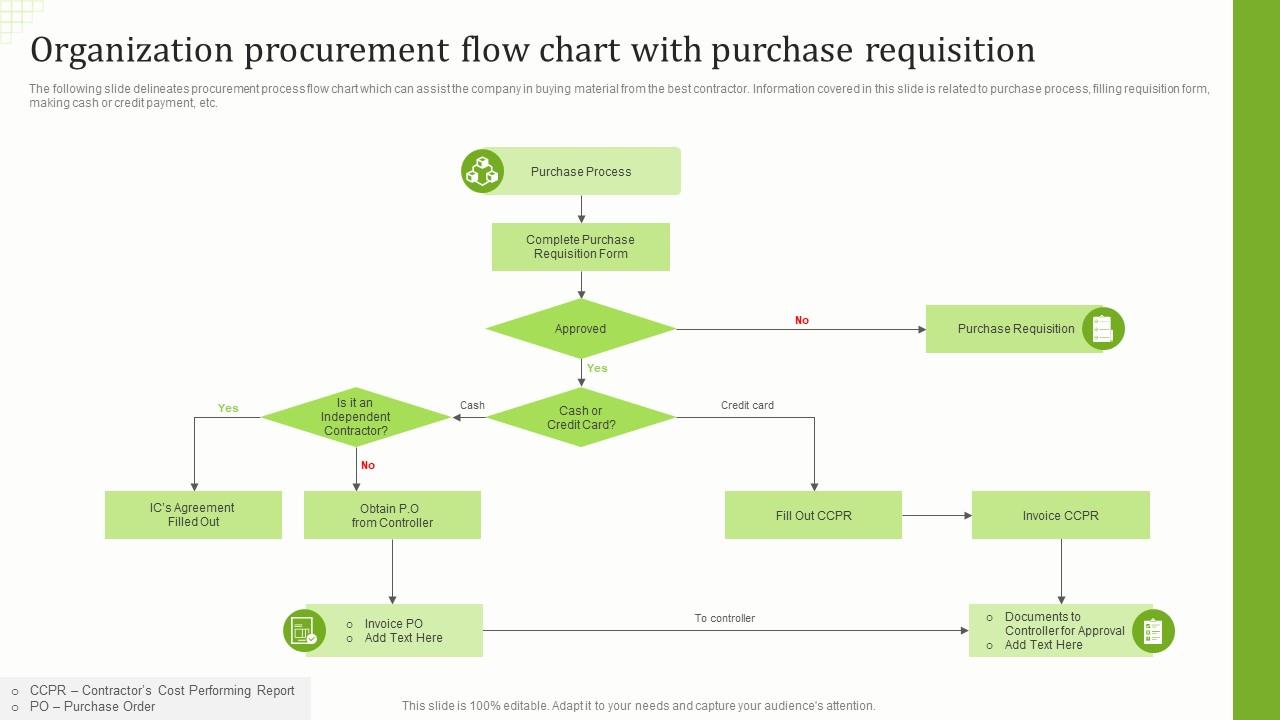
The following slide delineates procurement process flow chart which can assist the company in buying material from the best contractor. Information covered in this slide is related to purchase process, filling requisition form, making cash or credit payment, etc. making cash or credit payment, etc. Introducing our premium set of slides with Organization Procurement Flow Chart With Purchase Requisition. Elucidate the four stages and present information using this PPT slide. This is a completely adaptable PowerPoint template design that can be used to interpret topics like Approved, Purchase Process, Purchase Requisition. So download instantly and tailor it with your information.

FAQs for Organization Procurement Flow Chart

So basically you're looking at need identification, vendor selection, approval workflows, purchase orders, then receiving and payments. It's like a roadmap showing how requests flow through your company - honestly gets messy fast if you're at a bigger place. Decision points and approval gates are built into each step. You'll want to map out who does what and what paperwork they need. I'd start by looking at how you guys currently do things, then chart it out. Great way to catch bottlenecks too, which there's probably more of than you think!

Honestly, a good procurement flowchart just cuts through all that confusing back-and-forth. Your team knows exactly who approves what and when quotes are needed - no more wondering if you missed a step. Think of it like GPS for buying stuff. The biggest win? Everyone stops reinventing the process each time. Stakeholders can actually see where their requests are instead of bugging you constantly (which gets old fast). I'd start by sketching out what you're doing now, then figure out where things get stuck most often. That's your roadmap right there.

Honestly, getting stakeholders to agree on approval levels is like pulling teeth. Everyone has opinions about decision points! Start with your most common scenarios first - don't try to map every weird edge case right away. Procurement is messy and never follows the rules anyway lol. The trick is finding that sweet spot between being thorough and not creating some nightmare flowchart that nobody wants to look at. Once people are on board with the basics, then you can start adding all the complicated stuff. Trust me, it's way easier to get buy-in when things look simple at first.

Yeah so healthcare/pharma are absolute hell with all their regulatory hoops - way more approval checkpoints than you'd expect. Tech companies do the opposite, they cut out steps to move fast. Manufacturing builds in longer lead times from the start. Government stuff adds security clearance steps that make everything drag. Oh and financial services - they pile on extra risk assessments too. Honestly? Skip the generic templates. Just find 2-3 companies in your actual industry and see how they really do it. Way more helpful than guessing.

Honestly, tech turns your whole procurement setup into something that actually works without you babysitting it. Digital workflows automatically send requests to whoever needs to approve them. Real-time tracking shows you exactly where things are stuck - which happens more than it should, trust me. AI can spot red flags and suggest better vendors too. The visibility alone is worth it since you're not constantly wondering what's happening with orders. Don't try to automate everything right away though. Pick one simple process first and see how it goes.

So basically, map out who does what at each step and when they need to jump in. Most teams screw this up because they think people will magically know their timing - spoiler alert, they won't. Walk everyone through the whole process first so they get the big picture before focusing on their part. Set up check-ins at the major milestones and call out the bottlenecks before they happen. The real trick is making sure people understand who they're waiting on and who's waiting on them. Trust me, this prevents so many headaches later.

Honestly, start with cycle time - track how long each procurement step actually takes. Cost savings and supplier performance are obvious ones too, like their on-time delivery rates. Exception rates will tell you when your process is falling apart and people need to step in manually. Don't sleep on stakeholder satisfaction either - if your internal folks think the process sucks, you're kind of screwed regardless of the numbers. Contract compliance is solid to track, maybe some quality stuff if you have bandwidth. But seriously, pick like 3-4 max to start or you'll drown in spreadsheets.

Honestly, procurement flow charts are lifesavers for staying compliant. They build in all those checkpoints you need - approvals, documentation, vendor checks - so you can't accidentally skip stuff that'll bite you later during audits. The visual layout makes it super clear when your team needs to verify things like competitive bidding limits or conflict of interest forms. Auditors eat this kind of documented process up too. Oh, and definitely cross-check yours against whatever regulations hit your industry - there's probably some random requirement you're forgetting about that could cause headaches down the road.

Update your flowchart every quarter, or whenever big changes happen with processes or regulations. Seriously, don't overcomplicate it - those massive charts just sit in drawers collecting dust. Get feedback from the people actually doing the work, not just their bosses. Someone in procurement should own it and work with legal, finance, ops to keep it current. Oh, and version control matters so you're not dealing with five different outdated copies floating around. Set up feedback sessions where people can call out bottlenecks they're hitting. Trust me, the users will spot problems way faster than management will.

Honestly, flow charts are perfect for this - way better than dumping a thick manual on someone's desk. Walk new hires through each step visually so they actually see who approves what and when POs are needed. Interactive versions work great too where people can practice different scenarios. The visual stuff just sticks better, you know? Plus they'll catch issues before things go sideways. I'd have your team run through some real examples with the chart next training session. Makes the whole buying process way less confusing for everyone.

Start with swimlanes to show who does what - like separating procurement from finance. Decision diamonds are perfect for approval points. I've honestly seen too many flowcharts that look like total chaos because people skip the visual stuff. Different colors help distinguish between document types and approval levels. Keep your text short and stick with the same symbols throughout. Oh, and definitely map it out with sticky notes first - way easier to move things around before you go digital. Trust me on that one.

Yeah, start by mapping out your approval levels and dollar limits - who needs to sign off on what amounts. Most places grab a basic template then tweak it for their weird quirks. Like does IT have to approve every software purchase? Legal review for contracts over $10k? Document your current mess first, then figure out where things get stuck. There's always that one person who sits on approvals forever, ugh. Add your real department names and whatever forms you actually use. Oh, and don't forget compliance stuff if you're in a regulated industry. Once you see the whole picture, you can start cutting out the stupid steps.

So procurement flow charts are basically how you turn your big-picture supply chain goals into actual day-to-day steps. Your strategy might say "get faster delivery, cut costs" but the flowchart shows your team exactly how to evaluate suppliers and approve purchases to make it happen. Pretty neat connection, honestly. They're also great for finding bottlenecks that mess with your bigger objectives - I've seen teams miss this completely. Start by mapping what you're doing now, then compare it against where you want to be strategically. You'll probably find some gaps.

Honestly, a good flow chart is like relationship gold with vendors. They'll know your timeline upfront, what docs you need, approval stages - the whole deal. No more constant "where are we at?" emails cluttering your inbox. Trust me, vendors hate being blindsided by random delays just as much as you hate explaining them. When you're consistent with the process, they actually start giving you better deals because they know you're legit. I'd map out what you're doing now and just shoot your regular vendors the key dates. Makes everyone's life easier.

Honestly, flow charts are perfect for this - they'll show you exactly where your procurement process gets bogged down. Start by mapping everything from initial needs assessment to final contract signing. You'll probably be shocked at how much redundant stuff you're doing (I always am). Look for spots where approvals take forever or where you're dealing with way too many vendors for similar things. The visual format beats staring at spreadsheets any day. Once you see it laid out, consolidating suppliers and automating some of those approval steps becomes obvious. Just document what you're currently doing first, then go from there.

Ratings and Reviews

90% of 100
Review Form
Write a review
Most Relevant Reviews
  1. 100%

    by O'Sullivan Evans

    SlideTeam was so customer-centric and quick service-provider that I doubted the amount I was paying and literally re-checked the transaction.
  2. 80%

    by James Lewis

    SlideTeam is the best in the business. Their templates are engaging and customizable. You can rely on them.

2 Item(s)

per page: