


Procurement workflow process overview ppt template




Try Before you Buy Download Free Sample Product
 Impress Your
 Audience
 100%
100% Editable
 Save Hours
 of Time


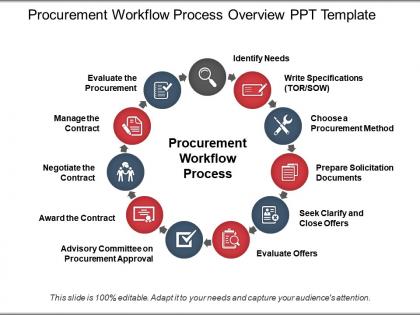
Control your business inventories with our professionally curated procurement workflow process PPT design. Use this procurement management PPT layout diagram to define the procedure of procuring the raw material into your business so to improve your productivity rate. An effective procurement life cycle process PPT diagram will offers you a clear picture of how your business inventory process flow from one stage to another. You can also describe the roles and responsibility of your each procurement team member. The stages will start from the requirement identification, to raising the PO till the final stage of evaluating or inspecting the procurement material. Use this PPT template as an influential tool for your management to take control over your business inventory with this inventory management PPT slide design. This procurement workflow process PPT diagram will also allow you to build an effective production plan in accordance to your business capabilities. Thus, start working over this PPT slide design now. Get grey cells going at the correct frequency. Our Procurement Workflow Process Overview Ppt Template are great for fine tuning.
People who downloaded this PowerPoint presentation also viewed the following :
Procurement workflow process overview ppt template with all 5 slides:
Our Procurement Workflow Process Overview Ppt Template contain brilliant extra features. They come as an added bonus.

FAQs for Procurement workflow process
So basically you've got six main steps: requisition (someone asks for stuff), sourcing (finding suppliers), evaluation (comparing bids), approval (getting sign-offs), contracting, then receipt and payment. Approval is honestly where everything dies - people are always MIA when you need them. Each step has different people involved and paperwork you'll need. Oh, and definitely bring procurement into the loop early! I learned this the hard way. They'll save you so much trouble if you don't try rushing past them later.
Honestly, tech is a lifesaver for cutting through all that tedious procurement stuff. Start with the boring, repetitive tasks - like creating POs and matching invoices. That's where you'll see immediate results. E-procurement platforms handle your whole workflow from start to finish, which is pretty sweet. You can automate approvals, set up vendor catalogs that talk directly to your ERP, and even use AI to spot sketchy suppliers before they screw you over. The real-time spending visibility alone is worth it - no more surprise budget disasters. Trust me, once you digitize this stuff, you won't want to go back to the old way.
Honestly, supplier relationship management is just staying tight with your vendors throughout the whole buying process. Sure, getting a good price matters, but you're really building partnerships here. These relationships save money and reduce headaches down the road - plus suppliers will actually prioritize your stuff when things get crazy. It's kinda like networking but with contracts involved (sounds boring when I put it that way lol). Regular check-ins work wonders. Listen to what they're telling you too. Trust me, putting in that effort upfront pays off big time later.
Cycle time is your best starting point - track how long it takes from someone requesting something to actually getting it. Cost savings vs targets matter too, obviously. My old team was totally obsessed with supplier performance scores and honestly it worked out pretty well for them. Purchase order accuracy is annoying but critical because fixing screwups constantly will drain your life. Also watch contract compliance rates and whether you're staying on budget. Oh and definitely set up some kind of simple dashboard - you'll want to catch trends before they become problems. Once cycle time improves, the other stuff usually gets better too.
Ugh, approval bottlenecks are the absolute worst - requests just sit there forever while everyone waits around. Budget tracking turns into this messy nightmare too, especially when you're still using spreadsheets like it's 2010. Vendor management? Don't even get me started on trying to keep track of different pricing and those compliance rules that keep changing. Manual processes slow everything down. Honestly, I'd map out where things actually fall apart in your current setup first. Then just focus on fixing whatever wastes the most time - you'll feel way better once that stuff's automated.
Here's the thing - getting stakeholders involved is like having extra eyes on everything before you mess up. You'll catch problems way earlier when you bring in end users, finance, legal, whoever matters. They spot stuff procurement teams totally miss, plus they know which vendors are actually decent. Requirements get way better too. The trick is figuring out who needs to be in the loop at each step, then - and this is key - don't just pretend to ask their opinion. Actually listen. I've seen too many projects where people got "consulted" but their feedback went nowhere. Trust me, those painful "wait, this isn't what we wanted" meetings are so much worse than just doing stakeholder management right from the start.
Figure out what matters most first - price, quality, delivery times, financial stability. Those are your non-negotiables. I'd look at 3-5 suppliers minimum for a decent comparison. Get references and samples whenever you can. Here's the thing though - cheapest isn't always smartest. Think about the whole picture, not just upfront costs. A scoring system helps keep you honest instead of going with your gut (which can be wrong, trust me). Document why you picked them too. Future you will thank you when someone asks "why did we choose these guys again?"
Look, data analytics is basically like having x-ray vision for your procurement stuff. You'll spot spending patterns that would take forever to find otherwise. Track how suppliers are actually performing, catch price trends before they hit you, find places to save money you didn't even know existed. Honestly the risk management part alone is worth it - way easier to make calls when you've got solid data backing you up. Oh and benchmarking against industry standards becomes automatic. I'd say start simple though, maybe just analyze office supplies or something first. Once you see how it works you'll get hooked.
You're looking at 10-30% cost cuts, which is pretty solid. Most savings come from not having your team buried in paperwork all day - that labor cost adds up fast. But here's where it gets interesting: automated vendor comparisons catch so much waste it's almost embarrassing. Like, you'll wonder how you were burning money before. Contract compliance monitoring is huge too since manual tracking misses everything. Oh, and having real-time spend data makes you way stronger when negotiating. I'd start with automating purchase order approvals - easiest quick win to prove it works.
Yeah, legal stuff will definitely bog down your procurement process. All those mandatory reviews and contract approvals? Can't skip 'em. Your legal team needs time to comb through vendor agreements and check if suppliers actually meet compliance standards. Industry regs make it even messier - finance is probably the worst for this. But here's the thing: plan for it upfront instead of scrambling later. Figure out which purchases need legal sign-off and build that waiting time into your schedule. Trust me, it's way better than explaining delays to your boss afterward.
Here's what's worked for me - get your procurement policies out there publicly first. Document literally everything because trust me, you'll need those records later. Post all vendor requirements upfront so there's no confusion. Multiple people should review big purchases (politics, you know?). Make your evaluation criteria objective and visible to everyone. Digital approval workflows are honestly a game-changer since they track everything automatically. Oh, and run regular audits. They're annoying but they'll catch stuff before it blows up in your face.
Honestly, just bake risk checks right into each step of your buying process. During vendor selection, dig into their finances and compliance history first. Flag the sketchy categories upfront - tech contracts are notorious for going sideways later. Set up approval flows where anything over X dollars or in sensitive areas needs the risk team's blessing. Regular supplier reviews are clutch too. You'll want backup plans for your critical vendors because Murphy's law, right? The trick is making this stuff automatic instead of scrambling after problems hit. Templates and checklists help your team actually follow through.
Okay so three main things you need: e-procurement software handles all your purchase orders automatically, spend analytics shows you exactly where money's going (this one's honestly huge - like you'll find waste everywhere), and SRM tools keep all your vendor stuff organized. Contract management is worth getting too if you deal with complicated agreements, but that's more optional. I'd start with the e-procurement thing first since it fixes your workflow headaches right away. The analytics piece though... that's where you actually save real money once you see the patterns.
So ethical sourcing basically means you're judging suppliers on way more than just price and quality now. Fair wages, environmental stuff, worker safety - all that matters too. Honestly, most companies expect it at this point. Your vendor scorecards need to factor in these social responsibility metrics alongside the usual ones. I'd start by creating a supplier code of conduct (sounds fancy but it's pretty straightforward). Then make following it part of your contracts. It's definitely more work upfront, but you don't want to get caught working with sketchy suppliers these days.
Okay so you definitely need both the tech stuff and people skills. Everyone expects you to dig into spend data now and find savings through dashboards and all that analytics stuff. Plus digital platforms are pretty much standard - e-sourcing, contract management systems, the works. But honestly? The relationship side might matter more. You're juggling negotiations with suppliers while your own team members all want completely different things. Gets messy fast. Communication and project management will literally save you from going crazy. Oh, and whatever procurement software your company uses - learn that first. Easy quick win right there.
-
I discovered this website through a google search, the services matched my needs perfectly and the pricing was very reasonable. I was thrilled with the product and the customer service. I will definitely use their slides again for my presentations and recommend them to other colleagues.
-
Innovative and Colorful designs.