

Procurement Analysis Powerpoint Presentation Slides




Try Before you Buy Download Free Sample Product
 Impress Your
 Audience
 100%
100% Editable
 Save Hours
 of Time


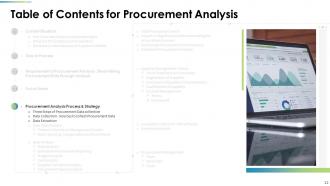
This PowerPoint presentation depicts that Procurement analysis is an assessment of what happens in purchasing department, including whether or not they are adhering to the purchase strategy and managing stocks at optimal levels. Procurement analysts, agents, and managers may use this ppt to select which wholesale distributors or manufacturers will obtain their business. Check out our competently designed Procurement analysis PPT that includes templates for collecting data from various source systems such as ERPs, categorizing data into standard or use-case-specific categories, and displaying data in a visualization dashboard or within business intelligence tools. This presentation also covers analytics in category management, strategic sourcing, contract lifecycle management, procure-to-pay, sustainability, and CSR. Download our 100 percent editable and customizable template, which is also compatible with google slides.
People who downloaded this PowerPoint presentation also viewed the following :
Content of this Powerpoint Presentation
Slide 1: This slide introduces Procurement Analysis. State Your Company Name and begin.
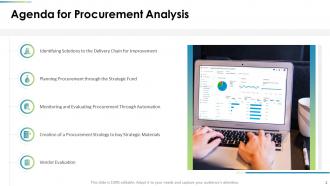
Slide 2: This slide states Agenda of the presentation.
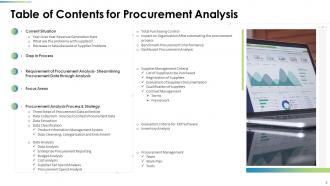
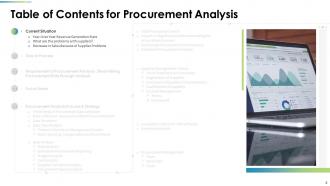
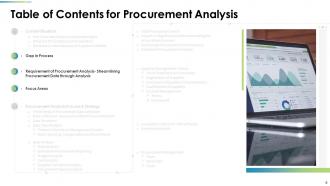
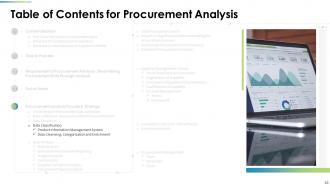
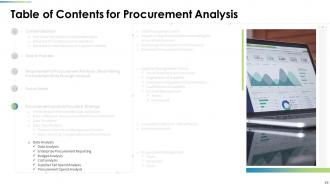
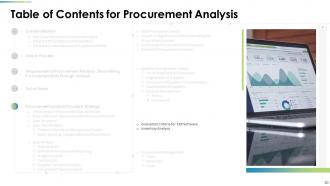
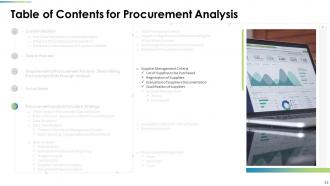
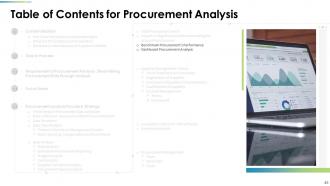
Slide 3: This slide presents Table of Content for the presentation.
Slide 4: This slide highlights title for topics that are to be covered next in the template.
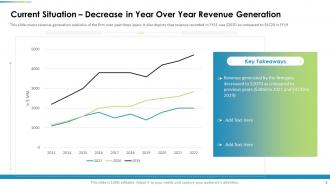
Slide 5: This slide covers revenue generation statistics of the firm over past three years.
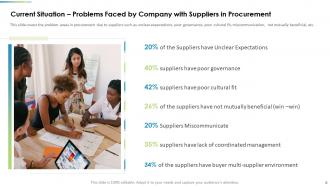
Slide 6: This slide displays the problem areas in procurement due to suppliers.
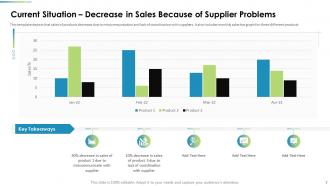
Slide 7: This template depicts that sales of products decrease due to miscommunication and lack of coordination.
Slide 8: This slide highlights title for topics that are to be covered next in the template.
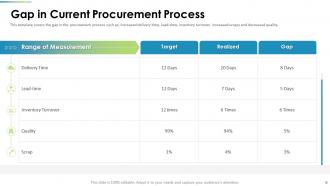
Slide 9: This slide represents Gap in Current Procurement Process.
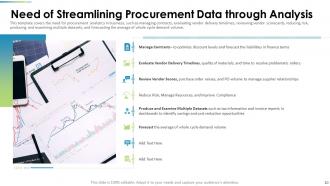
Slide 10: This slide showcases Need of Streamlining Procurement Data through Analysis.
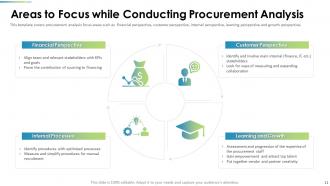
Slide 11: This slide shows Areas to Focus while Conducting Procurement Analysis.
Slide 12: This slide highlights title for topics that are to be covered next in the template.
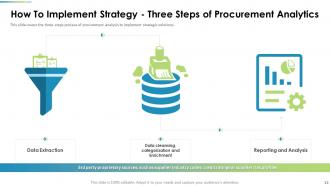
Slide 13: This slide covers the three steps process of procurement analysis to implement strategic solutions.
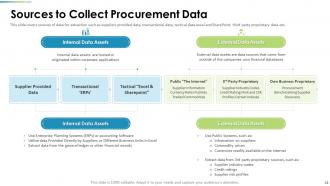
Slide 14: This slide showcases sources of data for extraction such as suppliers provided data, transactional data, tactical data, etc.
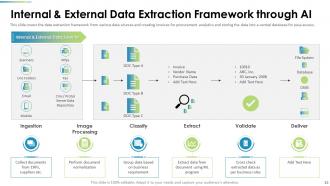
Slide 15: This slide shows Internal & External Data Extraction Framework through AI.
Slide 16: This slide highlights title for topics that are to be covered next in the template.
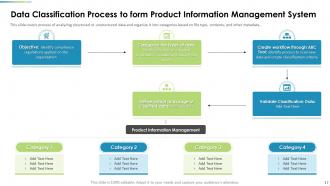
Slide 17: This slide presents Data Classification Process to form Product Information Management System.
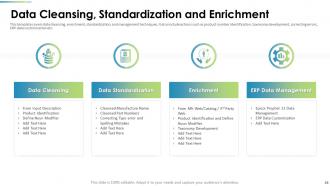
Slide 18: This slide displays Data Cleansing, Standardization and Enrichment.
Slide 19: This slide highlights title for topics that are to be covered next in the template.
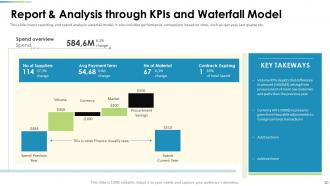
Slide 20: This slide represents Report & Analysis through KPIs and Waterfall Model.
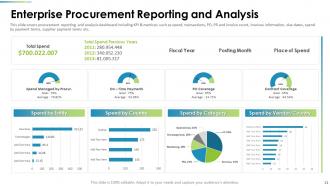
Slide 21: This slide showcases Enterprise Procurement Reporting and Analysis.
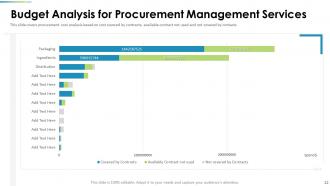
Slide 22: This slide presents Budget Analysis for Procurement Management Services.
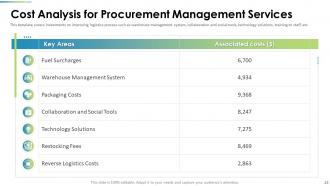
Slide 23: This slide displays Cost Analysis for Procurement Management Services.
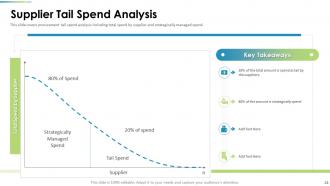
Slide 24: This slide covers procurement tail spend analysis including total spend by supplier and strategically managed spend.
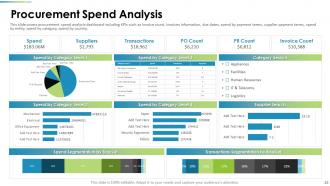
Slide 25: This slide displays procurement spend analysis dashboard including KPIs such as invoice count, invoices information, due dates, etc.
Slide 26: This slide highlights title for topics that are to be covered next in the template.
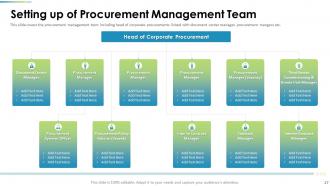
Slide 27: This slide represents Setting up of Procurement Management Team.
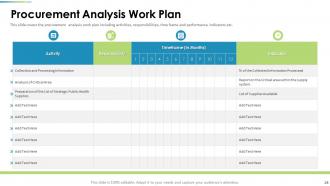
Slide 28: This slide covers the procurement analysis work plan including activities, responsibilities, time frame and performance indicators.
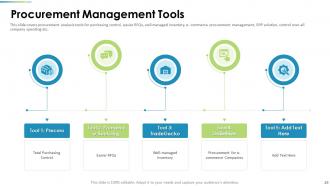
Slide 29: This slide showcases procurement analysis tools for purchasing control, easier RFQs, well managed inventory, etc.
Slide 30: This slide highlights title for topics that are to be covered next in the template.
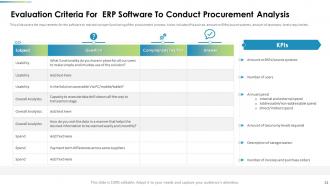
Slide 31: This slide shows Evaluation Criteria For ERP Software To Conduct Procurement Analysis.
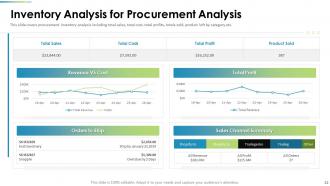
Slide 32: This slide presents Inventory Analysis for Procurement Analysis.
Slide 33: This slide highlights title for topics that are to be covered next in the template.
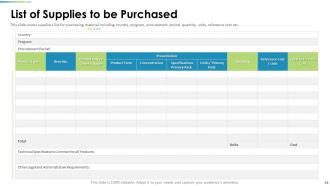
Slide 34: This slide covers suppliers list for purchasing material including country, program, procurement period, etc.
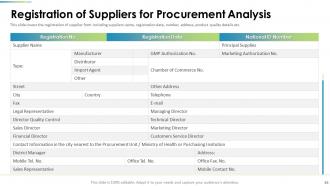
Slide 35: This slide displays Registration of Suppliers for Procurement Analysis.
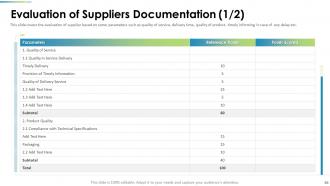
Slide 36: This slide covers the evaluation of supplier based on some parameters.
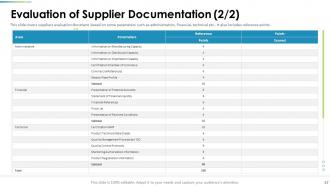
Slide 37: This is another slide continuing Evaluation of Supplier Documentation.
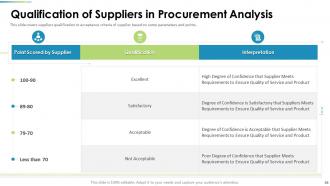
Slide 38: This slide represents Qualification of Suppliers in Procurement Analysis.
Slide 39: This slide highlights title for topics that are to be covered next in the template.
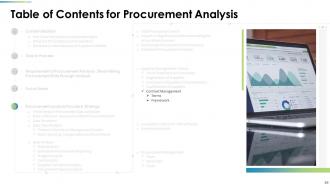
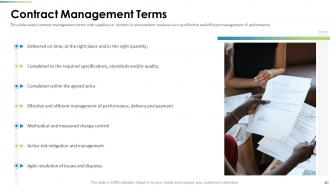
Slide 40: This slide covers contract management terms with suppliers or vendors in procurement analysis.
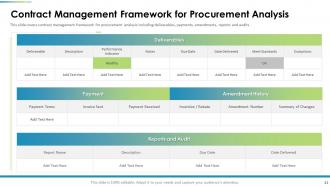
Slide 41: This slide showcases Contract Management Framework for Procurement Analysis.
Slide 42: This slide highlights title for topics that are to be covered next in the template.
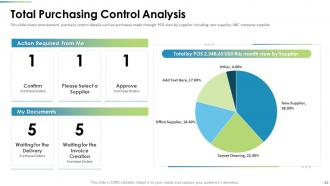
Slide 43: This slide covers procurement purchase control details such as purchases made through POS.
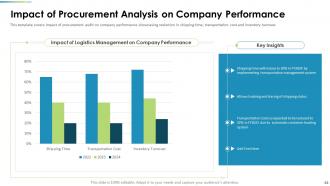
Slide 44: This slide shows Impact of Procurement Analysis on Company Performance.
Slide 45: This slide highlights title for topics that are to be covered next in the template.
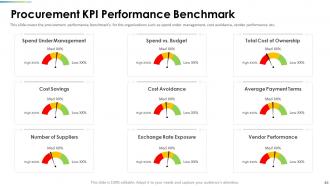
Slide 46: This slide presents Procurement KPI Performance Benchmark.
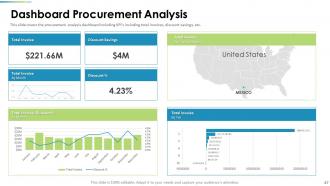
Slide 47: This slide covers the procurement analysis dashboard including KPI’s including total invoices, discount savings, etc.
Slide 48: This slide displays Icons Slide for Procurement Analysis.
Slide 49: This slide is titled as Additional Slides for moving forward.
Slide 50: This slide provides 30 60 90 Days Plan with text boxes.
Slide 51: This slide presents Roadmap with additional textboxes.
Slide 52: This is a Financial slide. Show your finance related stuff here.
Slide 53: This is a Timeline slide. Show data related to time intervals here.
Slide 54: This slide depicts Venn diagram with text boxes.
Slide 55: This slide shows Post It Notes. Post your important notes here.
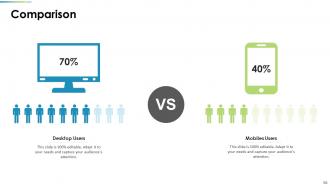
Slide 56: This is a Comparison slide to state comparison between commodities, entities etc.
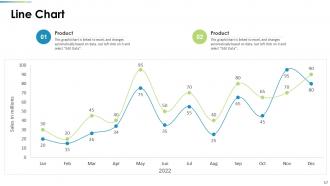
Slide 57: This slide describes Line chart with two products comparison.
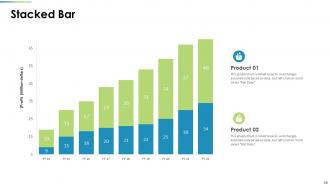
Slide 58: This slide represents Stacked Bar chart with two products comparison.
Slide 59: This is a Thank You slide with address, contact numbers and email address.
Procurement Analysis Powerpoint Presentation Slides with all 64 slides:
Use our Procurement Analysis Powerpoint Presentation Slides to effectively help you save your valuable time. They are readymade to fit into any presentation structure.





FAQs for Procurement Analysis
You'll want to focus on four main things: spend analysis, supplier performance evaluation, market research, and risk assessment. Honestly, start with spend analysis first - that's where you'll find the biggest surprises and it sets up everything else. Look at your historical spending to spot patterns and opportunities. Then check how your current suppliers are doing on cost, quality, delivery times, all that stuff. Research what's happening in the market too - pricing trends, other suppliers you could use. Oh, and don't forget risk assessment - like whether your suppliers are financially stable or if there could be supply chain issues. The spend analysis usually shows some quick wins right away.
Honestly, data analytics is a game changer for procurement - you'll finally see what's actually happening instead of guessing. Spending patterns become obvious. Which suppliers are reliable? Crystal clear. I used to think it was this huge complicated thing, but even basic spend analysis shows you quick wins right away. The trick is making sure your data isn't a mess first. You can predict demand better too, which saves you headaches during budget season. Don't overthink it though - just pick one area and start there.
Look, supplier performance evaluation is just checking if your vendors actually do what they say they'll do. Track stuff like on-time delivery, quality, cost compliance - the basics. Honestly, you'll be shocked how many "solid" suppliers fall apart once you start measuring them properly. I learned this the hard way with a vendor who seemed great until we looked at their numbers. This data drives your sourcing calls and contract decisions. My advice? Pick 3-4 metrics that actually matter to your business and stick with them. Don't overcomplicate it at first.
Honestly, just bake the risk stuff right into how you're already evaluating suppliers. Score them on sketchy factors - like are they financially solid, do they actually deliver on time, quality track record, etc. I throw together a basic probability vs impact grid (sounds fancy but takes like 10 minutes). Then figure out your backup plans beforehand - alternate suppliers, extra inventory, whatever. Oh and definitely add a risk column to your vendor spreadsheets. Makes it way easier to spot red flags early instead of scrambling later when something goes sideways.
Honestly, track three main things: cost savings percentage, how long your procurement cycles take, and supplier performance scores. Cost savings is obvious - shows you're actually saving money. Cycle time is super underrated though, like nobody talks about it but it matters so much. That's everything from when someone requests something to when it gets delivered. Supplier performance is whether your vendors are doing what they said they'd do - quality, on-time delivery, all that stuff. Track these for maybe 3-6 months first to see where you're at, then you can get into the weeds with contract compliance and spend management if you want.
So procurement analysis is basically your roadmap for making smart buying choices that actually move your business forward. You're looking at supplier performance, cost trends, risk stuff - all the data you need to match your purchasing with bigger goals like cutting costs or hitting sustainability targets. Think of it like... well, you wouldn't randomly buy things for your house without a plan, right? Same concept here but for companies. The analysis tells you where to spend more, where to pull back, and which suppliers can genuinely help you reach those major objectives. I'd start by figuring out your biggest spend areas first.
Honestly, I'd go with Ariba, Coupa, or Zycus first - those are your heavy hitters for spend analytics. Excel's still clutch though, especially for quick stuff when you don't want to deal with logging into another system. Power BI or Tableau will save your butt when you need to present findings that actually look professional. Oh, and check what reporting your ERP already has before buying anything new - might be sitting right there. My advice? Pick one main tool that plays nice with whatever you're already using, then add other pieces as you figure out what you actually need. Don't go crazy buying everything upfront.
Look, first thing - map out who you're actually buying from right now. I bet you'll find you're way too dependent on like 3-4 vendors, which is risky as hell. Mix it up by region, company size, different industries even. Set some goals - maybe work with more minority-owned businesses or check out international options. Those supplier discovery platforms are pretty decent for finding alternatives, and don't sleep on industry networks either. Just don't sacrifice quality for the sake of diversification, you know? Oh, and create some kind of scorecard system to rate new suppliers consistently. Makes the whole process way less chaotic.
Honestly, the two biggest mistakes I see are not tracking all your spending and getting obsessed with sticker prices instead of what things actually cost you over time. Map out every spend source first - that's your foundation. Don't just look at unit costs either. I've watched teams get screwed by "cheap" suppliers who were disasters for quality and delivery. Those supposedly great deals? They ended up costing way more down the road. You'll want to look at historical trends too, not just current snapshots. Oh, and market conditions matter - they change everything.
Pull your spend data from the last 2-3 years and group it by type first. Regular stuff like office supplies follows different patterns than one-off equipment buys. Check your seasonal spikes, supplier lead times, all that. Most procurement is way more predictable than people think - honestly surprised me when I first started tracking it. Build in some buffer though because Murphy's Law is real. Look for the recurring patterns in volumes and timing. Short bursts work better than trying to forecast everything at once. You'll start seeing cycles pretty quick once you categorize consumables separately from project purchases.
So regulatory compliance basically means you can't just pick the cheapest vendor anymore. Now you've got to check if they actually follow all the industry rules too. Your supplier options get way more limited, and yeah, you'll probably pay more. But trust me, getting hit with compliance violations is so much worse than spending extra upfront. I always build those requirements right into the RFP from day one - saves you from panicking later when you realize your "great deal" supplier can't actually meet regulations. Oh, and document literally everything because auditors are obsessed with paperwork trails.
Honestly, you'll get way better insights when everyone chips in their data. Finance knows the budget reality, operations sees what's actually being used (not just ordered), and IT gets the tech specs that matter for vendors. Working alone just leaves blind spots everywhere. Set up monthly check-ins or something - doesn't have to be fancy. The thing is, procurement decisions ripple through the whole company anyway, so why not get their input upfront? You'll catch inefficiencies and patterns that would totally fly under the radar otherwise. Makes your analysis actually useful instead of just... theoretical, I guess.
Honestly, start diving into whatever analytics platform your company's already using - that's where the real opportunities are hiding. AI-driven spend analysis is huge right now, plus real-time supplier risk monitoring. The pattern recognition stuff is actually getting scary good at catching savings humans totally miss. ESG tracking and carbon footprint analysis are becoming must-haves for vendor selection too. Oh, and supply chain transparency tools are basically standard now after all the chaos we've had. Predictive procurement modeling is the other big one. Push hard for better data visualization dashboards - trust me on this.
Honestly, procurement analysis is perfect for this stuff. You can filter suppliers based on their environmental practices and actually track how green your supply chain is. I'd start by updating your vendor scorecards with sustainability criteria - things like carbon footprint per purchase, renewable energy use, minimal packaging. It's pretty eye-opening once you see the data. Look for vendors with solid recycling programs too. The best part? All this tracking makes reporting to stakeholders so much simpler. You'll spot waste reduction opportunities you never noticed before, and it's way easier to partner with companies that actually care about the environment instead of just saying they do.
Hey! So basically document everything upfront - your data sources, methods, assumptions, the whole deal. Everyone needs access to the same baseline info you're using. I've watched analyses completely crash because people were working off different vendor numbers or cost assumptions (such a mess). Build clear trails showing your reasoning, and honestly admit what you can't measure. Oh, and share your draft findings early instead of dropping some mysterious final report. Write in normal language too - half these procurement reports might as well be in ancient Greek. Your non-procurement colleagues will actually thank you for recommendations they can understand.
-
I can always count on your designs for my professional needs. I believe I found a one-stop-shop for PPTs.
-
Based on my personal experience, I would recommend other people to subscribe to SlideTeam. No one can be disappointed here!