


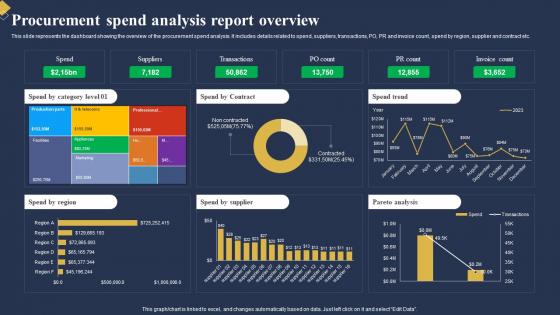
Procurement Spend Analysis Report Overview




Try Before you Buy Download Free Sample Product
 Impress Your
 Audience
 100%
100% Editable
 Save Hours
 of Time


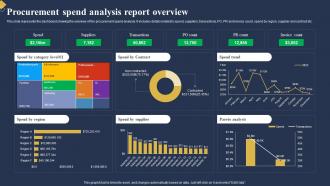
This slide represents the dashboard showing the overview of the procurement spend analysis. It includes details related to spend, suppliers, transactions, PO, PR and invoice count, spend by region, supplier and contract etc.
People who downloaded this PowerPoint presentation also viewed the following :
Procurement Spend Analysis Report Overview with all 7 slides:
Use our Procurement Spend Analysis Report Overview to effectively help you save your valuable time. They are readymade to fit into any presentation structure.





FAQs for Procurement Spend
Okay so four things you really need: get all your spending data in one spot first (data consolidation), then categorize everything properly - honestly this part sucks but you gotta do it. After that, analyze your suppliers to see who you're buying from and how much. Finally, hunt for savings opportunities. The categorization thing trips everyone up because your data's probably a mess right now. I'd say tackle one category at a time if it feels overwhelming - like maybe start with office supplies or something simple. Once you get that down, expand from there. Clean data first, then segment by category and supplier. Don't try to boil the ocean on day one.
Dude, dashboards are your best friend here. Turn all that procurement spend data into charts and graphs that actually make sense. Bar charts for spend categories, heat maps for supplier performance - that stuff works. Executives eat up visual data way more than endless spreadsheets (trust me on this one). You'll spot weird spending patterns super quick, plus it's easier to track savings and find where you can consolidate suppliers. Start simple with pie charts and basic trend analysis. Then you can get fancy with supplier scorecards later once you've got the basics down.
Honestly, SpendHQ, Ivalua, or Zycus are your best bet - they're built for this exact thing and won't make you hate data cleanup. Tight on budget? Power BI or Tableau with some Excel magic can get you surprisingly far. Already using SAP Ariba or Coupa? Might as well stick with what you know. The real trick is finding something that'll actually talk to your ERP without breaking everything. I'd map out what data sources you're working with first - saves you from picking something fancy that doesn't play nice with your current setup. Trust me on that one.
So spend analysis is like getting a microscope for your purchasing - you'll see exactly where money's disappearing. Pull your last 12 months of data and sort it by supplier and category. What you're hunting for: duplicate vendors doing the same work, departments buying random stuff instead of going through approved channels, missed opportunities to negotiate better deals with your top suppliers. Honestly, most companies are shocked at how scattered their spending actually is. Short sentences work here. The efficiency boost comes from consolidating suppliers and getting everyone on the same purchasing playbook across teams.
Start with the basics - total spend broken down by category, supplier, and timeframe. Maverick spend is huge (all those sneaky off-contract purchases that somehow happen anyway). Track your contract compliance rates and savings vs what you promised leadership. Supplier performance scores matter too. I always include spend concentration ratios since nobody wants to be overly dependent on one vendor. Price variance analysis catches trends early. Payment terms compliance affects cash flow, so don't skip that. Year-over-year comparisons make you look good when things improve. Build from there once people see it's actually useful.
Pull about 12-18 months of your procurement data first. Break it down by category, supplier, department - the usual suspects. Month-over-month comparisons are where you'll catch the interesting stuff. Excel pivot tables work great for this, though I'd kill for a proper analytics tool sometimes. Watch for seasonal patterns and any rogue spending that's happening outside your contracts. Price swings and volume changes tell a story too. Oh, and check if you're too dependent on certain suppliers - that can bite you later. Start with your biggest spend categories since that's where the money actually is.
Look, supplier performance is your reality check when doing spend analysis - tells you if you're actually getting value. Sure, you can analyze costs all day, but if suppliers are always late or delivering junk, that "amazing deal" you negotiated? Not so amazing anymore. Track stuff like on-time delivery and quality scores alongside your spend data. I've honestly seen companies save way more by ditching cheap but unreliable suppliers than by haggling over rates. Performance metrics help you figure out which suppliers are worth keeping versus the ones secretly draining your budget through hidden costs and headaches.
So spend analysis is basically your roadmap for smarter sourcing decisions. Look for your biggest spending categories first - that's where the money is. You'll also catch duplicate suppliers for the same products, which is perfect for consolidation. Plus it shows you which contracts actually work versus the ones that just look pretty in meetings (we all know those ones). The sneaky part? Finding all those rogue purchases that bypass your preferred suppliers completely. My advice is always hit the high-spend, risky categories first since that's where you'll see real results from your time investment.
Ugh, data quality is your worst enemy here. Your spend info is probably all over the place - different platforms, messy formats, duplicate everything. Plus each department calls the same vendor by like three different names, which makes categorizing a nightmare. Manual work slows you down big time. Getting people on board is hard too since results aren't instant. Oh, and fragmented systems don't help - feels like you're missing half the puzzle pieces. My advice? Clean up your data sources first. I know it's boring work, but trust me, everything flows better after that.
Start with getting your data clean first - standardize vendor names, category codes, all that boring stuff. Set up automated rules to catch weird outliers and duplicates (you'll definitely find some head-scratchers). Your procurement team needs to actually get the classification system they're using, which honestly seems obvious but... anyway. Do quarterly audits where you spot-check big transactions. Make sure they're coded right. Way easier to build these checks upfront than cleaning up a mess later. Short version: fix the process before the data gets messy.
Spend analysis is perfect for catching compliance issues before they bite you. Track which vendors aren't following contract terms and spot any rogue spending happening outside your approved channels. Regulatory problems? You'll see them coming from a mile away. Plus it helps with the boring stuff like diversity targets and sustainability requirements. I'd definitely set up dashboards that automatically flag weird patterns - could be fraud or just someone going off-script. The whole point is getting ahead of problems instead of scrambling to fix them later. Way better than constantly putting out fires.
Quarterly at minimum, but honestly monthly is way better if you can manage it. Your spending shifts faster than you'd think - new vendors pop up, contracts change, markets get weird. Company size matters though. Smaller operations can probably get away with quarterly reviews, but bigger companies with messy supply chains? They really need that monthly check-in to spot problems before they blow up. I'd say start quarterly if you're not doing it at all yet - better than nothing, right? Then bump it up to monthly once you get the hang of it and start seeing results.
There are a few ways to tackle this. Commodity-based works (like UNSPSC codes), but honestly I'd start with supplier groupings - it's dead simple and you'll spot concentration risks right away. Department or cost center classification is solid too, depends on what your finance team wants to see. Contract-based sorting helps if you've got different agreement types floating around. Pick one main system though - don't try to do everything at once or you'll confuse everyone. You can always add other views later once people get the hang of it. Oh, and make sure whatever you choose actually makes sense for how your business operates.
Know your crowd first - execs want dollar signs and big picture stuff, ops teams want the nitty-gritty supplier drama. Charts and visuals are your friend because honestly, nobody's got time for endless spreadsheets. Skip the data dumps and go straight for the good stuff: where you're bleeding money, which suppliers suck, consolidation wins. Always throw in actual dollar amounts and when you'll see savings (people love timelines). Oh and build a dashboard they can check regularly instead of doing this whole song and dance every quarter.
Dude, spend analysis is seriously a game-changer for supplier negotiations. You walk in with real data instead of just winging it. Like, you can see exactly where you have power - maybe you're their biggest customer or you're getting ripped off compared to market rates. The relationship dynamic totally shifts too. Rather than that awkward back-and-forth haggling, you can actually have strategic conversations about volume discounts or payment terms. Oh, and consolidation opportunities - forgot about that one. The trick is creating win-win situations instead of just hammering them on price. Builds way better partnerships down the road.
-
Fantastic collection of visually appealing PowerPoint templates. They certainly uplift the look of the presentation.
-
The way SlideTeam professionals work is exceptional. Thanks for being so helpful!