


Procurement Analysis Procurement Spend Analysis Ppt Topics




Try Before you Buy Download Free Sample Product
 Impress Your
 Audience
 100%
100% Editable
 Save Hours
 of Time


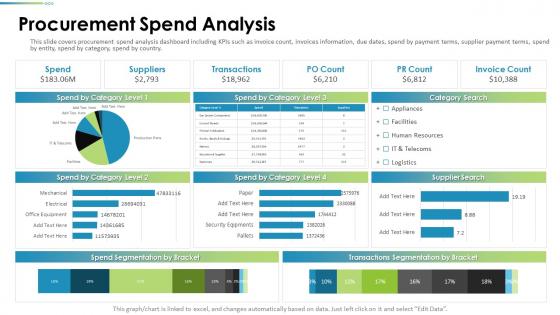
This slide covers procurement spend analysis dashboard including KPIs such as invoice count, invoices information, due dates, spend by payment terms, supplier payment terms, spend by entity, spend by category, spend by country.
People who downloaded this PowerPoint presentation also viewed the following :
Procurement Analysis Procurement Spend Analysis Ppt Topics with all 7 slides:
Use our Procurement Analysis Procurement Spend Analysis Ppt Topics to effectively help you save your valuable time. They are readymade to fit into any presentation structure.





FAQs for Procurement Analysis Procurement Spend
So you'll want to hit four main things: spend analysis, supplier performance, market research, and risk assessment. First analyze your current spending and supplier relationships - that's your baseline. Market conditions and pricing trends come next (this part's usually where you find some surprises, honestly). Risk assessment is huge too - check supplier finances, geopolitical stuff, supply chain issues. The whole point is getting the full picture before you decide anything. Oh, and make a template so you don't miss anything important each time. Trust me, it'll save you headaches later.
Honestly, procurement analysis is like your crystal ball for the whole supply chain. You're spotting good suppliers, hammering out contracts, and catching red flags before they turn into disasters. I always tell people to look at their spending patterns and supplier performance - it's crazy how much that reveals. Better sourcing decisions mean your deliveries show up on time, costs stay manageable, and you're not scrambling when something goes sideways. Production schedules stay smooth too. Start simple though - just review your top 5 suppliers every quarter. That one move gives you so much insight into whether your supply chain is actually healthy or not.
Focus on the big three: cost savings, how well suppliers perform, and visibility into what you're spending. Don't just look at purchase price - track total cost of ownership instead. Delivery times matter too, plus quality scores and whether vendors actually stick to contracts. Honestly, supplier risk is huge and gets overlooked way too much. Nobody wants a key vendor suddenly imploding on them. Also watch spend concentration - having everything with one supplier can really screw you over. It's about finding that sweet spot between saving money and not taking stupid risks. Start here, then get fancier later.
Honestly, automation is a game changer here. Most procurement software can pull data automatically and build dashboards that show spending patterns, supplier metrics, all that stuff - without you manually digging through spreadsheets. The AI features are actually pretty solid now too. They'll catch weird anomalies and spot savings you'd probably miss. Set up alerts for contract renewals or when you're hitting budget limits. Real talk though, most companies barely scratch the surface of what their existing software can do. Start there first - you might be sitting on features you didn't even know existed.
Look, data analytics basically stops you from making procurement decisions based on gut feelings or whatever some smooth-talking vendor tells you. Pull your current spend data first and categorize everything - you'll probably find some crazy patterns right off the bat. The numbers don't lie about which suppliers actually deliver on time and where you're bleeding money. You can spot cost-saving opportunities, predict supply chain issues before they screw you over, and track real performance metrics instead of promises. Honestly, it beats getting burned by vendor relationships that look good on paper but fall apart when you need them most.
Think of procurement analysis as your supply chain radar - it catches problems early. You'll want to dig into spending patterns and track how suppliers are performing. Delivery times slipping? Prices jumping unexpectedly? Those are huge red flags. I've seen companies get burned by putting all their eggs in one basket, so use the data to spot where you're too dependent on single suppliers or specific regions. Honestly, the trick is just staying on top of it regularly instead of scrambling when everything's already falling apart. Way better than playing defense later.
Honestly, just clean up your spending data first - trust me on this one. Group everything by supplier, category, department, and time periods so you can actually see what's going on. The 80/20 rule totally applies here - your biggest expenses are where you'll find the real money. Make sure you're using the same categories everywhere, and definitely run this stuff by people who know what they're buying (they'll catch weird stuff you missed). Monthly automated reports are a game changer too. Way better than doing some massive deep-dive every quarter and hating your life.
Honestly, dig into your spending data and you'll be shocked at the waste you find. Look at your supplier performance, contracts, all that stuff - it shows you exactly where you're getting ripped off. I always tell people to start with their biggest spend categories (like top 20%) since that's where the real money is. You might discover you can bundle purchases for volume discounts, or maybe there's a cheaper supplier who's actually better quality. Sometimes you're just overpaying out of habit, you know? Once you see the full picture of what you're buying, negotiating becomes way easier too.
Honestly, your biggest headaches will be crappy data and not being able to see how suppliers are actually performing. Departments hoard their spending info, and good luck getting people to look at your reports. Start with cleaning up how you collect data - maybe invest in decent procurement software that talks to your ERP system. Supplier scorecards help a ton if you update them regularly. Oh, and here's something most people mess up: design your reports WITH the people who'll use them. Otherwise you're just making pretty charts nobody cares about. Track the right metrics from the beginning or you'll be backtracking later.
Honestly, supplier performance evaluation is what separates the good procurement teams from the ones always putting out fires. Track the basics - on-time delivery, quality scores, cost performance, how quickly they respond to issues. Build scorecards for each vendor so you've got real data when making sourcing decisions or renegotiating contracts. The trick is setting up your KPIs early and actually reviewing them regularly, not just when everything's falling apart. Some companies get lazy with this part. Use what you learn to push for better terms or start shopping around for alternatives.
So there's a bunch of ways to tackle this. Spend analysis is probably your best starting point - compare your costs to industry standards and what you've spent before. Honestly, this usually shows you the biggest wins right off the bat. Supplier scorecards work great for tracking delivery times, quality stuff, and whether they're actually following their contracts. Market benchmarking helps you see how your pricing stacks up against competitors, though getting that data is kind of a pain. Oh, and don't forget cycle time analysis - it shows how slow (or fast) your processes are compared to best practices. KPI dashboards make everything easier to visualize.
Honestly, you're missing out on so much when you do procurement analysis solo. Finance people catch cost trends you'd totally overlook, while ops folks know which suppliers are actually nightmares to work with. IT saves your butt by spotting tech issues that seem fine but would blow up later. The best part? When these teams help create the analysis, they don't just smile and ignore your recommendations - they actually use them. I'd grab one person from each department for your next project. Trust me, the insights get way deeper when you have those different viewpoints in the room.
Dude, procurement is getting wild these days. You can't just pick whoever's cheapest anymore - that strategy is basically dead. Now you gotta think about supply chain strength, political drama between countries, and whether your suppliers are actually sustainable. Trade wars can screw everything up overnight, plus natural disasters and new regulations keep throwing curveballs. Lead times are crazy long now too, which totally messes with your cost math. Honestly, I'd start building models that can handle different scenarios - like what happens if shipping costs double or a key supplier gets hit by sanctions? It's way more complex but you'll thank yourself later.
So beyond just cost and quality, you've gotta factor in ethics too. Look at their labor practices, environmental stuff, how transparent they are about their supply chain. Does it match what your company actually stands for? This whole thing's gotten way bigger lately - stakeholders and regulations are pushing hard on it. When scoring vendors, throw in sustainability certs, fair trade compliance, anti-corruption policies, all that social responsibility stuff. Weight it right though. Yeah, you might pay more upfront for ethical suppliers, but trust me - it beats dealing with PR nightmares and regulatory headaches later.
Procurement's getting pretty crazy right now with all the AI stuff rolling out. Predictive analytics can actually forecast supply chain disasters before they happen, which is honestly mind-blowing. Companies are also obsessing over sustainability metrics - tracking carbon footprints, ethical sourcing, the whole nine yards. Real-time data integration gives teams insane visibility compared to what we had before. After all that supply chain chaos we've been through, everyone's doubling down on supplier risk assessment too. Oh, and scenario planning is huge now. My advice? Start playing around with these AI tools sooner rather than later because they're becoming mandatory, not optional.
-
Much better than the original! Thanks for the quick turnaround.
-
Their professional templates are very impressive, even my manager was curious about the source. I am very grateful.