


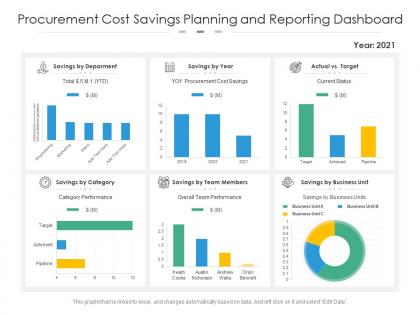
Procurement cost savings planning and reporting dashboard snapshot




Try Before you Buy Download Free Sample Product
 Impress Your
 Audience
 100%
100% Editable
 Save Hours
 of Time


Our Procurement Cost Savings Planning And Reporting Dashboard Snapshot are topically designed to provide an attractive backdrop to any subject. Use them to look like a presentation pro.
People who downloaded this PowerPoint presentation also viewed the following :
Procurement cost savings planning and reporting dashboard snapshot with all 2 slides:
Use our Procurement Cost Savings Planning And Reporting Dashboard Snapshot to effectively help you save your valuable time. They are readymade to fit into any presentation structure.
FAQs for Procurement cost savings planning and
Honestly, spend consolidation is your best bet - fewer vendors means way more negotiating power. Strategic sourcing helps too, just do your homework on market rates before signing anything. Getting departments to stop picking their own random suppliers is a nightmare but worth it if you can pull it off. E-procurement systems cut down on all that manual processing stuff, though they're kind of a pain to set up initially. Focus on your biggest spend categories first since that's where you'll actually see the money move. Everything else can wait.
So basically, tech automates all that tedious manual stuff and gives you actual data to cut costs with. Start with something simple like invoice processing - you'll see results fast. E-procurement platforms handle your purchasing workflows way better than spreadsheets (trust me on this one). AI can spot spending patterns you'd never catch manually, plus automated vendor systems help you negotiate better deals. The spend analytics are honestly a game-changer - suddenly you know exactly where money's disappearing. Oh, and no more ridiculous email chains! Pick one process to automate first and watch the savings add up.
Negotiating with suppliers is honestly where you'll save the most money in procurement. Most of them pad their initial quotes expecting pushback anyway, so you're basically throwing away savings if you don't negotiate. Do your research first though - check what their competitors charge, figure out how much volume you bring to the table. Payment terms, bulk discounts, even getting them to cover shipping costs are all fair game. The trick is building relationships before you actually need to renew contracts. That way you're not desperate when it's time to talk numbers. Oh, and always have backup options ready - makes a huge difference in how seriously they take your requests.
Buying in bulk is honestly a game-changer for cutting costs. Suppliers give you way better per-unit pricing when you're ordering more - they love moving inventory fast. The admin side is huge too, since you're not constantly processing tiny orders (I swear half my old job was just purchase orders). Your negotiating power goes up big time with larger contracts. Just watch out for storage costs eating into your savings - and make sure you won't tie up too much cash at once. I'd start with whatever you use most and see where you can bundle orders together.
Track both hard and soft savings - you'll miss tons of value otherwise. Hard ones are obvious: price cuts, renegotiated contracts, coming in under budget. Soft savings matter too though - process improvements, risk stuff, consolidating suppliers. Honestly, most teams I've worked with only look at the flashy numbers and ignore everything else. Measure savings as a percentage of total spend, document avoided costs, track supplier performance improvements. Set up some basic dashboard showing monthly trends. Way easier to see what's actually moving the needle that way.
Look, good supplier relationships are basically money in your pocket. They'll hook you up with volume discounts and better payment terms when you've got that trust built up. Also - and this might sound obvious but whatever - they actually answer when you call, which saves you so much headache. You can work together on cost-cutting projects and they'll loop you in early on new products. The whole process just gets smoother over time, less back-and-forth nonsense. I'd say pick your top 5 suppliers and set up regular check-ins with them. It's worth the time investment.
Okay so first thing - you gotta pull all your spending data from everywhere. Total nightmare but whatever, just get it done. Clean it up, then sort everything by supplier, department, whatever makes sense so you can actually see what's happening. Hunt for the obvious stuff like rogue spending and suppliers who aren't sticking to contracts. Honestly, you'll probably find multiple vendors doing the exact same thing which is just... why? Focus on your biggest 80% of spend though. Even tiny improvements there will save you serious money. Oh and set up quarterly check-ins or you'll forget about this whole thing in like two months.
Honestly, sustainable stuff isn't as expensive as people think anymore. Energy-efficient products cut your utility bills. Buying in bulk from local suppliers saves on shipping costs. Durable items last way longer so you're not constantly replacing things - which is annoying anyway. Most sustainable vendors price competitively now, not like the old days when everything "green" cost double. You'll dodge regulatory fines too, plus spend less on waste disposal. I'd start by looking at whatever you spend the most on and find certified alternatives that fit your current budget. Pretty straightforward approach.
Honestly, volatile markets mess with everything you thought you knew about procurement. Instead of those long contracts, go shorter and flexible so you can jump on price drops. Supply getting sketchy? Time to spread your bets across more suppliers - yeah, you'll pay extra but at least you won't get screwed when your main guy can't deliver. I've watched so many teams stick to their old playbook and get absolutely wrecked when everything shifted. You gotta stay on top of commodity trends and economic stuff so you can switch gears before you're paying crazy rates.
Don't just chase the lowest price - you'll end up with garbage that breaks in two weeks. Rushing rollouts without getting everyone on board is another huge mistake. Track your actual savings too, not just what you hoped to save. Avoid turning every tiny purchase into a bureaucratic nightmare (seriously, nobody wants to fill out forms to buy staplers). Oh and don't burn bridges with suppliers just to save a few bucks - you'll regret it when something goes wrong. Start small with pilot programs and measure quality alongside costs. That way you're not accidentally tanking your operations while trying to impress the CFO.
Honestly, getting departments to actually talk saves you so much money it's ridiculous. You'll catch duplicate orders before they happen and get better bulk pricing when you know what everyone's buying. We found out marketing and IT were both ordering from the same vendor at totally different rates - such a facepalm moment. Different teams also have their own supplier connections you might not know about. Once you see total company demand, contract negotiations get way easier too. Maybe start with monthly check-ins where teams share what's coming up? Worth trying at least.
Honestly, start with negotiation workshops - that's where you'll see immediate results. Financial modeling basics are huge too since your team needs to look past sticker prices. I'd throw in some supply market training so they actually understand what they're buying... sounds obvious but you'd be surprised. The soft skills piece is underrated though - relationship building and strategic thinking really separate the decent buyers from the rock stars. Oh, and data analytics is becoming non-negotiable since everyone wants proof of savings now. Communication skills matter more than most procurement people want to admit.
Honestly, outsourcing procurement can save you serious money. These third-party companies have way better negotiating power with suppliers than you do - they're buying for tons of clients. You'll dodge all those internal costs too: salaries, benefits, training new hires. And don't get me started on procurement software fees, they're ridiculous. The expertise thing is huge - you get seasoned pros who won't fall for supplier tricks or sign crappy contracts. I'd start by figuring out what procurement tasks are eating most of your time, then run the numbers on outsourcing those specific pieces.
Dude, competitive bidding is a game changer for cutting costs. Makes suppliers actually fight for your business instead of just throwing out lazy quotes. I've watched prices drop like 30% just from running a proper RFP - it's wild how much they were overcharging before. Auctions work great too, especially for straightforward stuff where the specs are obvious. You need at least 3-4 solid bidders though, otherwise it's pointless. Oh and don't bother with tiny purchases, but anything over 10K? Absolutely worth it. Your CFO will love you.
Honestly, dive into your purchase orders and invoices - that's where the real money insights hide. Data analytics helps you spot which suppliers are crushing it and which ones are bleeding you dry. I've watched teams cut costs by 15-20% just from properly analyzing their spend data. Wild how much waste you discover, right? Track seasonal price swings, see if you can consolidate suppliers, and check if people are actually following contracts. Set up some basic dashboards for your biggest spending categories so you're not just guessing anymore. Way better than making decisions on hunches.
-
Graphics are very appealing to eyes.
-
Qualitative and comprehensive slides.
-
Appreciate the research and its presentable format.
-
Topic best represented with attractive design.