


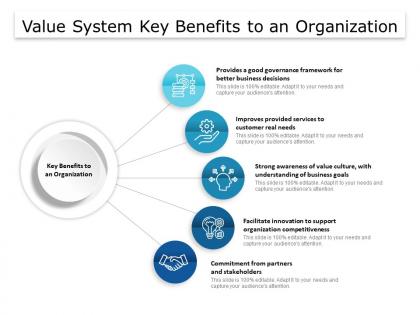
Value system key benefits to an organization




Try Before you Buy Download Free Sample Product
 Impress Your
 Audience
 100%
100% Editable
 Save Hours
 of Time


Our Value System Key Benefits To An Organization enable correct alignment of forces. Enhance focus on the assignment at hand.
People who downloaded this PowerPoint presentation also viewed the following :
Value system key benefits to an organization with all 2 slides:
Enhance focus on the assignment at hand with our Value System Key Benefits To An Organization. They enable correct alignment of forces.
FAQs for Value system key benefits
Honestly, your company values are like the invisible rulebook everyone actually follows - not the fake stuff on the website. They shape how people make decisions and treat each other every single day. Clear values give teams common ground and shared expectations. But here's the thing - if you don't have them (or they're wishy-washy), you'll get chaos. People won't know what's actually acceptable behavior. Start by figuring out what values you want to see in action, then bake those into your hiring and recognition processes. Otherwise you're just wasting everyone's time.
Okay so don't just stick values on the wall and call it done. Actually use them when you're making decisions - like who to hire, who gets promoted, which projects to prioritize. Share real stories about employees living these values in meetings or company updates. Most places screw this up because it feels fake and performative. Your managers need to know what each value actually looks like day-to-day, not just memorize buzzwords. Oh and be consistent everywhere - onboarding, reviews, how leadership deals with drama. People will notice if you're just talking the talk.
Look, having solid values actually moves the needle on your bottom line. Companies see 40% less turnover when their values are clear - and honestly, constantly hiring gets expensive fast. People trust brands that aren't wishy-washy about what they stand for, so customer loyalty goes up. Your team stops waffling in meetings because they've got a framework for decisions. Engaged employees perform 23% better, which obviously helps revenue. Better candidates want to work somewhere that means something. I'd start with maybe 3-5 core values and actually use them when you're hiring people.
Think of value systems like your company's compass - they help everyone make decisions the same way. Your teams won't have to guess what matters most or wait around for approval on everything. Honestly, I've seen places where nobody knows what the company actually stands for, and it's chaos. Clear values mean faster choices, less arguing between departments, and decisions that make sense together. The trick is picking maybe 3-5 values that you'll actually use, not just stick on a poster somewhere. When people know the framework, they can move quickly.
Look, people need more than just a paycheck to actually care about their job. Having solid values gives them something real to connect with - like they're part of something that matters, you know? Your best employees will stick around longer because they feel like they belong there. Plus they'll actually talk up your company to other people, which is honestly worth its weight in gold. But here's the thing - you can't just slap some inspirational quotes on the wall and call it a day. Those values need to actually shape how decisions get made every single day, or people see right through it.
First thing - figure out what you actually stand for, not just what sounds good. Then check if those values match where you're heading strategy-wise. Innovation as a core value while you're slashing budgets? Yeah, that's not gonna work. Map each value to real objectives and weave them into how you hire, evaluate performance, make decisions. I've seen too many companies with beautiful mission statements that mean absolutely nothing. Your values should drive the exact behaviors that get you to your goals. Honestly, just start by looking at what you reward now versus what you claim matters.
Honestly? The trickiest part is everyone brings their own baggage to what values actually mean. Like, "respect" to someone from a super formal workplace might totally clash with someone who's used to blunt feedback. Plus you'll get those veteran employees who are like "but we've always done it this way" - and man, they can be stubborn. Communication styles get weird too when you're trying to nail down what these values look like day-to-day. My advice? Get different groups involved from the start so it doesn't feel like management just decided for everyone.
Look, when your brand actually stands for something, customers who share those values will connect with you on a deeper level. They'll see you're not just another company pushing products. Say you're genuinely committed to sustainability - people notice that consistency across everything you do. It builds real loyalty. Honestly, I've seen brands charge more and customers stick around even when they mess up occasionally. The trick is figuring out what you truly believe in first, then don't be fake about it. Your competitors can copy your products but they can't copy authentic values.
Honestly, employee surveys are your best shot at figuring this out - ask people if they actually see leadership living the values day-to-day. Exit interviews are pure gold since people leaving have zero reason to sugarcoat things. Track stuff like retention rates and how many people get promoted internally too. Oh, and check if customers can tell what you stand for through feedback scores. I'd probably start with just a quick anonymous survey asking employees to rate how well managers embody each value. It's wild how many companies skip this basic step.
Think of your company's values as your sustainability GPS - they literally tell you which way to go when you're faced with tough choices. If environmental responsibility is baked into your core values, it'll guide everything from what suppliers you pick to how you treat employees. Honestly, companies without clear values just make random decisions and pray it works out (spoiler: it usually doesn't). The real magic happens when those values help you resist the temptation to take shortcuts for quick cash. First step? Figure out what sustainability actually means to you.
Look at Patagonia - their whole environmental thing actually changed how they run everything, not just their marketing. Netflix did something similar with that "Freedom and Responsibility" culture, which probably helped them not die when streaming took over. Southwest's been profitable forever because they actually mean it when they say employees come first (wild concept, right?). The thing is, none of these were just motivational posters. People actually made different choices because of the values. If you're trying this with your team, figure out what specific behaviors you want to see happen more often first.
Look, you gotta walk the walk, not just talk about it. Every decision you make? Explain why and tie it back to what you actually believe in. I've watched way too many managers preach about doing the right thing, then totally bail when things get messy - kills all trust immediately. Tell stories about when following your values sucked but paid off later. Own your screwups and show how your principles helped you figure it out. Oh, and definitely call out team members when they're living those values too. Trust me, people notice what you do way more than your fancy speeches.
Your value system is like having a built-in GPS for tough decisions - especially when things get messy or ethically weird. Instead of panicking and making random choices, you've got solid criteria to fall back on. I learned this the hard way after some questionable calls early in my career, honestly. Pick your top 3-4 core values and actually write them down somewhere. When you're stuck on a decision, just run it through that filter. Does this align with what matters to your company? Will future you hate present you for this choice? It keeps you consistent and helps you dodge those landmines nobody sees coming.
Honestly, your values can't just be set-it-and-forget-it - markets change too fast for that. I'd start by asking customers and employees what actually matters to them now compared to like two years ago. The hard part? Figuring out which values are non-negotiable versus the ones that should evolve. Watch for shifts in how customers behave, what competitors are doing, industry trends - then see if your values still guide good decisions. Do this every quarter maybe? Think of them as living documents, not something carved in stone. Values should help you navigate change, not hold you back from it.
Honestly, leadership needs to walk the walk first - nobody's buying into values when the boss acts completely different. Build them into your hiring and review processes so people actually see career impact. Regular team meetings help too, but skip the corporate speak and use real stories instead. I'd also say accountability is huge here. People notice when values are just wall decorations versus when they're tied to promotions and performance. The whole thing falls apart if it feels disconnected from daily work. Make it relevant to what they're actually doing, not some abstract concept.
No Reviews