


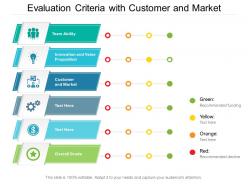
Evaluation criteria with customer and market





Try Before you Buy Download Free Sample Product
 Impress Your
 Audience
 100%
100% Editable
 Save Hours
 of Time


Use our Evaluation Criteria With Customer And Market to weave a web of your great ideas. They are guaranteed to attract even the most critical of your colleagues.
People who downloaded this PowerPoint presentation also viewed the following :
Evaluation criteria with customer and market with all 5 slides:
Our Evaluation Criteria With Customer And Market are designed to help you succeed. They have all the ingredients you need.


FAQs for Evaluation criteria with
Check your target market size first - is it actually growing or just stagnant? Competition analysis comes next because tons of players usually means there's real demand (though maybe oversaturated). I'd honestly skip the fancy reports and just talk to potential customers directly. Surveys work, but interviews are way better for getting honest feedback. Don't forget external stuff like economic trends or regulations that could mess with demand - learned that one the hard way. Oh, and seasonal patterns matter more than you'd think. Customer conversations beat everything else though.
So here's the thing - competitive analysis shows you whether your idea can actually make it. Check out who's already in the space and what they're charging. If a bunch of companies just crashed and burned doing your exact thing, maybe pump the brakes? But competition can be good too since it proves people want this stuff. Hunt for weak spots where competitors suck or ignore certain customers. Look at their pricing, missing features, angry reviews - that's your goldmine right there. Don't just copy everyone else though. Use what you learn to do something different.
Dude, you can't just look at your whole market as one giant thing. Break it down first - demographics, buying habits, what people actually need. Each chunk is gonna have different growth potential and competition levels. Like, going after big corporations versus small businesses? Totally different games. Some segments might look amazing on paper but be impossible to crack. Others could be goldmines nobody's paying attention to. Honestly, I learned this the hard way trying to sell to everyone at once. Analyze each piece separately and see which ones actually match what you're good at.
Honestly, start by pulling from everywhere - industry reports, competitor stuff, customer surveys, social media. Google Trends is actually super useful but people sleep on it. Don't get distracted by weekly changes though, they're mostly just noise. Focus on 6-12 month patterns instead. The real gold is in how customers talk about their problems - that language shift thing always catches trends early. I set up monthly alerts for keywords in my space (probably overkill but whatever). Most crucial part? Actually talk to customers before you pivot anything major based on what you're seeing.
Focus on TAM, SAM, and how much you can realistically grab. Don't just look at last year - markets get crazy volatile, so check 3-5 year trends instead. Customer acquisition costs vs lifetime value is huge too. How crowded is the space? That competitive density thing can kill you if there's too many players already. Oh, and timing stuff matters - like are there regulatory changes coming or is the tech finally ready for mass adoption? Honestly, regulatory shifts can make or break market entry. Get solid data on these first, then build your projections.
Dude, you gotta look at the big economic picture first before diving into any market analysis. Strong GDP, low unemployment, inflation under control? Go aggressive with growth stocks and revenue projections. But when those numbers start looking sketchy - and trust me, half the time economists don't even agree on what they mean - you need to shift gears completely. Focus on boring stuff like cash flow and debt ratios instead. Markets get weird when the macro environment goes sideways. It's honestly like the difference between driving on a clear highway versus navigating through a storm.
Honestly, start by checking out who you're up against - map the top 3-5 competitors and see where they're positioned. A crowded market isn't always bad though, sometimes it just means people actually want to buy this stuff. Look at how loyal customers are to existing brands and whether it's easy for them to switch. The regulatory stuff matters too - you don't want to enter right when new rules are dropping. I'd also dig into barriers to entry and what stage the market's in. Cultural factors are huge but people forget about them. Once you know the competitive landscape, work backwards to spot the gaps nobody's filling yet.
So SWOT analysis is basically this framework where you map out strengths, weaknesses, opportunities, and threats - sounds boring but it's actually super useful. Instead of just chasing whatever opportunities look shiny, you're forced to think about whether you can actually handle them. Like, do your strengths match what the market wants? What weaknesses might bite you later? The cool part happens when you start connecting the dots between quadrants. Maybe you'll spot a perfect opportunity that plays to your strengths, or realize a threat could totally wreck you if you don't fix a weakness first. Just dump everything into four boxes then look for patterns.
Dude, regulations will absolutely make or break you. Compliance costs and approval timelines eat into everything - your budget, your timeline, the whole thing. Healthcare and finance are brutal because existing companies basically have these regulatory moats protecting them. Lucky them, sucks for you trying to get in. Plus regulations aren't static - what's required today might change next year. I learned this the hard way on a fintech project once. Build that regulatory risk assessment into your market projections early. Don't wait until you're already committed to find out you can't actually operate in half your target states.
Honestly, just compare what your criteria predicted against how customers actually reacted. If they're loving something you rated low, your system's off. Customer interviews are pure gold - they'll reveal stuff you never thought to track. I do this thing where I look for patterns in their feedback that show gaps in my framework. Then I tweak the weights or throw in new criteria. Oh and make it regular, like every quarter or whatever works. Real user data beats guessing every time. Don't overthink it - the market will tell you what matters.
SurveyMonkey or Typeform are solid for getting numbers. But honestly? Don't sleep on just talking to people - interviews and focus groups tell you way more than any survey will. Google Analytics shows what people actually do on your site, which beats what they say they do. I'm probably obsessed with checking out competitors using SEMrush or similar tools. You'd be surprised how much you can steal... I mean learn from them. Industry reports from Statista are good too, though sometimes pricey. Mix a few methods together and always double-check with real customers before you make any big moves.
Honestly, consumer behavior studies are gold for figuring out how people actually buy stuff. Way better than just staring at sales numbers all day. They show you the "why" behind purchases - like what makes someone choose brand A over B, or what price point makes them bail. You can catch trends early and find gaps competitors are missing. Plus they help you segment markets properly instead of guessing. I'd definitely use them to double-check your assumptions about who your customers really are. Oh, and they're super helpful for sizing up demand shifts before they happen. Makes your whole market eval feel less like shooting in the dark.
Tech changes flip everything about how you evaluate markets. What worked five years ago? Probably useless now - I mean, remember when mobile wasn't even a thing companies worried about? Then suddenly it became life or death. Your usual metrics get thrown out the window. Customer acquisition costs, competitive moats, scalability - they all mean something different when new tech drops. Build some flexibility into how you assess things so you're not caught off guard. Honestly, I'd check your assumptions every few months and ask "what could completely screw up our current thinking?"
Honestly, pricing tells you everything about a market's potential. Premium pricing usually means strong demand and less cutthroat competition - that's the sweet spot. Those low-price markets? Sure, they look easy to enter, but you'll be fighting over scraps with everyone else. Check what competitors are charging first, then figure out price elasticity. Will customers stick around if you bump prices 10%? Some markets are super sensitive, others aren't. The tricky part is understanding what actually makes people willing to pay more in your specific segment. I learned this the hard way with my last project - thought we could charge premium but customers just weren't having it.
Think of market risk evaluation as your strategic GPS. You're basically mapping out volatility, competition, and demand shifts to figure out your next moves. Should you enter that new market? Launch the product? Maybe back away from certain segments? Having this data is like checking the weather before camping - obviously way smarter than going in blind. The cool part is you can actually put numbers on potential downsides and compare different options. Then you've got realistic expectations when talking to stakeholders. Just don't be that person who does all this analysis and then lets it collect dust in some folder.
No Reviews