

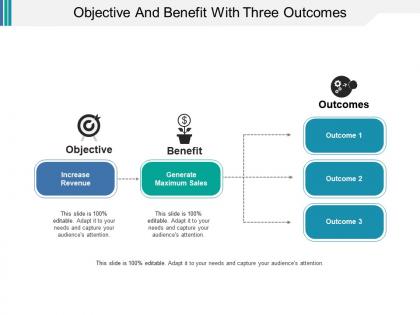
Objective and benefit with three outcomes




Try Before you Buy Download Free Sample Product
 Impress Your
 Audience
 100%
100% Editable
 Save Hours
 of Time


Cap it all with our Objective And Benefit With Three Outcomes. They will be your crowning glory.
People who downloaded this PowerPoint presentation also viewed the following :
Objective and benefit with three outcomes with all 5 slides:
Enable them to absorb the impact of hardship with our Objective And Benefit With Three Outcomes. The grind becomes easier to bear.
FAQs for Objective and benefit
So output objectives are basically what you *do* - like "send 100 emails this month." Pretty straightforward stuff you can control. Outcome objectives? That's what you actually *achieve* - think "boost customer engagement by 15%." Way harder to measure but honestly more important. Most teams (mine included lol) get trapped counting outputs because they're so much easier to track. But outcomes force you to ask if your work actually matters. I'd say set both types, just make sure your outcomes connect to real business goals. Otherwise you're just busy for no reason.
Honestly, most people mess this up by tracking the wrong stuff. You want metrics that actually matter - customer satisfaction, revenue, retention rates. Not just busy work that looks impressive on paper. Before you even start, ask yourself what success actually looks like. Then set real targets with deadlines. Track everything through dashboards so you can see if you're moving the needle or just spinning your wheels. The whole point is measuring what changed because of your work, not documenting every little thing you did. Makes a huge difference once you get it right.
Dude, you absolutely need stakeholder feedback when setting objectives - it's like your sanity check. Without it, you're basically guessing what people actually want. Get their input early to understand what success means to them, then keep checking in as you go. I've watched so many teams think they nailed it only to totally miss the mark (honestly kind of painful to see). Their feedback helps you focus on metrics that actually matter instead of just pretty numbers for your dashboard. Oh, and definitely interview key people about their pain points before you even start writing objectives.
Dude, outcome-based goals are game changers for teams. Instead of "write 10 blog posts," try "boost organic traffic 30%." Now your content writer, SEO person, and designer all get they're chasing the same thing. It's wild how fast people start actually talking to each other when they realize they need each other to win. I've seen teams go from siloed to collaborative overnight with this shift. Your next project? Skip the task list. Pick one clear outcome everyone can rally behind - you'll be shocked how different the energy feels.
Start with good documentation everyone can actually find - shared docs or project tools work well. Regular meetings help reinforce goals (people forget constantly, it's just human nature). Visual stuff like dashboards makes progress feel real instead of abstract. Connect individual tasks back to the bigger picture so people see how their work matters. Honestly, I'm probably being repetitive here but consistency across all your communication is huge. Check in often to make sure everyone's still on the same page about what success looks like. It sounds simple but it really works.
So instead of asking "did we build what we said we would?" you're asking "did we actually get the result we wanted?" It's a total mindset shift. You'll be changing scope constantly - feels messy but makes way more sense honestly. Success isn't about checking off deliverables anymore, it's about real impact like user numbers or revenue. Planning gets way more flexible since you're chasing outcomes, not a rigid feature checklist. Oh and definitely figure out what "winning" looks like before you even start building anything - saves so much headache later.
Honestly, tracking gets SO much easier with the right tech tools. They automate all the data collection stuff so you don't have to do it manually (thank god). Dashboards let you see your key metrics in real-time, plus you can set alerts for when things go sideways. The best part? Reports actually show impact instead of just busy work. I use analytics platforms and project management tools that pull from different sources - gives you the full picture. Start by figuring out which metrics actually move the needle for your goals, then find tools that track those automatically. Game changer.
Honestly, the worst thing I see is when teams think they're being outcome-focused but they're really just listing tasks. "Implement new CRM system" isn't an outcome - "boost customer retention by 15%" is. Also watch out for super vague goals like "improve customer satisfaction." What does that even mean? And don't pick stuff your team can't actually control. Here's what really gets me though - companies will spend all this time crafting perfect outcome objectives, then turn around and micromanage every little decision. Makes zero sense. Pro tip: keep asking "so what?" after each goal until you find the real business impact you're chasing.
Honestly, start by looking at what actually happened with your last few goals - where did you totally miss the mark? Pull real data from your past performance and current resources, not just wishful thinking. Your team knows what's actually doable way better than you do from your desk, so ask them first. I always break massive goals into smaller chunks because pivoting is so much easier that way. Oh, and definitely pad your timeline - everything takes like 30% longer than you think it will. Run small tests when you can before going all-in. Trust me on the buffer thing though, it'll save your sanity.
Honestly, outcome-based goals work because people can actually see what they're working toward. When your team understands how their daily stuff connects to the bigger picture, they're way more invested. There's also that dopamine hit when you cross something meaningful off your list - I'm totally guilty of adding things I already did just to check them off! The trick is making those outcomes feel realistic and personal to each person. Career growth, learning new skills, or just fixing annoying problems that actually matter to them. Short goals keep momentum going too.
Stop asking your team what they got done today. Ask what actually changed instead. I learned this the hard way - you can feel super busy checking boxes while making zero real progress. Open every meeting with "did we hit our targets?" not "what's everyone working on?" When things go well, celebrate it. When they don't, figure out why together without playing blame games. Here's the thing though - once you've agreed on the goals, let your people solve it however they want. Quit hovering over their process and just track what matters.
So Target's a great example - they switched from "spend more on marketing" to "boost customer retention by 15%." Way more specific. Hospitals do this too, setting goals like "cut readmissions by 20%" instead of just "better patient care" (which honestly means nothing). Tech companies are probably the best at this - they track actual user engagement numbers rather than some fuzzy "improve user experience" goal. Once you notice this pattern, you'll see it everywhere. The trick is measuring what actually moves the needle for your business, not just the stuff you're doing to get there.
Honestly, you've gotta get way more specific about results when everyone's remote. Skip the vague stuff like "better communication" - go for hard numbers instead. Maybe "cut project time by 15%" or hit "90% client satisfaction." I learned this the hard way lol. Remote work actually helps here because you're forced to define what winning looks like. Set real deadlines with metrics anyone can check. Weekly check-ins become your lifeline too. That way if someone's struggling, you'll catch it fast and can pivot before things go sideways.
Honestly, SMART goals are your best bet if you're just starting out - Specific, Measurable, Achievable, Relevant, Time-bound. Pretty basic but it actually works. OKRs are solid too if you want something that connects your big vision to real numbers you can track. Logic models are handy for mapping how your work leads to results, though I feel like Theory of Change gets way too complicated unless you're running some massive project. The main thing? Pick one approach and stick with it instead of bouncing around. I've seen people get paralyzed trying to combine frameworks when they should just start somewhere simple.
Dude, outcome-oriented objectives are perfect for Agile/Lean stuff. Instead of "build this feature," you're like "increase user retention 15%." Way better, right? Your team actually gets why they're doing the work during sprint planning - not just what they're building. Lean methodology loves it because you stop wasting time on features that don't actually impact your metrics. I learned this the hard way on my last project, honestly. Just define the outcome you want before your next sprint, not the specific features you think you need to ship.
-
It saves your time and decrease your efforts in half.
-
Colors used are bright and distinctive.