


Strategic planning with goals and results




Try Before you Buy Download Free Sample Product
 Impress Your
 Audience
 100%
100% Editable
 Save Hours
 of Time


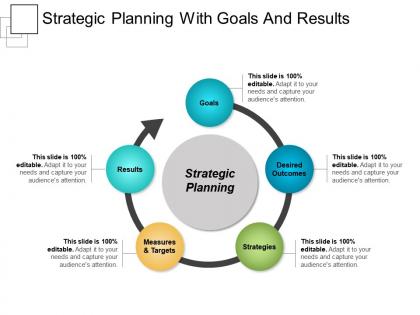
Help to make a successful organization with the help of Strategic Planning With Goals and Results PowerPoint template. Ensure that your employees and stakeholders are working towards a common goal by mentioning critical elements of strategic plan using this effective slide. Include the processes that an organization uses to coordinate for the implementation of the strategy using this effective strategic management template. Take advantage of this strategic management process layout and include five stages of the process such as goal setting, analysis, strategy formation, strategy implementation, and strategy monitoring. You can mention the examples of strategic goals like time, dollars, percentage, numerical count in order to execute an action plan using strategic objective PPT layout. Also, describe outcomes of strategic planning which help to get desired results. Now, download this visually attention-grabbing operational planning slide and help your company to achieve effective results.
People who downloaded this PowerPoint presentation also viewed the following :
Strategic planning with goals and results with all 5 slides:
Our Strategic Planning With Goals And Results foster equality. Any and everyone can use them at will.

FAQs for Strategic planning with
Okay so first figure out your vision and mission - where are you actually trying to go? Then do an environmental scan (I know, sounds boring but trust me). Look at your internal strengths and weaknesses, plus external opportunities and threats. Most people totally skip this step and regret it later. Set specific goals with actual numbers, not vague stuff. Map out strategies to hit those goals and assign owners with deadlines. Oh, and don't forget regular check-ins - quarterly works well for course corrections when things inevitably go sideways.
Honestly, most organizations mess this up by doing it backwards. Start with your mission statement and figure out what it actually means day-to-day. Then pick 3-5 areas where you really need to move the needle. Here's the thing - if a goal doesn't directly help you hit your mission, just dump it. I see this all the time where teams create these elaborate strategies that sound impressive but don't connect to anything meaningful. Have everyone explain how each initiative gets you closer to your vision. If they can't do it in normal words, that's your red flag right there.
So stakeholder analysis is like mapping out who actually gives a damn about your strategy - and trust me, there's always more people than you think. List everyone who could mess with your plan or get affected by it: employees, customers, investors, regulators, even community groups. Then plot them on one of those power/interest grids to see who you need to kiss up to first. The whole point? Understanding their influence and what pisses them off so you can get buy-in from the right people. Sounds boring but honestly saves you from so much drama later when someone comes out of nowhere to torpedo your project.
SWOT analysis is basically mapping out your strengths, weaknesses, opportunities, and threats all in one spot. Sounds pretty basic, right? But it's actually super helpful for strategic decisions. You'll want to be brutally honest during the whole thing - that's what makes it work. Use your strengths to go after opportunities, figure out how to fix weaknesses that might trip you up, and plan for potential threats. I know it feels like business school stuff, but once you map everything out, prioritize the biggest issues and build your strategy around those. Trust me, it's way more useful than it looks on paper.
Track your financials obviously - revenue growth, profit margins, ROI on the big stuff. But don't sleep on the operational metrics. Customer satisfaction, employee engagement, market share shifts - that's where you'll spot trouble before it tanks your numbers. Honestly, pick maybe 5-7 metrics tops that actually connect to what you're trying to achieve. I've seen people drown in data when they track everything. Set up some kind of monthly dashboard so you're not flying blind. Way easier to pivot when you catch things early instead of scrambling later.
Honestly, you've gotta bake flexibility right into your planning from day one. Check in quarterly - maybe even monthly if things are moving fast. Annual planning is basically dead at this point, at least for anything customer-facing. Your strategic plan should feel more like a Google doc than something printed and bound, you know? Scenario planning helps a ton here. Figure out what parts of your strategy could get wrecked by market shifts and watch those like a hawk. Oh, and set up some trigger points that force you to revisit everything when certain metrics hit.
Oh man, the classic mistakes? Vague goals that mean nothing, plus leaving out key people who'll actually do the work. I've seen so many plans just become expensive paperweights. Don't be that person who says "three months tops" when you know damn well it's gonna be eight - we're all guilty of that optimism trap. Get different departments involved early instead of planning solo. Build in regular check-ins because things will go sideways. Oh, and be brutally honest about your actual resources versus your wishful thinking. Pick one clear goal first, then expand from there.
Dude, tech makes strategic planning so much less painful. AI can spot market trends you'd totally miss, and predictive analytics helps you see what's coming down the road. Those visualization dashboards? Way better than staring at endless spreadsheet rows - actually makes data interesting for once. Cloud platforms let your team stay synced up even when everyone's working remotely. Real-time insights beat those outdated reports we used to rely on. Honestly, just pick whatever manual task is currently eating up your time and automate that first. You'll wonder why you waited so long.
So basically, scenario planning is about creating 3-4 different "what if" stories for your business instead of just crossing your fingers on one outcome. Think of it like this - what happens if new tech completely disrupts your industry? Or the economy tanks? Each scenario forces you to actually think through how you'd pivot. I mean, it's honestly just having multiple backup plans ready to go. The tricky part is figuring out your biggest uncertainties first - that's where you build your scenarios around. Way better than being blindsided when things inevitably change.
Honestly, get your people involved from day one instead of dropping some fancy plan on them later. I'd start with surveys or maybe some town halls - find out what they actually think the problems are. Leadership loves creating stuff behind closed doors but it backfires every time. Show them the "why" and prove their input mattered in the final plan. Don't do that vague "we're all responsible" thing either. Give specific people specific jobs. The whole point is making them feel like they helped build it, not like they're just getting told what to do.
Honestly, your company culture and strategy have to work together or you're screwed. Like, if your plan needs people to take risks but everyone's terrified of making mistakes, good luck with that. Culture affects how people actually do the work, not just what's written on paper. Over time though, the strategic moves you make will slowly change your culture too. It's weird how that works. You really need to look at whether your team's current vibe can handle what you're trying to achieve. Then fix the gaps through who you hire, how you reward people, and what leadership actually does day-to-day.
Honestly, most companies should do a full strategic review once a year, but don't wait that long to check in. Quarterly reviews are where the magic happens - you'll catch problems early instead of scrambling later. Three-year plans that sit untouched are basically expensive paperwork at this point. The world changes too fast for that. If you're in tech or something equally chaotic, maybe check in monthly on the big stuff. Block those quarterly sessions in your calendar right now. Seriously, treat them like you would any other meeting that actually matters for your business.
Honestly, leadership makes or breaks everything. You could have the most brilliant strategy ever, but if your leaders aren't actually driving it forward, it's worthless. They need to keep communicating the vision and make those hard decisions about where to spend money and time. When stuff inevitably goes sideways (which it always does), good leaders keep everyone focused. Plus they have to actually walk the walk - if they're not living the strategy, why would anyone else? The smart ones also know when to pivot the plan because, let's be real, things rarely go exactly as expected. Just make sure your leadership team is genuinely on board.
Honestly, the biggest mistake people make is using the same pitch for everyone. Your board cares about different stuff than your front-line team does. Break it down for each group - why should THEY care? Skip the corporate jargon too. Nobody wants to decode your strategy speak when they're already swamped. Mix up how you communicate - emails, meetings, those visual dashboard things if that's your vibe. I've watched so many solid plans die because leadership just sent one email and called it done. Make it a back-and-forth thing. Answer questions, ask for input, then keep bringing it up. Oh, and create something simple they can reference later when they inevitably forget the details.
Honestly, you've gotta bake innovation right into your planning from day one. Budget for it specifically - don't just hope it happens. Cross-functional teams work way better than keeping everyone in their usual boxes. Here's the thing most companies mess up: they punish failure instead of rewarding smart experiments. I'd also do regular check-ins to see what's actually moving the needle. Oh, and pick one area to test this out next quarter rather than trying to overhaul everything at once. Innovation can't just be an afterthought if you want it to stick.
-
Understandable and informative presentation.
-
Unique and attractive product design.