


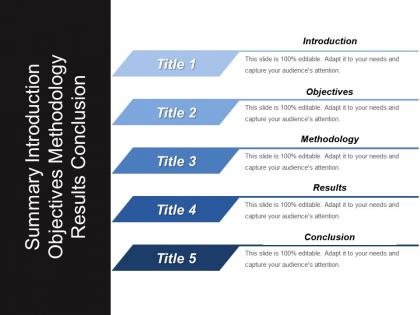
Summary introduction objectives methodology results conclusion




Try Before you Buy Download Free Sample Product
 Impress Your
 Audience
 100%
100% Editable
 Save Hours
 of Time


Enhance empowerment with our Summary Introduction Objectives Methodology Results Conclusion. Facilitate the generation of bright ideas.
People who downloaded this PowerPoint presentation also viewed the following :
Summary introduction objectives methodology results conclusion with all 5 slides:
Our Summary Introduction Objectives Methodology Results Conclusion offer you complete freedom. They let you delve into your every desire.
FAQs for Summary introduction objectives
Start with a solid research question - has to be specific and testable or you'll get nowhere fast. Pick your method based on what you're actually trying to figure out (qualitative vs quantitative). Sample size is huge, way more than most people realize. You'll need a plan for controlling variables and dodging bias too. Ethics approval's required if you're dealing with human subjects - learned that one the hard way! Honestly, nail down that research question first and everything else just clicks into place. The methodology flows naturally once you know exactly what you're asking.
Okay so you basically need four things: effect size, power (usually 80%), significance level (0.05), and how variable your data is. Honestly just use G*Power or some online calculator - way easier than doing the math yourself. Figure out the smallest difference that actually matters to you first, then punch those numbers in. Oh and if you're doing surveys, factor in response rates too since people flake. I always bump up my final number by like 10-20% because dropouts are inevitable and missing data sucks to deal with later.
So quantitative is all about numbers - like surveys with rating scales that tell you 73% of people clicked something. Pretty straightforward stuff. Qualitative is more about the messy human side through interviews and focus groups where people actually explain their thoughts. You get the "why" instead of just the "what." Honestly, I think qualitative research is way more interesting even though it's harder to analyze. Most decent projects mix both approaches anyway since numbers alone don't tell you much about user frustration or behavior motivations.
Honestly, the biggest thing is just being super transparent about everything you do. Document your methods clearly and make sure your sample size actually makes sense. Get other people to review your work - seriously, you'll be amazed what you miss but they catch immediately. Deal with biases and confounding variables from the start, don't wait. Oh, and preregister your studies if you can. Report all your results too, even the boring ones nobody wants to hear about. Bottom line: if someone can't replicate what you did, you're screwed credibility-wise.
So basically, your lit review shows what's already been studied and where the research gaps are. You'll avoid duplicating work that's already been done and figure out which theories actually hold water. Super boring at first, not gonna lie, but it saves you from major headaches down the road. Plus it proves you're not just making stuff up - you actually know the field. Oh and definitely don't wait until the last minute to start it. Keep updating as you find new sources instead of treating it like some box to check off.
Get IRB approval first - that's non-negotiable. Then just be super clear with people about what you're actually doing and why. The consent stuff shouldn't feel like reading a legal document, but don't skip the important bits either. Let people know they can bail anytime, no questions asked. Oh, and definitely loop in some community folks when you're planning everything out. They'll spot problems you totally missed. I learned that the hard way on my first study lol. Better to play it safe than scramble to fix things later when someone rightfully calls you out.
Honestly, start with clear research questions before you even touch the data. Pick stats methods that actually make sense for what you're investigating. Clean everything thoroughly first - seriously, messy data will ruin your whole analysis. I always use visualization early on to catch weird patterns or outliers. Document as you go (trust me on this one, you'll forget your logic later). Try multiple approaches to validate findings when you can. Oh, and do some exploratory analysis first to get a feel for the dataset before jumping into formal tests.
Start with the obvious stuff - citation counts, media mentions, policy refs. The real measure though? Whether people actually change what they're doing because of your research. Track new programs, funding shifts, behavior changes in whoever you're studying. Social media buzz and feedback from practitioners matter too (sometimes more than fancy metrics, tbh). First figure out what impact means for YOUR specific work, then build measurements around that. Oh and don't forget implementation data - that's where you'll see if your research actually moves the needle or just sits on a shelf.
Okay so first thing - get Zotero or Mendeley ASAP. Seriously, citations will destroy your soul otherwise. I use Notion for organizing everything but Obsidian's cool too if you want that mind-map vibe. Google Scholar's the obvious starting point, plus ResearchGate, but check your field's specific databases. Qualtrics makes surveys way less painful. Oh and if you're doing qualitative stuff, NVIVO or Atlas.ti are lifesavers - though Atlas has this weird learning curve that annoyed me at first. The research rabbit holes are so real though. Start with the reference manager, you'll be thanking me when you're scrambling before deadlines.
Honestly, the biggest mistake researchers make is not matching their communication style to who they're talking to. Skip the jargon when you're presenting to regular people. Lead with your main finding right away - don't make them wade through all your methodology first. Charts and infographics are your best friend here. I've watched amazing research get completely ignored because the presentation sucked, which is honestly heartbreaking. Always answer the "so what" question upfront. Why should they care? Also, start working on your elevator pitch now. You'll need it way more than you expect, trust me.
Ugh, confirmation bias is the worst - you end up only finding stuff that backs up what you already believe. Don't fall into Wikipedia rabbit holes either (fun but totally uncitable). Sketchy websites and super old sources will tank your credibility too. Here's what actually works: start broad to get the big picture, then zoom in. Track your sources immediately or you'll hate yourself later when you're scrambling to cite everything. Seriously, make a simple doc from day one. I learned this the hard way during my psych paper nightmare last semester.
Honestly, funding makes or breaks everything. Got money? You can hire solid people, get decent equipment, run proper studies. Broke? You're dealing with tiny sample sizes and sketchy data - trust me on this one. Timeline gets screwed too because underfunded stuff just drags forever. What really helped me was planning around constraints from the start instead of pretending I had unlimited resources. Oh, and don't try to hide your limitations when presenting - people can usually tell anyway.
Okay so peer review is basically quality control for research - other experts in your field look over your paper before it gets published. They check your methodology, findings, all that stuff to catch mistakes or bias you missed. Honestly it's pretty nerve-wracking waiting for feedback! But the reviewers are anonymous and usually give solid suggestions that actually improve your work. The whole process legitimizes your research too. I mean, anyone can write a paper, but peer review separates real scholarship from random blog posts. When you're ready to publish, just go for it - those critical comments will make your study way stronger even if they sting at first.
Working with people from other fields is honestly a game changer. You'll catch blind spots that would've totally slipped past you otherwise. Different methodologies and frameworks reveal patterns you'd never notice staying in your own bubble. My advisor always says every discipline has its "we've always done it this way" moments - collaboration helps you dodge those traps. Your findings get way more solid too since you're testing ideas against completely different academic traditions. Oh, and grab coffee with researchers doing adjacent work! Even random conversations can totally shift your project direction.
So basically, open access gets rid of those annoying paywalls on research papers. Your work becomes way more accessible - especially huge for researchers at smaller schools who can't afford those crazy expensive journal subscriptions. More people can actually read and cite your stuff, which is honestly pretty cool for your career. Scientific progress moves faster too since everyone can build on each other's research instead of being locked out. I always think it's wild how much knowledge gets stuck behind paywalls. Definitely consider it for your next paper if you can swing it.
-
Unique research projects to present in meeting.
-
Thanks for all your great templates they have saved me lots of time and accelerate my presentations. Great product, keep them up!