

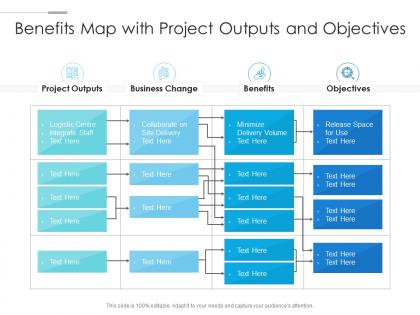
Benefits map with project outputs and objectives




Try Before you Buy Download Free Sample Product
 Impress Your
 Audience
 100%
100% Editable
 Save Hours
 of Time


Our Benefits Map With Project Outputs And Objectives are topically designed to provide an attractive backdrop to any subject. Use them to look like a presentation pro.
People who downloaded this PowerPoint presentation also viewed the following :
Benefits map with project outputs and objectives with all 2 slides:
Use our Benefits Map With Project Outputs And Objectives to effectively help you save your valuable time. They are readymade to fit into any presentation structure.
FAQs for Benefits map with project
Honestly, most teams screw up the tracking part - they get obsessed with just shipping stuff and forget to actually measure if it worked. Start by mapping out what benefits you expect upfront, then get your baseline numbers down. Create a plan with clear owners and deadlines (someone needs to own this thing end-to-end, not just during the fun planning phase). Track your progress regularly against those baselines. And here's the thing - you'll probably need to pivot your approach because what you planned rarely matches reality. Short sentences work. But don't skip the measurement part just because delivery feels more urgent.
Honestly, the biggest screw-up I see is teams not setting up their metrics beforehand - they try measuring success after everything's already rolling. Get your baseline numbers first. Track the obvious stuff like cost savings and revenue, but don't forget the squishy things like how happy stakeholders are. Regular check-ins are clutch for seeing if you're actually hitting what you promised in your business case. Pick maybe 3-5 indicators that actually matter instead of tracking everything under the sun (learned that one the hard way). Keep it simple and consistent.
Honestly, most of the time it comes down to nobody planning properly upfront. Teams just dive in without figuring out what "success" actually means or who's gonna track it. Then you get the whole "set it and forget it" mess - I swear, projects just float around aimlessly after they launch. Money's always tight too, especially when you're trying to measure fuzzy stuff like customer happiness. Oh, and don't get me started on departments that won't talk to each other. Makes capturing cross-team benefits nearly impossible. My advice? Get someone owning this from day one.
Honestly, without stakeholder buy-in, your project benefits will just disappear once you launch. I've watched so many teams nail the technical side but completely bomb on benefits - people just drift back to their old habits. Your stakeholders need to get what success actually looks like and help figure out realistic targets. More importantly though, they're the ones who'll change how they work and push others to hit those benefit numbers. The trick is mapping out your key people early and getting them involved in defining what benefits actually matter to them. Otherwise you're basically building something nobody really wants to use properly.
Think of KPIs as your project's report card - they show if you're actually getting the value you promised. Pick ones that tie directly to your benefits, not just random metrics that sound impressive. I learned this the hard way when my team spent months tracking stuff that didn't matter at all! Outcomes beat outputs every time. Keep it simple with 3-5 KPIs max. Set your baseline numbers early so you'll know what improvement looks like. Oh, and get everyone to agree on what "success" means upfront - saves so many headaches later.
Don't treat benefits tracking like some afterthought - bake it right into your project phases from day one. During initiation, nail down what you'll actually measure. Then find specific people who'll stick around after launch and make it their job to track this stuff. I do quarterly check-ins, but honestly whatever rhythm works for your team. Build a simple dashboard comparing your baseline to real results. Here's the thing though - most people wait until the end to start measuring, which is backwards. Start tracking benefits the moment you deliver anything useful. Otherwise you'll have no clue if the project actually worked.
Honestly, start with a basic benefits register - way simpler than it sounds. Document what you're expecting, who owns what, and set actual measurable targets with review dates. Logic models and balanced scorecards work great too for tracking promises vs reality. Simple dashboards beat complex frameworks every time, trust me on this. You'll need a benefits realization plan template and build checkpoint reviews right into your timeline. Oh, and if you need something formal, MSP frameworks are decent but kinda dry. Benefits register first though - everything else builds from there.
Look, benefits realization basically keeps you honest about whether your projects actually deliver on strategy. You're constantly measuring real outcomes against what you said you'd achieve. Most companies skip this part and wonder why nothing connects. Track which initiatives are actually moving things forward vs. just eating budget. Your metrics need to tie directly back to strategic goals - otherwise you're just collecting random data. I'd start by mapping current projects to actual outcomes and see what's missing. It's honestly the only way to spot when you're veering off track before it's too late.
Dude, you've gotta speak their language - execs want those ROI numbers while your ops people care about actual day-to-day stuff. Visuals are your best friend here. Seriously, nobody reads dense reports anymore (I learned this the hard way). Monthly updates work well without being annoying. Tell the story behind your data instead of just throwing numbers at people. Oh, and be honest when things aren't working - people respect that way more than you'd think. Always end with what's happening next so they're not left wondering.
Here's the thing - you can build the perfect project, but if people won't actually use it differently, you're screwed. Change management gets your stakeholders on board instead of fighting you every step. Start early with clear communication about what's changing and why they should care. Training helps too, obviously. The "what's in it for me" angle is huge - people need to see personal benefits, not just company ones. I've seen too many great projects fail because someone treated change management like an afterthought. Don't be that person.
You should check out Kaiser Permanente's EHR rollout - they tracked clinical metrics and actually saved money while improving patient care. Toyota's lean manufacturing is still the best example though, honestly their obsession with measuring waste reduction is kind of crazy but it worked. Target did something similar with supply chain stuff, cut inventory costs and sped up deliveries. Oh, and they all picked specific metrics upfront instead of figuring it out later. I'd say grab 3-4 things you can actually measure before you start your project. Makes it way easier to prove it's working.
Honestly, automation is a game-changer for this stuff. Set up dashboards that update in real-time and alerts when things go sideways. Project management tools work great, or even fancy spreadsheets if you're not ready to go all-out yet. The visual reports make stakeholder updates so much easier - no more scrambling to pull numbers together last minute. Don't overthink the tech stack though. I'd start with automating just one report first, then expand from there. You'll be shocked how much time you get back from not doing everything manually.
Look, the numbers don't lie - projects that actually track their benefits hit success rates around 70% compared to like 30% for ones that don't. Pretty crazy difference, right? You've gotta map out what value you're expecting upfront and assign people to own those outcomes. Smart decisions happen when everyone's focused on real results instead of just checking boxes. Plus you'll spot problems way earlier, and stakeholders actually stay interested because they can see tangible progress. Honestly, most teams skip this step and then wonder why things fall apart later. Start with specific, measurable benefits every single time.
Don't make this a one-off thing - you've gotta weave benefits tracking into how you already run stuff. Pick 2-3 benefits that actually matter and track them monthly. Here's what kills me though: companies throw launch parties then completely forget about measuring results. Assign real owners, not just people who "monitor" (big difference). Build simple dashboards that your leadership team will actually check regularly - not some 50-slide deck nobody opens. Honestly? Tie it into performance reviews and budget planning. That's when people start caring. Make it feel natural, not like extra homework.
Honestly, you need both hard data and people's actual opinions to prove your benefits worked. Compare your current numbers against whatever you measured before - KPIs, financials, productivity stuff. But also talk to people! Surveys and interviews catch the fuzzy benefits that spreadsheets totally miss. Quick tip though - don't just check once and call it done. I'd do quarterly reviews or something regular like that. Oh, and make a simple tracking system so you're measuring the same things each time. Otherwise you'll be all over the place and won't know what's actually working.
-
Design layout is very impressive.
-
Innovative and Colorful designs.