


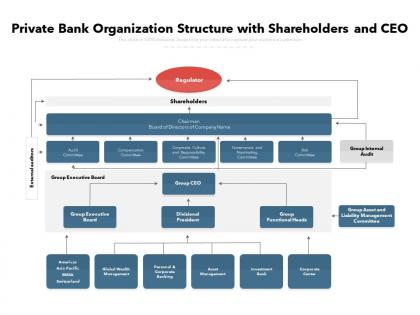
Private bank organization structure with shareholders and ceo




Try Before you Buy Download Free Sample Product
 Impress Your
 Audience
 100%
100% Editable
 Save Hours
 of Time


No burden is too hard to carry for our Private Bank Organization Structure With Shareholders And CEO. They accept any assignment.
People who downloaded this PowerPoint presentation also viewed the following :
Private bank organization structure with shareholders and ceo with all 2 slides:
Go hard at it with our Private Bank Organization Structure With Shareholders And CEO. They will help you double the effort.

FAQs for Private bank organization structure with
Private banks have three main layers. Relationship managers sit at the top - they're the client-facing people dealing with wealthy families. Below them you've got the investment teams doing the actual money management stuff, plus analysts and researchers. Then there's all the back-office support like compliance and operations. It's way messier than regular banking because of all the regulatory hoops with rich clients. Everything basically flows through those relationship managers though - they're honestly the most important people since they bring in the money and keep clients happy. Kind of makes sense when you think about it.
So governance basically controls who decides what and how quickly stuff happens. Relationship managers handle the daily client work, but anything risky or big money has to go up the chain to senior people or committees. Banks are way more rigid than other financial places - I found that out the annoying way. Complex clients mean more approval layers to deal with. My advice? Figure out the decision chain early and get to know the key approvers. Seriously saves so much headache when you need fast approval for client stuff. Oh, and don't underestimate how long some of these processes take.
So compliance is basically the department that keeps everyone out of jail lol. They're like a buffer between us and the regulators - reviewing new clients, watching for sketchy transactions, making sure wealth managers follow all the KYC and anti-money laundering rules. Honestly they can feel like the fun police sometimes when they shoot down risky clients, but they've got veto power over any client relationship for good reason. They report straight to the top. Pro tip: if you're ever not sure about regulatory stuff with a client, just ask them first. Way better than guessing and getting it wrong.
So private banks basically split their teams by how rich you are. Ultra-high-net-worth ($25M+) gets one setup, high-net-worth ($1-25M) gets another, then there's emerging affluent below that. Makes sense honestly - billionaires need totally different stuff than someone with like $2M. The super wealthy get their own dedicated relationship managers plus whole support teams. Lower tiers? You're probably sharing resources or dealing with apps and digital stuff mostly. Oh and this structure thing actually matters because it determines what products you can even access and how much hand-holding you get.
So the CIO is basically the investment mastermind of the whole operation. They set the big strategy that everyone else follows when managing client money. Reports straight to the CEO usually since they're dealing with portfolios worth crazy amounts. All the portfolio managers and research people work under them, so any investment ideas you hear? That's their framework at work. They also do the client-facing stuff for major decisions and speak for the bank publicly about market views. Honestly, they're the ones you want on your side if you're trying to get strategic direction on anything portfolio-related. Pretty important role.
So banks are ditching those old rigid hierarchies for flatter teams. Digital tools mean relationship managers can reach senior leadership way faster now - no more endless layers. Honestly, the siloed approach is pretty much dead. Client teams need instant access to analytics and compliance stuff, so banks are restructuring around client needs instead of product lines. They're embedding tech people right into wealth management teams rather than keeping IT separate (which actually makes sense). If you're doing this restructuring thing, just focus on getting tech, compliance, and client services working together daily. Way more effective than those old tower setups.
Yeah so relationship managers usually report to senior RMs or team heads, then those guys report up to regional directors. Pretty straightforward hierarchy on the client-facing side since they're the ones bringing in money. Credit, compliance, ops - they have this weird dotted-line thing with front office but actually report to their own functional heads. Investment specialists are kind of in the middle supporting multiple RM teams, which honestly seems like it could get messy. Oh and even if you don't directly report to someone, you'll end up working with them constantly anyway on client stuff. Communication's everywhere in these places.
Most private banks embed risk management right into their org chart now. Chief risk officers report directly to the board (or should, anyway - red flag if they don't). Each division has its own risk managers too. What's changed is the two-way flow - risk appetite comes from the top, but actual exposure data bubbles up from wealth management, lending, all the units. It's way better than the old days when risk was just some isolated department everyone ignored. Board-level risk committees are pretty standard now. Honestly, check how independent their CRO actually is - that tells you everything.
Honestly, start by mixing your teams up - get relationship managers actually working with ops and compliance people on real deals, not just sitting in boring meetings together. Digital workspaces where everyone can track client stuff and deal progress work way better than email chains (trust me on this one). The big thing though? Fix your incentive structure so departments aren't stabbing each other in the back for budget or credit. I'd probably just pick two departments and run a pilot first - see what breaks and what actually works before rolling it out everywhere.
Honestly it's all about what level you're going for. Entry-level? They do massive campus recruiting and throw you into rotational programs to learn the basics. Mid-level gets more targeted - headhunters start calling with specific technical training. Senior roles are basically just stealing people from other banks (seriously, everyone just hops around). For executives, it's all board-level searches and they expect you to already know everything. The higher up you go, the less hand-holding you get. Oh and figure out which tier you want first - makes your whole strategy way easier.
Honestly, banks are drowning in red tape - makes them super rigid with endless approval chains. Your wealth teams want to jump on client opportunities fast, but compliance means everything gets stuck in committee hell. Legacy systems don't help either. It's like steering a cruise ship with a paddle, no joke. Cross-functional pods work though - smaller teams where relationship managers can actually make decisions without ditching the controls they need. Creates some breathing room within all that structure. Way better than the usual bureaucratic nightmare most places deal with.
Your org structure totally shapes how well you serve clients. Relationship managers need backup from specialists - tax people, investment folks, lending experts. When that's set up right, clients get quick, smart answers. Matrix structures? Honestly, they're usually a nightmare - too many people involved in every decision. Give your RMs real authority and keep support teams close. Pod models work great because everyone knows exactly what they're doing. I've seen too many places where RMs spend half their time fighting internal bureaucracy instead of helping clients. Structure should make the RM's job easier, not harder.
Dude, regulations totally dictate your org structure whether you like it or not. You'll need compliance teams, risk divisions, clear reporting chains - all that fun stuff regulators want to trace during audits. Multiple countries? Even messier since each has different rules. Honestly such a pain sometimes but whatever. They'll force minimum staffing, mandatory committees, specific oversight roles on you. My advice? Check the regulatory requirements before designing anything. Trust me, restructuring later when examiners show up is way worse than getting it right upfront.
Most private banks use unified messaging platforms and shared databases - pretty basic stuff. They'll have weekly meetings between wealth management, lending, and operations (honestly can be overkill sometimes). The real trick is having clear escalation paths and relationship managers who actually talk to each other across departments. Don't overthink it though - simple communication protocols that people will use beat fancy systems they'll ignore. Oh, and standardized reporting templates help a ton for keeping info flowing smoothly.
Look, culture is everything in private banking - it literally makes or breaks your performance. When your team actually cares about long-term client relationships instead of just chasing quick deals, you'll get way better retention and referrals. Plus a solid risk-aware culture keeps you out of those massive scandals that tank everything overnight (seriously, nobody wants to be Wells Fargo). Your people stick around longer when they feel valued too, which matters huge in this industry since it's all about relationships. Honestly, just focus on rewarding ethical behavior and putting clients first. The rest follows.
No Reviews