

Company shareholder structure powerpoint slide template





Try Before you Buy Download Free Sample Product
 Impress Your
Audience
 100%
Editable
 Save Hours
of Time


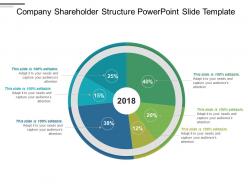
Present the shareholding structure of your origination with our company shareholder structure PowerPoint slide template. This presentation slide of organizational structure has been created by our professional team members to keep you aligned with latest market trends. Use this template of company structure to show the various activities which are directed to achieve the goals of an organization. These activities can include rules, roles, and responsibilities taken by its stakeholders, shareholders or company's owners. Use this template of company ownership structure to define specific hierarchy within an organization which provides a visual representation of how a company is shaped and how it can move forward in achieving its goals and objectives. This PowerPoint layout can be used to show map structure of the management which can enhance efficiency and provide clarity for everyone at every level. Download this company partners PPT slide and for more visit our website. There is no disagreement with the quality of your thoughts. Our Company Shareholder Structure Powerpoint Slide Template will treat them as top of the line.
People who downloaded this PowerPoint presentation also viewed the following :
Company shareholder structure powerpoint slide template with all 5 slides:
Figure out the intention behind each clause with our Company Shareholder Structure Powerpoint Slide Template. Be able to examine the judgement.



FAQs for Company shareholder structure
So for your shareholder template, start with the basics - names, share counts, ownership percentages, and what class of shares everyone has. Voting rights need to be crystal clear (trust me on this one). Add any transfer restrictions and vesting schedules if you've got them. Board representation and anti-dilution stuff might seem boring now but will save you headaches later. Oh, and don't forget sections for founder shares, employee options, and investor preferences. Honestly though? Keep it simple at first. You can always make it more complex when you bring on new people.
So basically, your shareholder setup decides who calls the shots and how much their vote matters. Concentrated ownership? A few people can move fast on big decisions - awesome if you're aligned, disaster if not. With dispersed ownership you get more input but everything takes forever to decide. Board seats, voting rights, approval requirements - they all come from this structure. Oh and different share classes let founders keep control even when they own less of the company. I'd honestly map out some "what if" scenarios early so you know exactly who you need for fundraising, acquisitions, whatever major moves you're planning.
Honestly, the biggest win is people can actually *see* the ownership breakdown instead of squinting at spreadsheets. Numbers make everyone's brain shut off, but a visual chart? Instantly clear who owns what percentage. When you're presenting to boards, it shows you've got your shit together and aren't hiding anything sketchy. Color-coding by investor type helps too - maybe VCs in blue, angels in green, whatever works. Oh, and it's great for spotting weird conflicts between investors that you might miss otherwise. Keep the percentages clean and don't overcomplicate it.
Dude, get a good cap table template ASAP. Investors immediately know you're organized when you can show ownership percentages and voting rights without fumbling around. During fundraising, you won't be that founder frantically pulling numbers from three different spreadsheets at 2am (been there). It also helps you catch dilution issues before they blow up. Like, you'll spot when someone's about to lose way more equity than they realize. Update it after every round though - nothing worse than pitching with stale numbers. Trust me, this one thing makes you look so much more professional than most startups.
So minority shareholders give you money and make your company look more legit, but they can't actually control the big decisions since none of them own 50%+. They still get to vote on stuff and receive dividends though. Honestly, having them around shows you're not just running some solo operation, which investors like to see. The main thing is getting their exact rights written down clearly in your agreements - what they can vote on, what thresholds trigger certain decisions, all that. You don't want confusion later when someone thinks they have more say than they actually do.
Update that template right after any changes happen. Email your current shareholders directly, plus throw it on your investor relations page. File regulatory stuff if you're public - obviously. Shareholders absolutely lose their minds over ownership surprises, so be super transparent. Show percentage changes, new investor info, all the dates clearly. Major shareholders? Call them personally to walk through big changes - saves you headaches later. Oh and keep everything consistent across platforms. Mixed messages just create chaos you don't need.
Honestly, the worst thing you can do is make it too rigid. Don't hardcode percentages or names into the actual structure - you'll regret it later when things change (and they always do). Future funding rounds will dilute everyone's shares, so plan for that upfront. Set aside your employee stock option pool right away too. I've watched so many founders trip up on this part, it's painful. Different share classes might be necessary down the road, but keep things simple at first. Just build a framework that can grow with you instead of boxing yourself in early on.
Having a mix of different shareholders usually helps companies perform better. You get institutional investors, regular people, folks from different backgrounds - they all bring unique perspectives that prevent everyone from just agreeing with each other. Research shows these companies tend to be more innovative and bounce back from problems easier, though honestly it's hard to tell if diversity actually *causes* better performance or if it's just coincidence. Different investors have different expertise and connections. They see opportunities that a bunch of similar shareholders would totally miss. For your template, track what types of investors you have - their different goals might actually make your long-term strategy way stronger.
PowerPoint or Google Slides work fine for the main deck, but honestly? You'll want Lucidchart or Visio for those org charts - way cleaner looking. I basically live in Excel when building these things, calculating ownership percentages and testing different scenarios. Way more time there than on the actual slides. If you need to brainstorm structure with your team first, Miro's pretty solid. Got anything more complex? Maybe check if you already have access to CapTable.io or Carta. Oh, and start with a basic wireframe in Excel - build your visuals around good data, not the other way around.
Look, a shareholder structure template is basically your safety net for staying compliant and keeping investors happy. It tracks ownership percentages, voting rights, all that important stuff in one place. Way better than scrambling around during audits - been there, it sucks. You'll have standardized docs that show exactly who owns what and when things changed. Honestly, regulators love seeing clean records like this. Set it up now while you're thinking about it, because once you're knee-deep in due diligence, you won't have time to piece everything together from scratch.
Honestly, automation is a game-changer here. Document generators can pull straight from your cap table software - no more typos from copying stuff manually. Template builders with conditional logic are pretty sweet too, they'll auto-adjust based on your company type or jurisdiction. There are AI platforms now that suggest structures based on your specific setup and compliance needs. Cloud collaboration tools let everyone review simultaneously instead of endless email chains (thank god). I'd start by connecting your cap table system to a doc automation platform first. Saves me like 3+ hours per template, not even kidding.
So basically different share classes let you split up who controls what vs who owns what. Founders might get Class A with 10 votes per share while investors get Class B with just 1 vote - keeps you in the driver's seat. You can mess with dividend rates too, or who gets paid first if things go sideways. Honestly it's pretty clever once you figure it out. Just make sure your shareholder docs spell out exactly what each class gets because fixing that mess later? Yeah, not fun. I'd map out your voting split first, then build the classes around that.
Honestly, just tailor each template to what that specific group actually cares about. Investors want all the ownership percentages and voting rights spelled out clearly. Board meetings? Keep it high-level with the key numbers front and center. Your legal team will want every single technical detail - they love that stuff anyway. For employees, stick to equity pools and vesting but explain it like you're talking to a normal person, not a lawyer. The main thing is keeping your core data the same across all versions. Build one master template first, then create simpler versions that just highlight what each audience needs to know.
Start with ownership percentages and voting rights - that's the meat of it. Map out your current cap table, then run scenarios for future funding rounds so everyone sees how dilution works. Liquidation preferences will make or break deals honestly, I've watched people get blindsided by waterfall mechanics they didn't grasp. Option pools mess with dilution math too, so factor those in. Any special voting stuff or board control needs to be super clear. Bottom line: people need to know who's got power and what they'll actually get paid in different exit scenarios. Sounds boring but it's not when there's real money involved.
Honestly, pie charts and ownership tables are lifesavers for this stuff. You'll instantly see who's got the big stakes instead of drowning in boring paragraphs. Bar charts work great too - they really show the gap between major players and the little guys. Nobody wants to decode dense text when they're looking at cap tables, right? Pick what fits your audience though. Pie charts for basic ownership splits, tables when you need the nitty-gritty details like voting rights. Oh, and different share classes - that gets messy fast without good visuals.
-
Great designs, really helpful.
-
Great quality slides in rapid time.