

Company Shareholder Structure And Organizational Chart




Try Before you Buy Download Free Sample Product
 Impress Your
 Audience
 100%
100% Editable
 Save Hours
 of Time


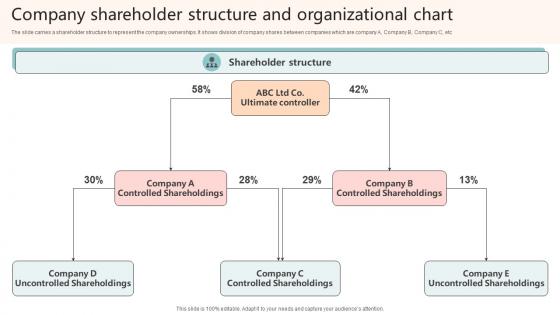
The slide carries a shareholder structure to represent the company ownerships. It shows division of company shares between companies which are company A, Company B, Company C, etc
People who downloaded this PowerPoint presentation also viewed the following :
Company Shareholder Structure And Organizational Chart with all 6 slides:
Use our Company Shareholder Structure And Organizational Chart to effectively help you save your valuable time. They are readymade to fit into any presentation structure.





FAQs for Company Shareholder Structure
So there's basically two ways to do this - single-class where everyone gets the same voting power (super simple), or dual-class which is way more complicated but honestly pretty clever. With dual-class, different share types get different votes. Like Class A shares might get 10 votes each while Class B only gets 1. Founders love this because they can raise money but still call the shots even if they don't own most of the company anymore. Google and Facebook both do it this way. Really depends if you want to keep control or share power with your investors.
So basically whoever owns the most shares runs the show. Family or PE firm with 51%? They're making all the big calls whether minority shareholders like it or not. Spread-out ownership gets complicated fast - you need way more people to agree on stuff, but at least there's some balance. Oh and voting rights aren't always equal, which honestly can get pretty messy. The thing is, you gotta design your governance around who actually owns what, not some perfect scenario from business school. Otherwise you're just setting yourself up for headaches.
Look, institutional investors are basically the heavy hitters here - think pension funds, mutual funds, those massive asset managers. They don't bother with tiny stakes. When they move in, they're reshaping who owns what and often gunning for board seats or major decision-making power. Most of those activist campaigns you hear about? Yeah, institutional money's usually pulling the strings. Honestly, if you want to track this stuff, 13F filings are your friend - that's where you'll catch the moves that actually shift things. Ownership concentration changes almost always trace back to these players making their moves.
Having lots of different shareholders is usually better for flexibility. No single investor can push you around or force their agenda on you. Sure, it means juggling more opinions, but that beats being stuck with one bossy shareholder demanding quick profits or whatever they're obsessed with that quarter. You can actually focus on building long-term value instead of constantly putting out fires. The tricky part? You'll need solid communication to keep everyone in the loop - and trust me, that's way harder than it sounds when you're dealing with dozens of different personalities and priorities.
Here's the deal with concentrated shareholders - they can make decisions crazy fast since it's just a few big players calling the shots. But here's where it gets messy: minority shareholders basically get ignored, and you lose all that diverse input that might've prevented bad calls. The transparency? Pretty much nonexistent. I've seen this play out badly when the major holders just steamroll everyone else. So if you're looking at companies like this, definitely check how they actually treat the smaller investors. Also look for decent governance rules that might keep the big guys in check - though honestly, those don't always work either.
Your company's shareholders are like a snapshot of what's going on in the market. Good times? More regular people buy in, growth funds get aggressive. Market tanks and suddenly institutions swoop in while everyday investors panic-sell - classic move, honestly. ESG funds pile in when everyone's feeling socially responsible, activist investors show up when they smell blood in the water. Worth tracking these shifts because they'll tell you what kind of pressure or changes might be heading your way governance-wise.
Honestly, it's like trying to manage a group chat with people from every continent. Different time zones are just the start - you're dealing with totally different regulatory rules, cultural expectations, and some investors want quick wins while others are playing the long game. Language barriers make everything harder, plus currency swings hit everyone differently. Oh, and don't get me started on trying to use the same reporting standards everywhere. My take? Set up clear communication from day one and maybe split your approach by region instead of doing this one-size-fits-all thing that never actually works.
Here's what I've learned from watching companies navigate this stuff: whoever owns your shares right now basically sets the rules for how you can raise money later. Got founders who still control everything? They'll probably go for debt or convertible notes to keep their grip on things. Dispersed ownership makes equity raises way easier since nobody's losing serious control. Family businesses are honestly the worst at this - they'd rather struggle with loans than let strangers buy in. Just figure out what giving up ownership actually means for your situation before you start that whole investor circus.
So activist shareholders are basically the ones who buy into underperforming companies and then start making noise. They'll push for changes - new executives, different strategies, higher dividends, whatever they think will boost the stock price. Think of them as corporate troublemakers, but usually the good kind? They force companies to be more transparent and actually explain their decisions. Sometimes they'll completely shake up the board of directors. If you see activist investors circling a company you're watching, expect some drama but potentially good results long-term. Worth checking who the major shareholders are when you're doing research.
Honestly, it's mostly about scale. Startups have maybe 10-20 shareholders max - founders, early employees, some VCs if you're lucky. Everyone fits around one conference table. Public companies? Completely different world. We're talking thousands or millions of shareholders who don't know each other and probably couldn't pick the CEO out of a lineup. Your cap table goes from a simple spreadsheet to this massive regulatory nightmare with quarterly reports and SEC filings. I'd say keep things dead simple while you can. Once you hit a certain size, complexity just... happens. No avoiding it really.
Most companies grab Bloomberg or FactSet to track who owns what, then do investor surveys to get the real scoop on sentiment. Peer benchmarking is huge too - you'd be shocked how wildly different ownership structures can be, even in the same sector. They'll also run scenario models to see how changes might mess with voting control or liquidity. But honestly? The data's only half of it. Regular chats with your big holders matter just as much. If you're starting out, I'd just do a basic ownership breakdown and maybe survey your key investors first.
Honestly, you gotta treat different shareholders totally differently. Institutional investors want the heavy stuff - detailed financials, formal presentations, all that corporate jazz. Retail shareholders? Keep it simple with newsletters or webinars they can actually understand. Private equity guys are gonna demand face time with your management team for those deep-dive sessions (they're kind of intense like that). Map out who your shareholders actually are first, figure out what keeps them up at night, then build separate communication plans. Don't try to send the same boring update to everyone - it never works.
Dude, get your voting rights and dividend stuff sorted out immediately. Like, day one. Your articles and shareholder agreements need to spell out exactly who gets what percentage of votes and profits. Preemptive rights are huge too - they control whether current shareholders can snag new shares before random outsiders do. Securities law compliance matters if you're raising money, obviously. Honestly, the messiest situations I've seen? Companies that used super vague language around these rights. Total nightmare when disputes pop up later. Document everything clearly and get a lawyer to review your shareholder structure before things get crazy.
Dude, ownership structure is huge for crisis management. Concentrated ownership? Decisions happen fast since you're not waiting for a million tiny shareholders to agree. A few big players can make bold moves when shit hits the fan. But dispersed ownership is a nightmare - everyone's got opinions, nobody's got real power. Though honestly, concentrated ownership can backfire too if those big shareholders make terrible calls. I always check who owns what when I'm looking at stocks during crazy times. It tells you everything about how quickly they can actually respond to problems. Short answer: fewer owners usually equals faster pivots.
Honestly? New shareholders basically hijack your company culture with their own agenda. Board changes happen first - that's your red flag right there. Then leadership starts kissing up to whatever the new owners want. Activist investors obsess over quarterly numbers, so suddenly nobody cares about innovation anymore. Private equity bros are all about cutting costs and "efficiency." Family offices might actually be cool though - they're often into sustainability stuff. It's wild how fast the vibe shifts once people realize where their paychecks are coming from. Your day-to-day work changes because everyone's trying to impress different people now.
-
Nice and innovative design.
-
Definitely recommend SlideTeam to all who need help with PowerPoint presentations. Their design team can create anything you need.