


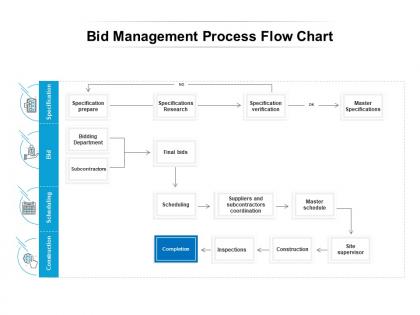
Bid management process flow chart




Try Before you Buy Download Free Sample Product
 Impress Your
 Audience
 100%
100% Editable
 Save Hours
 of Time


Acquaint folks with your journey through our Bid Management Process Flow Chart. Give an account of experiences that improved you.
People who downloaded this PowerPoint presentation also viewed the following :
Bid management process flow chart with all 2 slides:
Give an account of experiences that improved you with our Bid Management Process Flow Chart. Acquaint folks with your journey.
FAQs for Bid management
Honestly, it comes down to three main things - keyword research, bid optimization, and tracking performance. Start by figuring out what people are actually searching for (not what you think they're searching for). Then set your bids based on budget and goals, but here's the thing - don't just leave them alone after that. You've gotta keep an eye on what's working and what's just eating your money. Oh, and throw in some dayparting and device targeting too. I'd say start low with bids and work your way up once you see real data. Way better than throwing money at the wall and hoping something sticks.
Dude, get some bid management software - it'll save your sanity. All those templates, deadlines, and version control nightmares? Automated. Your team can actually collaborate without the usual chaos of emailing docs back and forth. AI tools are surprisingly decent at flagging compliance issues too, which beats reading through requirements with a magnifying glass. Honestly though, start small - pick whatever's driving you most crazy right now. Organization? Deadlines? Fix that first. You can always add more bells and whistles later once you're not drowning in paperwork.
Win rate's your main thing to watch - that tells you everything. I'd also pull your cost per acquisition and ROAS weekly to see if you're actually profitable. Conversion rates broken down by bid strategy? Super underrated metric honestly. Impression share shows if budget's holding you back. CTR and quality scores matter too since they mess with your costs directly. I usually check all this stuff weekly then tweak whatever's not working. Oh and don't get too caught up in vanity metrics - focus on what actually moves the needle for revenue.
Honestly, start with a kickoff meeting - get everyone aligned on who's doing what and when. I'd set up some shared workspace where you can all see the latest docs and track stuff in real-time. RACI matrix sounds fancy but it's just a simple chart showing who's responsible for what (total lifesaver for avoiding that "I thought YOU were handling it" drama). Regular check-ins help too, even quick 15-minute ones. Oh and group chats work great for random questions that pop up. The whole point is keeping everyone in the loop so nothing falls through cracks.
Honestly, market research is make-or-break for bid management. Think of it as your recon mission - you've gotta know what competitors are charging and what they're good (or terrible) at. Plus figure out what the client actually cares about most. Can't just wing it with random pricing, you know? Look at recent similar projects first. I'd say grab data from at least 3-5 comparable deals and see how they played out. This gives you solid benchmarks so you're competitive without killing your margins. Oh, and it helps spot trends too - sometimes clients are willing to pay more for stuff you wouldn't expect.
Honestly, dive deep into what each client actually gives a damn about - and it's usually not just price. Check their old RFPs for patterns. Some are obsessed with deadlines, others want tons of reporting. Mirror how they structure their priorities in your bid sections. Use their exact words when you're describing their problems. Makes them feel like you actually get what they're dealing with instead of copy-pasting some template. Oh, and creating client personas based on industry helps too - saves you time later. The whole thing's basically like dating but with way more Excel sheets involved.
Honestly, the worst thing you can do is mess up your conversion tracking from day one - you're basically throwing money into a black hole. Most people bid way too aggressively without knowing their actual margins, which is just painful to watch. Also don't fall into that "set it and forget it" trap... I swear, some campaigns just bleed cash for weeks because nobody bothers checking back. Automated bidding can work, but you gotta understand why it's making changes. Oh, and always base your bid adjustments on real data, not just whatever feels right.
Definitely ask for feedback after every lost bid - clients are way more willing to share than you'd think. Just be professional about it. Look for patterns in what they tell you. Maybe your prices are off, or competitors had better tech, or your proposals were confusing. I've seen companies lose deals purely because their presentations sucked, which honestly seems like such a waste. Keep track of everything in a basic spreadsheet (yeah, boring but necessary). Review it before writing new proposals. The whole point is actually changing what you do based on the feedback, not just hoarding data like some weird collector.
Start from your deadline and work backwards - seriously, this saves so much stress. I always add buffer time between milestones because something random will definitely break (learned this the hard way). Get a project management tool, doesn't matter which one really, just something to track who's doing what. Those quick daily check-ins are clutch for catching problems early. Oh, and finish your draft at least 24-48 hours before it's due. You'll thank me when the client inevitably has "just one tiny change" at the last second.
Honestly, pricing can make or break your whole bid. Price too high? You'll lose even if your stuff is way better. Go too low and sure, you might win, but your margins will be trash - trust me on that one. The trick is finding that sweet spot where you're aggressive enough to beat competitors but not bleeding money. Do your homework on what others are charging. Factor in what makes you different. Sometimes you gotta take risks with your margins, but always know your absolute bottom line before you even start. That's saved my ass more times than I can count.
Google's Smart Bidding is actually pretty solid - Target CPA and Target ROAS work well once you figure them out. I'd start there since it's free and built right in. Third-party wise, Optmyzr and WordStream are decent if you're running stuff across Google, Microsoft, Facebook. Honestly though, most people overthink this. Try the native automation first, see how it performs, then maybe look at fancier tools like Marin or DoubleClick if you're managing a bunch of accounts. The free options have gotten way better lately.
Build your risk assessment right into the proposal from the start. Identify what could go wrong early - scope creep, resource issues, client changes, whatever. Then figure out how you'll handle each one and actually price those solutions into your bid. Honestly, I learned this the hard way on a project last year. Always throw in a contingency buffer because something will go sideways, guaranteed. Create a simple risk register showing clients you've thought it through. Being upfront about risks actually makes you look more professional, not less. Clients appreciate the honesty and planning.
Honestly, visuals can totally save your proposal. Most procurement people are buried in boring text all day, so clean charts and infographics actually help them process info faster. They'll remember your key points better too. Good design also shows you're detail-oriented and can communicate well with clients - which matters more than people think. But don't go crazy with flashy stuff that just distracts. Stick to visuals that actually explain your approach and show what makes you different. I've seen too many proposals ruined by overdoing the graphics.
Dude, you've gotta keep training your team because these platforms change constantly - new features, bidding strategies, the whole nine yards. Most people barely scratch the surface of what's actually possible (seriously, everyone just sticks to the basics). Monthly sessions work well where people can practice real scenarios and show off tricks they've found. I'd focus on hands-on stuff like automated rules and audience targeting since that's where you see the biggest wins. Oh, and have team members demo what's working in their accounts - that peer learning thing is surprisingly effective for spotting gaps.
Three big things to watch out for: First, compliance is everything - miss one tiny requirement and you're out. Second, don't put anything misleading in there (obviously), and third, be super careful with confidential stuff. The compliance part is honestly brutal - I've seen people get tossed for the dumbest reasons. RFP requirements are basically gospel. Also watch that you're not accidentally spilling proprietary info or breaking NDAs you signed. Get someone else to eyeball your submission before sending it off. Trust me on this one. And yeah, document everything just in case.
No Reviews