

Bid Process Management Powerpoint Ppt Template Bundles





Try Before you Buy Download Free Sample Product
 Impress Your
Audience
 100%
Editable
 Save Hours
of Time


Our Bid Process Management Powerpoint Ppt Template Bundles are topically designed to provide an attractive backdrop to any subject. Use them to look like a presentation pro.
People who downloaded this PowerPoint presentation also viewed the following :
Content of this Powerpoint Presentation
Slide 1: The slide introduces Bid Process Management. State your Company Name and begin.
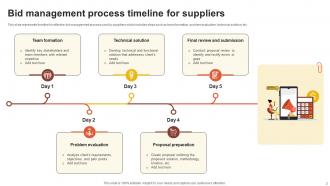
Slide 2: This slide represents timeline for effective bid management process used by suppliers which includes steps such as team formation, problem evaluation, technical solution, etc.
Slide 3: This slide depicts action plan for effective bid process management which includes various elements such as phases, actions required, supervisor, deadline and status.
Slide 4: This slide contains strategic framework for bid process management which includes elements such as pole players, process, measure, attributes, etc.
Slide 5: This slide renders use cases of AI to digitalize bid process management which includes requirement analysis, automated proposal generation, and response strategy optimization.
Slide 6: This slide highlights tender management system integration for bid process enhancement which includes phases such as source opportunities, manage knowledge, etc.
Slide 7: This slide shows flowchart for construction bid management process which includes elements such as receiving final bids, scheduling logistics, coordinating with suppliers, etc.
Slide 8: This slide covers various challenges to manage bidding process which includes team composition, time constraints, and inadequate collaborations.
Slide 9: This slide represents comparative analysis of tools for bid process management which includes features such as document management, task management, collaboration tools, bid tracking, etc.
Slide 10: This slide renders best practices for effective bid process management which include ultimate team composition, automated team pipeline, and central content library.
Slide 11: This slide highlights tram structure to manage bid process which includes roles such ad bid director, bid manager, bid coordinator, etc.
Slide 12: This slide displays checklist to manage bid process which includes elements such as phase, responsible person, task allocated, and status.
Slide 13: This slide presents roadmap for suppliers on bid management process which includes steps such as assessment and planning, identification and prequalification, document preparation, etc.
Slide 14: This slide demonstrates training for sales team on bid process management which includes elements such as sessions, duration, trainer, mode, date, etc.
Slide 15: The slide shows Bid management process icon for suppliers.
Slide 16: The slide renders Bid process management icon for construction supply.
Slide 17: The slide highlights Automated bid process management icon.
Slide 18: This is a Thank You slide with address, contact numbers and email address.
Bid Process Management Powerpoint Ppt Template Bundles with all 26 slides:
Use our Bid Process Management Powerpoint Ppt Template Bundles to effectively help you save your valuable time. They are readymade to fit into any presentation structure.











FAQs for Bid Process Management Powerpoint
The key stages in bid process management include opportunity identification, bid qualification, proposal development, submission and review, evaluation and negotiation, and contract award. These stages streamline competitive bidding by establishing clear timelines, ensuring compliance requirements, and coordinating cross-functional teams, with many organizations finding that structured bid management ultimately delivers higher win rates and improved resource allocation.
Technology streamlines bid processes through automated document generation, centralized collaboration platforms, AI-powered proposal matching, real-time tracking systems, and integrated compliance management tools. These solutions enable organizations to reduce preparation time by up to 60%, minimize errors through automated workflows, and enhance win rates with data-driven insights, ultimately delivering competitive advantage in increasingly complex procurement environments.
Key bid success metrics include win rate, proposal quality scores, time-to-submission, cost per proposal, and client feedback ratings. These measurements enable organizations to identify strengths and weaknesses in their bidding processes, with many companies finding that tracking response times and proposal accuracy ultimately delivers higher win rates and more strategic resource allocation.
Evaluating bid management team effectiveness involves analyzing win rates, proposal quality scores, client feedback, deadline adherence, and revenue generated from successful bids. Through performance dashboards and regular assessments, organizations can identify areas for improvement, optimize resource allocation, and enhance team collaboration, ultimately delivering higher conversion rates and competitive advantage in increasingly complex bidding environments.
Stakeholder communication serves as the backbone of successful bid processes, ensuring alignment between team members, clients, and decision-makers through regular updates, transparent progress reporting, and coordinated feedback loops. Effective communication strategies enable organizations to address concerns proactively, manage expectations seamlessly, and maintain competitive positioning, with many winning bidders finding that structured stakeholder engagement ultimately delivers higher proposal quality and stronger client relationships.
Organizations ensure compliance through standardized documentation templates, regular audit checkpoints, automated workflow approvals, comprehensive vendor verification processes, and detailed record-keeping systems. These mechanisms streamline regulatory adherence by establishing clear accountability chains, maintaining transparent decision trails, and enabling real-time monitoring, with many procurement teams finding that systematic compliance frameworks ultimately reduce processing delays while minimizing legal risks and enhancing stakeholder confidence.
Common pitfalls in bid document preparation include incomplete compliance matrices, misaligned pricing structures, inadequate technical specifications, poor timeline management, and insufficient stakeholder review processes. These challenges can be avoided by implementing structured templates, conducting thorough requirement analyses, establishing cross-functional review committees, and utilizing digital collaboration platforms, with many organizations finding that systematic preparation workflows significantly enhance win rates while reducing proposal development costs.
Risk management integrates into the bid process through comprehensive risk assessment frameworks, stakeholder analysis, contingency planning, and real-time monitoring systems. Organizations streamline this by implementing automated risk scoring tools, conducting thorough due diligence protocols, and establishing clear mitigation strategies, ultimately delivering more competitive proposals while minimizing potential project vulnerabilities and enhancing overall bid success rates.
Strategies to enhance bid proposal quality include comprehensive market research, stakeholder analysis, competitive positioning, value proposition articulation, and risk assessment frameworks. These approaches streamline proposal development by aligning offerings with client needs, differentiating from competitors, and demonstrating measurable outcomes, with many organizations finding that strategic bid management ultimately delivers higher win rates and stronger client relationships.
Effective bid tracking tools include CRM systems like Salesforce, specialized platforms such as Deltek and Unanet, project management software like Monday.com, and procurement solutions including SAP Ariba and Oracle. These platforms streamline proposal workflows, automate deadline tracking, and centralize document management, with many organizations finding that integrated solutions significantly reduce administrative overhead while enhancing win rates through better collaboration and strategic insights.
Lessons learned from past bids enhance future submissions by identifying proposal weaknesses, refining pricing strategies, and improving team coordination and timeline management. Organizations systematically analyze lost opportunities, successful wins, and client feedback to strengthen their competitive positioning, with many finding that documented bid reviews reduce proposal development time by 30% while significantly increasing win rates.
Best practices for cross-functional bid collaboration include establishing clear roles and responsibilities, implementing centralized communication platforms, creating standardized templates and workflows, conducting regular progress meetings, and maintaining shared document repositories. These approaches streamline coordination between sales, technical, legal, and finance teams, while ensuring consistent messaging and faster proposal development, with many organizations finding that structured collaboration frameworks significantly enhance win rates and reduce proposal turnaround times.
**INPUT**: How do budgeting and resource allocation impact bid success? **OUTPUT**: Effective budgeting and resource allocation significantly impact bid success by ensuring competitive pricing, adequate staffing, and comprehensive proposal development. Strategic resource planning enables organizations to deliver compelling value propositions while maintaining profitability, with many companies finding that well-allocated budgets for research, technical expertise, and presentation quality ultimately differentiate winning bids from competitors. [Word count: 54 words]
Legal considerations in bid processes include compliance with procurement regulations, contract terms accuracy, intellectual property protection, confidentiality agreements, and anti-corruption laws. These requirements vary significantly across industries, with government contractors facing stricter documentation standards than private sector bidding, while organizations increasingly find that proactive legal review streamlines approval timelines and minimizes costly disputes.
Effective training enhances bid management capabilities by developing strategic proposal writing, competitive analysis skills, and cross-functional collaboration techniques. Through comprehensive programs covering market research, pricing strategies, and stakeholder engagement, organizations streamline their bid processes, reduce proposal timelines, and significantly improve win rates, with many companies finding that trained teams deliver more compelling, client-focused submissions.
-
I am so thankful for all of the templates I've found on your site. They have saved me hours every week and helped make my presentations come alive. Keep up with these amazing product releases!
-
Making a presentation has never been this easy for me. Thank you SlideTeam for offering a splendid template library.