


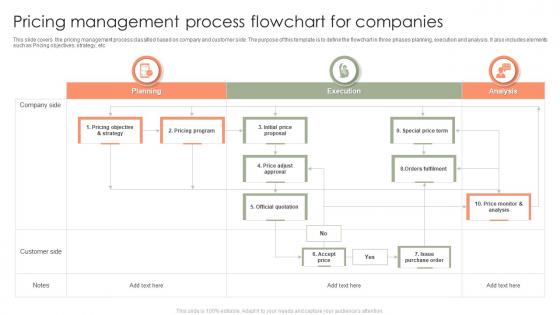
Pricing Management Process Flowchart For Companies




Try Before you Buy Download Free Sample Product
 Impress Your
 Audience
 100%
100% Editable
 Save Hours
 of Time


This slide covers the pricing management process classified based on company and customer side. The purpose of this template is to define the flowchart in three phases planning, execution and analysis. It also includes elements such as Pricing objectives, strategy, etc.
People who downloaded this PowerPoint presentation also viewed the following :
Pricing Management Process Flowchart For Companies with all 6 slides:
Use our Pricing Management Process Flowchart For Companies to effectively help you save your valuable time. They are readymade to fit into any presentation structure.





FAQs for Pricing Management Process
Okay so pricing basically comes down to four things. First, know your costs - duh, you can't lose money. Then check what competitors are charging so you're not totally off base. The tricky part? Figuring out how customers actually value your stuff, because honestly they don't think like we do. Also nail down if you're going premium, budget, or somewhere in between - that matters more than people realize. Oh and obviously align it with your business goals. I'd start by auditing where you stand on each area, then tackle whatever gap seems biggest first.
Honestly, just keep tabs on what your competitors are charging - but don't be weird about it. Check their prices regularly and see how they're positioning stuff. When they bump prices up, that's your chance to swoop in and grab their price-conscious customers. Or maybe you'll realize you're charging way too little (happens more than you'd think). The key thing is don't just copy their pricing like some kind of robot. That's honestly pretty dumb since your business isn't exactly the same as theirs. Instead, use what you learn to decide if you should price higher, lower, or somewhere in between based on what makes sense for your brand.
Honestly, pricing is all about messing with people's heads (in a good way). Your customers aren't doing math - they're reacting to psychological stuff. Like, the first price they see becomes their anchor point for everything else. People also hate missing out on deals way more than they like getting them, which is kinda backwards but whatever. That $9.99 trick? Still totally works because our brains are dumb. You gotta think about what they're comparing your price to though. My advice? Test different approaches with your actual customers and see what gets them to buy.
So dynamic pricing is basically letting software do what smart store owners have always done - bump prices up when stuff's flying off shelves, drop them when things aren't selling. The algorithms crunch a crazy amount of data: how people browse, what they've bought before, what competitors are charging, inventory levels. Pretty wild how much math goes into finding that perfect price point where you get decent conversions but still make good money. Honestly, I'd start with just a few products first. Test different rules and see what actually works for your customers before going all-in.
So price elasticity is basically how much your customers freak out when you change prices. Low elasticity? You can bump prices up without losing too many people - like with insulin or those overpriced phone chargers we all need. High elasticity means customers bolt the second you raise anything. Honestly, I learned this the hard way once. Now I always run small price tests first to see how people react. The real data tells you everything - way better than guessing how much you can get away with charging.
Honestly, value-based pricing is the way to go because you're basing prices on what customers actually get out of it - not just what it costs you to make. When people see they're paying for real results like time saved or problems fixed, they don't feel ripped off. Way better than random pricing that makes no sense to them. The best part? These customers stick around longer since they totally get why they're paying what they're paying. Oh, and definitely survey your customers first to figure out which benefits they care about most - that's like the foundation of the whole thing.
Track your competitors first - watch their pricing cycles and when they launch stuff. Your own historical data from the past few years is gold for spotting seasonal trends. Customer surveys tell you how much people actually care about price changes (sometimes they don't as much as you think). Economic indicators and industry reports help, though honestly they can be pretty boring to read through. Supply chain issues matter too since they mess with your costs. I'd set up some kind of monthly dashboard so you're not panicking when big pricing decisions hit. Makes life way easier.
Oh man, pricing across cultures is such a minefield! Germans want everything upfront and transparent - no games. But in a lot of Asian markets? Haggling's basically expected, it's part of the fun. What screams "premium quality" in one place might just look overpriced somewhere else. You've gotta research what locals actually earn and spend first. Also weird stuff matters too - like certain colors can make prices feel cheaper or more expensive depending where you are. I'd honestly start super small and test things out before going big. The context is everything with this stuff.
Honestly, subscriptions are pretty sweet for predictable income - you'll know what's coming in each month. Customer relationships get way stronger too since they stick around longer. The data you get on how people actually use your stuff? Super helpful for planning ahead. But man, getting new customers costs more upfront. And churn is brutal - I swear it's like a constant battle keeping people from canceling. You have to keep delivering value or they're gone in a heartbeat. If your product actually helps people on an ongoing basis and you don't mess up onboarding, subscriptions usually win over one-time sales. Just my two cents.
Dude, analytics totally changes the pricing game. Instead of guessing what customers will pay, you can actually see how they react to different prices. Look at your sales data first - that's the goldmine. Then add competitor tracking and you'll catch trends like crazy. Some products can handle price bumps without losing buyers, others are super sensitive. Seasonal stuff is where you really make bank though. I started doing this last year and honestly? My gut instincts were wrong like 60% of the time. The data doesn't lie.
Honestly, you can't wing pricing anymore without decent tech backing you up. Dynamic algorithms adjust your prices instantly when demand shifts or competitors make moves. The AI stuff is actually pretty solid for crunching customer data - finds those sweet spots where you maximize revenue but don't piss people off. Automated competitor tracking saves tons of time, plus A/B testing platforms let you experiment safely. Predictive analytics will show you how price changes might tank or boost sales before you pull the trigger. I'd start by looking at what pricing tools you're already using and see where you can automate the tedious stuff.
Dude, get out in front of this before they find out themselves - that's when people get really pissed. Give them like 30-60 days heads up with a straight explanation about why prices are going up. Supply costs, new features, whatever the real reason is. Don't be all wishy-washy about it either, that just makes it worse. I'd focus on what they're still getting for their money rather than just "sorry, costs more now." Oh and definitely prep your customer service people because they're gonna get hammered with calls about it.
Honestly, it comes down to not being sketchy about how you price things. Don't hide fees or jack up prices when people are desperate - that's just gross. Price discrimination gets messy too, especially if certain groups always end up paying more. Dynamic pricing? Fine for concert tickets, terrible during hurricanes. I always think about whether you'd be embarrassed if customers saw your pricing formula. Because they probably will eventually. Transparency goes a long way here. If you can't defend your pricing strategy to someone's face, maybe rethink it.
Make your promos feel exclusive instead of desperate - bundle stuff together or give loyal customers early access. Never slash your main products more than 15-20%, but you can go deeper on accessories or old stock. We totally screwed this up last year by discounting everything! Frame it as "member pricing" or tie it to actual events happening. Always show the original price first, then reveal the deal. Oh, and this is crucial - go back to regular pricing between sales so people don't just wait around for constant discounts. Trust me on this one.
Track your revenue per customer and profit margins first - those are non-negotiable. Win rates and conversion data will tell you if you're pricing people out or nailing it. Here's something weird though: higher prices sometimes bring in way better long-term customers, so don't just focus on volume. Customer lifetime value matters more than you'd think. I'd also watch what happens to your market share after tweaks. Honestly, just throw it all in a weekly dashboard so you can catch problems before they snowball into actual disasters.
-
The way SlideTeam professionals work is exceptional. Thanks for being so helpful!
-
I was really impressed with the presentation I created with their templates. I’ll be using their services moving forward.