


Vendor Management System Process Flowchart




Try Before you Buy Download Free Sample Product
 Impress Your
 Audience
 100%
100% Editable
 Save Hours
 of Time


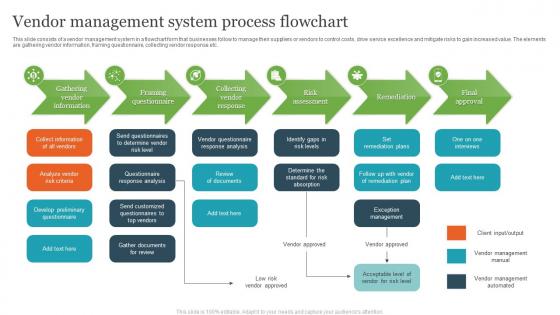
This slide consists of a vendor management system in a flowchart form that businesses follow to manage their suppliers or vendors to control costs, drive service excellence and mitigate risks to gain increased value. The elements are gathering vendor information, framing questionnaire, collecting vendor response etc.
People who downloaded this PowerPoint presentation also viewed the following :
Vendor Management System Process Flowchart with all 6 slides:
Use our Vendor Management System Process Flowchart to effectively help you save your valuable time. They are readymade to fit into any presentation structure.





FAQs for Vendor Management
Honestly, it all comes down to being super clear from day one about what you expect. Get everything in writing - deliverables, deadlines, quality stuff. Check in with them regularly so nothing goes sideways. I can't stress this enough: actually vet these people before you sign anything. Too many horror stories out there. Having backup plans saved my ass more than once, just saying. Oh, and treat them like actual partners instead of just vendors you're paying. Makes a huge difference in what you'll get back. Start by writing down who you're currently working with and see where you're missing oversight.
Figure out exactly what you need first - services, timeline, budget, the works. Check their experience and financial stability, but honestly, references are where you get the real dirt. I always call 2-3 because sales pitches sound amazing until reality hits. Don't just pick the cheapest option though. Communication matters way more than you'd think - do they actually listen or just push their standard package? I like making a simple scoring sheet to compare everyone objectively. Then go with your gut on the final call.
Honestly, just focus on four main things: delivery times, quality stuff like defect rates, costs, and how responsive they are when shit hits the fan. Monthly scorecards work great for this - don't overcomplicate it with a million metrics that don't actually matter. I learned the hard way to always include some compliance tracking too because audits suck. Set up a simple dashboard and review it with them regularly. The trick is picking metrics that actually affect your bottom line, not just tracking everything because you can.
Honestly, going digital with vendor stuff is a game changer. Start with getting all your contracts in one place online - that alone will save you so much headache. Then you can add automation for tracking renewals and payments. The dashboards are pretty sweet because you see everything at once instead of digging through spreadsheets. Plus automated alerts mean you won't miss important deadlines anymore. Onboarding new vendors becomes way less painful too. Oh, and the analytics help you catch performance issues early - like if someone's delivery times are getting worse. I'd focus on the contract repository first, then build from there.
Honestly, regular check-ins with vendors are a game changer. Set up monthly calls - even just 15 minutes works. You'll catch problems before they blow up, and vendors actually feel like you care about the partnership. Clear expectations from day one are huge too. I swear, half the vendor disasters I've seen happened because someone thought the other person just "knew" what was needed. Total nightmare. When you're upfront about changes or issues, vendors will bend over backwards for you. They'll prioritize your stuff over other clients. Worth the time investment, trust me.
Document everything from day one - seriously, you'll thank me later when things get weird. Talk to them directly first to see what's up, then lay out exactly what you need and what they're not delivering on. Not working? Go higher up the chain. Stay professional but don't be a pushover about it. Focus on fixing the problem instead of just complaining about how they screwed up (though honestly, sometimes you want to). Oh, and always have another vendor lined up as backup. Trust me on that one.
Honestly, start with solid due diligence - check their credentials, financials, and references first. We got burned once when a vendor just disappeared halfway through a project, so trust me on this one. Get everything in writing upfront: what they're delivering, when, and payment terms. Don't skip the communication piece either - set up regular check-ins from day one. I'd assign someone from your team to own the relationship completely. Oh, and create some kind of onboarding checklist so you're not scrambling to remember all the steps. Being organized at the beginning saves you so much headache later.
Honestly, you've gotta bake compliance checks right into your vendor setup from day one. Figure out what regs actually apply to each vendor first - saves you tons of headaches later. Make a solid checklist covering certs, audits, all that paperwork stuff they need to hand over upfront. We got totally screwed once by a vendor claiming SOC 2 compliance when they hadn't even finished their audit yet - learned that lesson the expensive way! Set up regular check-ins with them. Also make sure your contracts require vendors to tell you if anything changes on their end. Oh, and definitely automate those cert renewal reminders or you'll forget.
Honestly, the scariest stuff with vendor management is when they go down unexpectedly or get hacked - both will ruin your week. Do your homework first: check their finances, security certs, references, all that boring but necessary stuff. Set clear expectations upfront and have backup plans because vendors WILL fail you at 2am on a Friday. I learned that one the hard way. Regular check-ins help spot problems before they blow up. Build good relationships but don't get too cozy - you still need oversight. Start by figuring out which vendors would actually tank your business if they disappeared tomorrow.
Honestly, get super detailed with your SOW upfront - like annoyingly detailed. What you need, deadlines, how you'll know if it worked. I made this mistake once and the whole project went to hell because we were too wishy-washy at the start. Map out who's doing what and when decisions happen. Quality standards, communication schedules, all that stuff. Yeah it feels like overkill, but I'd rather spend an extra hour writing everything down than deal with confused contractors later asking "wait, what did you actually want?" Regular check-ins help too. Being picky about details now = way less drama later.
Look, you gotta keep pushing your vendors to do better - otherwise things just get stagnant and you're basically throwing money away. I'd set up quarterly check-ins to talk through what's working and what isn't. Catch problems while they're still small instead of waiting until something blows up. Honestly, most vendors actually respect clients who want to improve things together rather than just bitching when stuff breaks. Review their performance regularly and brainstorm fixes for any bottlenecks you're seeing. It keeps the relationship fresh and you'll get way better value long-term.
Honestly, prep work makes all the difference here. Look up their usual rates and what competitors charge so you're not going in blind. Build some rapport first - these people deal with pushy clients all day, so being genuinely nice goes way further than you'd think. Tell them your budget and timeline straight up. Don't try to nickel and dime everything either. Instead, find ways you both win. Maybe you pay faster in exchange for a discount? Oh, and this part's crucial - be ready to walk away if it's not working. Having backup options is your best friend. Get it all documented after.
First thing - get everything in one place. Spreadsheet, dashboard, whatever works for you to track contracts, performance, and who to call when stuff breaks. Focus your energy on the vendors that actually matter (the ones spending your budget or keeping the lights on). Check in regularly but don't be that person who's constantly breathing down their necks. Set up the same metrics across everyone so you can compare properly. Honestly, the biggest lifesaver is having a solid plan for when things go wrong - and they will. Start by figuring out what you've got now. Bet you'll find more overlap than expected.
Planning your exit early is key - honestly, start thinking about it when you first bring them on board. Check your contract for notice periods and how they need to return your data. The memory thing is real - people conveniently forget details once they're heading out, so document everything. You'll need a solid handover plan covering knowledge transfer and asset returns. Here's the thing though: don't burn bridges even if things went south. I've seen people end up working together again years later. Get those final deliverables locked down in writing before their last day hits.
Honestly, vendor management can totally make or break your whole supply chain. I've seen companies get burned so many times because they didn't stay on top of their suppliers. You want reliable deliveries and decent quality, right? Build actual relationships with these people - when stuff hits the fan (and it will), they'll take care of you first. Bad vendor management just creates headaches everywhere. Quality goes downhill, deliveries get delayed, then you're stuck scrambling for backup options. My advice? Figure out who your most important vendors are and actually talk to them regularly. It's not rocket science but people mess it up constantly.
-
Perfect template with attractive color combination.
-
Huge collection of high-quality templates. Worth each penny.