


Vendor Approval And Validation Process Flow Vendor Management For Effective Procurement




Try Before you Buy Download Free Sample Product
 Impress Your
 Audience
 100%
100% Editable
 Save Hours
 of Time


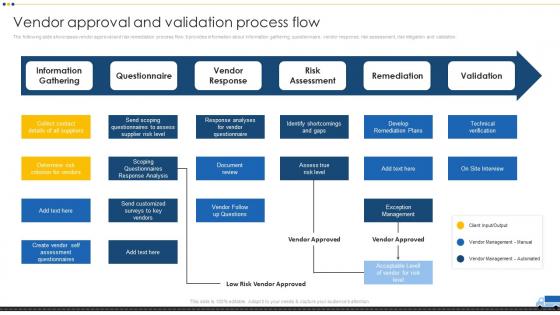
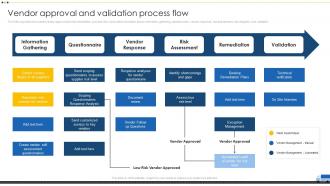
The following slide showcases vendor approval and risk remediation process flow. It provides information about information gathering, questionnaire, vendor response, risk assessment, risk mitigation and validation.
People who downloaded this PowerPoint presentation also viewed the following :
Vendor Approval And Validation Process Flow Vendor Management For Effective Procurement with all 6 slides:
Use our Vendor Approval And Validation Process Flow Vendor Management For Effective Procurement to effectively help you save your valuable time. They are readymade to fit into any presentation structure.





FAQs for Vendor Approval And Validation Process Flow Vendor Management
You'll need solid vendor selection criteria and contracts with clear SLAs first. Then set up performance monitoring and relationship management processes. Honestly, get a centralized tracking system ASAP - I learned the hard way that spreadsheets become a nightmare when you're managing multiple suppliers. Risk assessment matters big time, especially for critical vendors who could destroy your operations. Regular business reviews help catch problems early and keep everyone talking. Oh, and map out your current vendors first to figure out which ones would actually sink you if they disappeared tomorrow.
Okay so first thing - nail down exactly what you need and your budget before you do anything else. Trust me on this one. Check out their experience and whether they're financially solid, plus get references from clients who did similar projects. I always look hard at testimonials because some of these vendors will promise you the moon. During meetings, pay attention to how they communicate - terrible now means worse later. Oh and make sure they can actually grow with you if needed. A scoring sheet helps keep things objective when you're comparing options. Definitely call at least three references though.
Honestly, communication makes or breaks these relationships. Set clear expectations from day one - what you want, when you need it, quality standards, all that stuff. Then check in regularly so problems don't snowball. I've watched so many vendor situations go sideways because nobody was talking! Regular feedback helps too - let them know what's working and what isn't. Don't treat them like they're just there to take orders. Weekly calls or monthly reviews work well. Oh, and be direct but not a jerk about it. Partnership vibes, you know?
Honestly, tech can save you so much headache with vendor stuff. Start with whatever's eating up most of your time - probably contracts or invoices, right? You can automate renewals, get alerts before deadlines hit, and actually see all your vendor data in one place instead of scattered everywhere. No more digging through email chains just to approve someone! The analytics are pretty sweet too - you'll spot spending patterns and performance issues way faster. Your CFO will definitely love the ROI tracking part. I'd pick one process to digitize first, then build from there once you see how much easier it makes things.
Track the obvious stuff first - delivery times, quality scores, staying on budget. Response times when things go wrong too. But here's the thing, relationships matter way more than people think. How do they communicate? Do they actually solve problems or just pass the buck? Are they bringing new ideas to help you grow? Also check their financial health and compliance history - learned that one the hard way lol. I'd set up a basic scorecard covering all this and review quarterly. Makes those vendor meetings so much easier when you've got real numbers to work with.
Honestly, cultural stuff matters way more than time zones when dealing with global vendors. Some cultures want you to be super direct with feedback, others think that's rude as hell. What you see as being urgent might come across as pushy to them. Business etiquette varies everywhere too. My advice? Just ask your vendors upfront how they like to communicate and make decisions. Sounds obvious but most people skip this step. It'll save you so many awkward situations down the road. Trust me on this one.
Ugh, vendor management is rough - communication falls apart constantly and everyone's performance is all over the place. Scope creep happens literally every time too. What works for me: document absolutely everything (learned that the hard way), set up those boring regular check-ins, and get solid SLAs with actual numbers you can point to. Oh and definitely get backup contacts because your main guy will disappear right when shit hits the fan. Coffee meetings sound cheesy but they actually help when you need favors later. I'd start by looking at which contracts have zero performance metrics and fix those disasters first.
Build risk assessment into your vendor scorecard right from the start - don't make it an afterthought like so many teams do. Map out your main risk areas first: financial health, data security, compliance stuff, operational stability. Then weight each category based on what matters most to your business. During vendor selection, make them fill out detailed risk questionnaires and show you their certifications. If they're touching sensitive data, definitely require security audits. Once you've picked someone, schedule regular risk check-ins alongside your normal performance reviews. Honestly, I've watched too many companies get burned by treating this as just a box to tick instead of actually scoring it properly.
Do your research first - check what competitors charge so you're not going in blind. Make sure deliverables and timelines are super clear upfront because I've watched so many deals crash when people assume things. Payment terms should actually work for your cash flow, obviously. Oh and termination clauses are clutch - trust me on this one. You'll want review periods built in too so you can tweak stuff later. Honestly, the biggest thing? Get everything written down. Even those tiny details that feel obvious need to be documented or they'll bite you.
Dude, vendor diversity isn't optional anymore. Big companies literally won't partner with you if you can't show diverse suppliers - found that out when a client almost dropped us last year. Your customers expect it too, honestly. But here's the thing - it actually makes business sense beyond just doing the right thing. Diverse vendors are scrappy and often beat bigger competitors on price. Women and minority-owned businesses bring different ideas that can shake up your whole supply chain. Start simple: look at who you're working with now, then actively hunt for veteran or women-owned shops when you're sourcing next.
Look, your vendor setup basically makes or breaks how you'll handle supply chain chaos. Don't put all your eggs in one basket - diversify your suppliers or you'll get burned when (not if) something goes wrong. I've seen too many companies get wrecked by this. Map out who you actually depend on and spot those scary single points of failure. Check if your vendors have solid backup plans themselves. Keep some backup suppliers on speed dial. Building relationships with financially stable partners gives you options when everything hits the fan.
Build compliance straight into your vendor contracts upfront - spell out exactly what standards they need to hit. Regular audits are a must, plus make them hand over compliance docs on whatever schedule works for your industry. Honestly, I've watched so many companies get screwed because they figured vendors would just "get it" without clear direction. During onboarding, give them a compliance checklist to complete (and again later). Oh, and actually follow through on consequences when they screw up - otherwise what's the point? I'd start by going through your current agreements to spot any gaps that need fixing ASAP.
Honestly, quarterly check-ins are a game changer - talk about current stuff but also where you're both headed. Share your company roadmap (the parts you can anyway) so they actually get what you need. Pay their invoices fast and don't be a jerk to their people. Sounds basic but you'd be surprised how much that builds goodwill. Work on improvement projects together too, like cutting costs or fixing broken processes. That's when you stop being just another client and become an actual partner they want to keep happy.
Good vendor management is honestly a game-changer for efficiency. You cut costs, avoid those nightmare disruptions from flaky suppliers, and everything just runs smoother. The relationship part matters way more than people think - vendors will bend over backwards for clients they actually like working with. Better pricing, faster support, the works. Less micromanaging on your end too since reliable vendors don't need constant babysitting. Oh, and definitely set up regular check-ins with performance metrics from day one. Trust me, it saves so many headaches down the road.
Honestly, the whole vendor management space is shifting hard toward predictive stuff - everyone's using AI analytics instead of just reacting to problems. Sustainability and ESG metrics are everywhere now, especially if you're in manufacturing or retail. Healthcare and finance companies? They're absolutely obsessive about cybersecurity requirements for vendors, which makes total sense given all the breaches lately. The biggest change though is companies want actual partnerships, not just transactions. Fewer vendors overall, but way deeper relationships with shared goals and connected systems. You should probably start figuring out which of your current vendors could become real strategic partners.
-
Innovative and attractive designs.
-
The content is very helpful from business point of view.