


Six Steps Vendor Management Process




Try Before you Buy Download Free Sample Product
 Impress Your
 Audience
 100%
100% Editable
 Save Hours
 of Time


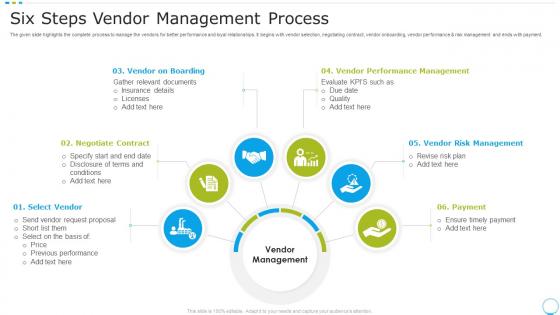
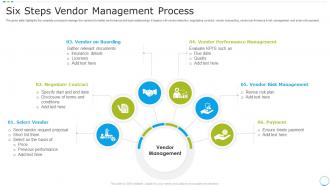
The given slide highlights the complete process to manage the vendors for better performance and loyal relationships. It begins with vendor selection, negotiating contract, vendor onboarding, vendor performance and risk management and ends with payment.
People who downloaded this PowerPoint presentation also viewed the following :
Six Steps Vendor Management Process with all 6 slides:
Use our Six Steps Vendor Management Process to effectively help you save your valuable time. They are readymade to fit into any presentation structure.





FAQs for Six Steps
Honestly, vendor management is way easier when you break it down. First figure out what qualifications they actually need to have. Get everything in writing with clear SLAs - trust me, this saves your butt later when things go sideways. Track how they're doing against those metrics you set up. Regular check-ins with their team help too, keeps everyone on the same page. Oh, and definitely have backup plans for anything critical because vendors can flake. The whole thing works better when you think of it as building an actual relationship rather than just signing contracts and hoping for the best.
Set up quarterly reviews tracking delivery times, quality scores, and cost variance - monthly if they're really critical to your ops. Scorecards work great for the hard stuff (on-time delivery, defect rates) plus softer things like how fast they respond to emails. Honestly, most people just collect this data and never look at it again, which is pointless. Track trends over time instead. Automated dashboards save you tons of manual work if you can swing it. Document everything because it gives you actual ammunition during contract renewals. Plus you'll catch problems early before they become disasters.
Track the obvious stuff first - delivery times, quality scores, SLA compliance. Cost savings and invoice accuracy matter too, obviously. But here's the thing: don't sleep on the relationship metrics. How fast do they respond when things go sideways? Are they actually easy to work with? I've seen companies stick with slightly more expensive vendors just because they're reliable and don't make you want to scream during meetings. Communication quality is huge. Set up quarterly reviews with your main vendors - just do it, even if it feels like extra work.
Honestly, cultural stuff can totally derail vendor relationships if you don't pay attention. Some cultures are super direct about feedback while others beat around the bush - creates all kinds of confusion. Decision-making processes are wildly different too. I learned this the hard way with a Japanese vendor who took forever to respond because they needed group consensus for everything. Time zones already suck without adding cultural miscommunication! You'll save yourself major headaches by learning their work style upfront. Don't assume they operate like you do - be really explicit about expectations and communication preferences.
Honestly, there are three things I'd hammer on if I were you. Payment terms first - try to stretch them to 60-90 days because cash flow is everything. Then nail down those performance metrics with actual penalties when they screw up (and they will). Exit clauses are huge too, even though nobody thinks about divorce during the honeymoon, you know? Oh, and push for volume discounts right away even if you're tiny now. Your usage always grows faster than you think. Don't let them pressure you into signing quickly either - that's their oldest trick. Get legal involved if it's a big contract.
Honestly, start by getting all your contracts digital first - that's the biggest win. Set up automated alerts for renewals because forgetting those is the worst. Having a centralized database beats dealing with random spreadsheets everywhere. Performance dashboards are super helpful too. AI tools can spot weird spending patterns you'd miss otherwise. The comparison features on procurement platforms are clutch when you're evaluating vendors side-by-side. I know it sounds like a lot, but even just digitizing contracts will save you tons of headaches.
Dude, risk management is like having insurance for your vendor relationships. Check their finances, security stuff, and compliance during the selection phase - I got burned once when a vendor went belly-up after six months, total nightmare. Don't stop there though. Keep monitoring their performance and have backup plans ready. Performance reviews should happen regularly, and honestly? Most people skip this part and regret it later. Build risk checks right into your evaluation process from day one. You don't want to be scrambling when things go sideways, trust me on this one.
Hit up your vendor contact right away - don't let this drag out. Write everything down, even the phone stuff. Honestly, most of these messes happen because nobody was clear about expectations upfront (classic scope creep situation). Direct convo not working? Go up the chain or loop in your legal people. Your contract is basically your best friend here - that's what'll back you up. Don't get emotional about it though, just stick to how it's screwing with business. The faster you move and the clearer you are about what you actually need, the better your chances of fixing this whole thing.
Honestly, most people mess up by not communicating clearly from day one. Contracts need to be crystal clear too - vendors can't read your mind, trust me on that. I've seen so many rush through the vetting process because they're desperate, which always bites them later. Regular check-ins are huge. Document everything in writing, even the small stuff. Never rely on just one vendor either - always have backups ready. Oh, and start building those relationships way before you actually need them. Makes everything smoother when crunch time hits.
Honestly, vendor management is a game-changer for staying nimble when things get crazy. You're not stuck with slow internal processes - you can switch gears fast by working with different vendors or scaling things up and down. It's way better than being trapped with one approach, you know? Strong relationships with multiple vendors mean you get access to their cool innovations without having to build everything yourself (which takes forever). The trick is keeping good partnerships going so you've got options when you need to pivot quickly. Trust me, it beats scrambling when markets shift unexpectedly.
Honestly, don't just pick the cheapest vendor - that's bitten me in the ass before. Check their finances first, make sure they're not gonna disappear on you. Their tech skills matter obviously, but also dig into whether they've done stuff like your project. Customer support is where you'll really feel the pain if it sucks. Security's non-negotiable these days. Oh, and see how their stuff plays with what you already have - integration nightmares are real. Talk to their current clients, not just the references they hand you. Maybe make a little scorecard so you're not just going with whoever bought you the nicest lunch.
Build compliance checks right into your vendor process from day one. Map out which regulations actually hit your vendors - generic checklists are honestly just annoying for everyone. During onboarding, grab their certifications, audit reports, risk assessments, all that documentation stuff. Don't forget the ongoing reviews either, since things shift constantly. I've seen too many companies treat this like a one-and-done thing. Keep it as an ongoing conversation instead. Set up some basic tracking system so when auditors come knocking, you can quickly show what you're monitoring. Makes life way easier.
Dude, stick with your vendors long-term if you can. Better pricing and they'll actually prioritize your calls when shit hits the fan. They learn your business inside out, so they'll give you a heads up about problems or suggest stuff you didn't even think of. Honestly, the time you save not training new suppliers constantly is worth it alone - no more quality roulette every few months. When you're in a jam, they'll bend on payment terms or rush something through. Just don't ghost them between orders, you know? Check in once in a while.
Honestly, your vendors see stuff you don't because they work with tons of clients. Set up regular check-ins and surveys to get their take on what's broken. Post-project reviews work great too. They'll call out bottlenecks in your approval process or point out where requirements aren't clear enough - which happens more than you'd think. The trick is actually doing something with their feedback instead of just nodding along. Maybe try quarterly roundtables where they can speak freely? Track what changes you make and see if it actually helps. Their outside perspective is gold.
Honestly, there's a bunch of solid vendor management platforms that'll save you tons of headaches. SAP Ariba, Coupa, and Ivalua are the heavy hitters - they do everything from sourcing to contracts and tracking performance. Smaller companies might want something simpler though, like Vendorful or just using whatever procurement stuff is already in your ERP. I'd skip the fancy demos until you know what's actually broken in your current process. List out your biggest annoyances first. Then pick maybe 2-3 platforms that actually fix those specific problems instead of getting distracted by all the bells and whistles.
-
I am not the best at presentations but using SlideTeam’s PPT template made it easier for me. Thank you SlideTeam!
-
Informative design.