


Eight Phases Of Vendor Management Lifecycle




Try Before you Buy Download Free Sample Product
 Impress Your
 Audience
 100%
100% Editable
 Save Hours
 of Time


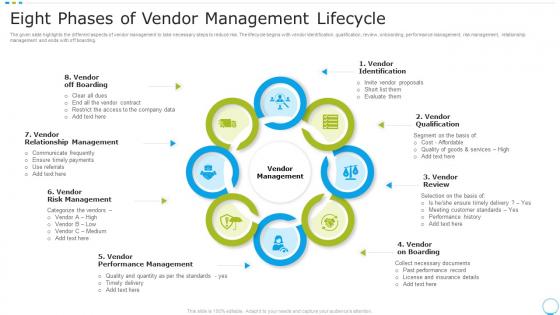
The given slide highlights the different aspects of vendor management to take necessary steps to reduce risk. The lifecycle begins with vendor identification, qualification, review, onboarding, performance management, risk management, relationship management and ends with off boarding.
People who downloaded this PowerPoint presentation also viewed the following :
Eight Phases Of Vendor Management Lifecycle with all 6 slides:
Use our Eight Phases Of Vendor Management Lifecycle to effectively help you save your valuable time. They are readymade to fit into any presentation structure.





FAQs for Eight Phases Of
So there's basically five stages you'll go through. First, find and vet potential vendors - that's the fun part. Contract negotiation comes next (ugh, this can take months). Then you onboard them into your systems. Performance monitoring happens throughout - track how they're doing against your SLAs and KPIs. Finally, decide if you want to renew or dump them. Here's the thing though - think about renewal criteria even during onboarding. Makes the whole cycle smoother. Oh, and definitely treat vendor relationships like dating... some work out, others don't!
Look, picking the right vendors is make-or-break for your business. You're literally choosing who controls parts of your operations, budget, and how customers see you. Good vendors hit deadlines, stay on budget, and actually get what you're trying to do. They bring skills your team might not have - basically like hiring specialists without the full-time cost. The trick is doing your homework upfront. Check their past work thoroughly because trust me, switching vendors later is a nightmare and costs way more than you'd think. I learned that the hard way. Be picky now, save headaches later.
Check their financial health first - nobody wants their vendor going bankrupt mid-project. Look at technical skills, security practices, and whether they actually get your company culture. References are huge here. I'd honestly skip anyone who can't provide solid client examples. Their compliance certs matter too, plus how they handle your data. Pay attention to how they communicate during the whole evaluation thing - that's probably how they'll be as a partner. Oh, and make a scoring sheet with weighted criteria so you're not just picking whoever gave the best sales pitch.
So I'd start with regular scorecards tracking delivery times, quality, SLA stuff, and costs. Quarterly business reviews are clutch - yeah, they're awkward as hell at first but totally worth it. Sit down and go through the numbers together. Don't forget to ask your team what they think since they deal with vendors daily and catch things reports miss. I always look at trends over months, not just single data points. Oh and if someone's performance tanks? Give them an improvement plan with real deadlines and actual consequences. Otherwise they'll just keep screwing up.
Look, risk management is basically your safety net with vendors - catches problems before they explode. When picking vendors, check their financials, security stuff, compliance issues. You don't want them tanking your project later. After they're hired, keep monitoring for changes that could screw you over. Honestly, I've watched too many companies skip this step and then panic when their vendor goes bankrupt or gets hacked. My advice? Make a simple scorecard covering whatever matters most to your business. Short sentences work better than overthinking it.
Honestly, the right tech setup can handle so much of that tedious vendor stuff for you. Start with whatever's driving you crazy first - maybe it's onboarding new vendors or tracking who's actually performing well. Vendor management platforms are solid for automating contract renewals and getting real-time performance data. AI tools help with risk assessment too, which is pretty neat. The integration part is huge - you can pull everything into one dashboard instead of jumping between five different systems. Don't try to fix everything at once though, that's just asking for a headache.
Set up quarterly check-ins with your top vendors, not just when contracts are up. Share what's happening on your end and ask about their roadmap - communication goes both ways. Build relationships with multiple people there because if your main contact bails, you're stuck starting over (learned this the hard way). Document conversations since everyone forgets details later. Honestly, treating them like actual partners instead of just vendors makes a huge difference. I'd start with your three biggest ones this month and see how it goes.
Honestly, good contracts are what keep vendors from screwing you over. You want everything spelled out - deadlines, what they're actually delivering, and what happens if they don't. I learned this the hard way on a project last year. Set up regular check-ins and measurable KPIs so you can call them out when things go wrong. Without that stuff in writing, you're basically just hoping they'll do their job properly. Which, spoiler alert - they won't always. Make sure penalties are real too, not just some vague "we'll discuss it" nonsense.
Honestly, most of the time it's communication that screws everything up. Vendors will promise you the moon during sales calls, then suddenly can't deliver basic stuff. Your team forgets to actually check if they're hitting their targets until everything's on fire. Cost overruns are brutal too - those "small" add-ons pile up fast. Then there's all the compliance headaches and security risks when you're relying on outside companies. I learned the hard way that setting up regular check-ins from the start makes a huge difference. Way better than constantly putting out fires later.
Honestly, build compliance checks straight into your vendor contracts from day one. Do your homework during onboarding - check their certs, audit reports, regulatory stuff before you sign anything. Set up regular reviews (quarterly or yearly depending on how risky they are). Your contracts should include audit rights and require them to tell you if something goes wrong. Document everything and use a scorecard to track performance. The paperwork part is boring as hell, but trust me - it's way better than dealing with compliance disasters later. Clear consequences for violations are a must too.
For vendor tracking, focus on delivery times, quality scores, and how they stick to budgets and SLAs. Customer satisfaction matters most though - that's your real scorecard. I'd also watch how fast they respond to problems and communicate overall. Here's the thing: don't track everything or you'll drown in data. Pick maybe 5-7 metrics that actually matter to your business. Review quarterly and set up something simple so you can catch issues early. Honestly, a basic dashboard beats fancy reports nobody reads.
Honestly, getting your vendors plugged into your supply chain data is huge. They can see your demand forecasts in real-time and adjust their production schedules before you're scrambling with emergency orders. No more of those panic moments when everything's on fire. Your key vendors - maybe start with 3-5 of them - get access to what you actually need and when. Fewer stockouts, better inventory flow, way smoother coordination. I'd pilot it with your most critical suppliers first since they probably hate the last-minute chaos as much as you do.
Set up monthly check-ins right away, but also leave room for quick texts or calls when stuff comes up. Most vendor relationships crash because people just... stop talking to each other, which is honestly so preventable. Use shared dashboards or whatever project tools work for both of you so nobody's left guessing. Document the big decisions and actually send those meeting notes within a day or two. Oh, and figure out your escalation process before you need it - like who calls who when things go sideways. Book that first quarterly review within your first month while you're both still motivated.
Honestly, good vendor management is like having a personal finance app for your business. Start by auditing where your money's actually going - you'll be shocked at the redundant services you're paying for. Bundle purchases whenever possible for volume discounts. Those performance reviews? They catch problems before they blow up your budget (learned that one the hard way). Track stuff like cost per service and ROI consistently. The real win is spotting vendors who aren't pulling their weight. Plus you can renegotiate contracts from a position of strength when you have the data. It's basically preventing those "oh crap" moments in Q4.
Working with diverse vendors totally changes your innovation game. They bring perspectives you just won't find with your usual suppliers. These businesses - minority-owned, women-owned, smaller companies - have had to get scrappy to survive, so they've figured out creative solutions your bigger vendors never had to think about. Different backgrounds = different approaches, which is actually pretty amazing to watch play out. Oh, and here's something cool: they often serve markets your traditional suppliers don't really get, so they understand customer needs others miss completely. Just don't treat them like a checkbox exercise - actively look for them upfront during vendor selection.
-
The presentations are very helpful. I am always able to get appropriate templates for the different topics related to my profession.
-
Happy to found you SlideTeam. You guys are value for money. Amazing slides.