

Fleet Management System Process Flow Chart




Try Before you Buy Download Free Sample Product
 Impress Your
 Audience
 100%
100% Editable
 Save Hours
 of Time


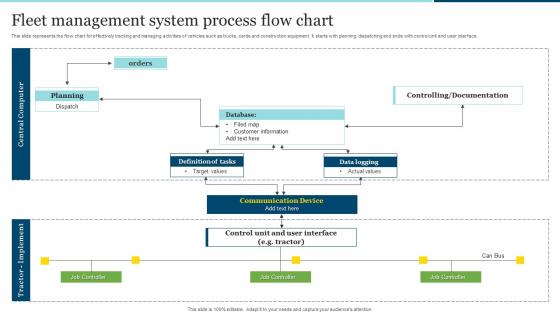
This slide represents the flow chart for effectively tracking and managing activities of vehicles such as trucks, cards and construction equipment. It starts with planning, dispatching end ends with control unit and user interface.
People who downloaded this PowerPoint presentation also viewed the following :
Fleet Management System Process Flow Chart with all 6 slides:
Use our Fleet Management System Process Flow Chart to effectively help you save your valuable time. They are readymade to fit into any presentation structure.





FAQs for Fleet Management System
GPS tracking is absolutely essential - no way around that one. You'll also need maintenance scheduling, driver management, fuel monitoring, and compliance reporting. Honestly, the real-time tracking completely changes everything since you can optimize routes on the fly. Driver behavior stuff helps with safety plus cuts insurance costs. Automated maintenance alerts save you from expensive breakdowns (learned that the hard way). Fuel tracking catches waste and fraud fast. Compliance module handles DOT requirements automatically. If you're doing this gradually, start with tracking and maintenance first - biggest bang for your buck there.
Honestly, telematics is a game changer for cutting costs. Real-time data shows you exactly how drivers are behaving - speeding, harsh braking, all that stuff that kills your maintenance budget. Route optimization saves a ton on fuel too. The GPS tracking part? Total lifesaver when you need to know where everyone is without playing phone tag all day. Insurance companies actually give discounts if you use it, which is nice. Oh, and you can spot problems before they turn into expensive breakdowns. I'd focus on fuel and maintenance tracking first since that's where you're bleeding the most money anyway.
Honestly, driver behavior makes or breaks fleet safety. Your accident rates and fuel costs? They're directly tied to how your drivers actually drive. Hard braking and speeding jack up your insurance claims - not to mention harsh driving can kill fuel efficiency by like 20%. That's huge when you multiply it across dozens of vehicles. The cool thing is telematics makes tracking this stuff way easier now. Set up driver scorecards, monitor speeding events and hard stops, then coach the drivers who need work. It's probably the fastest way to see real improvement.
Honestly, driver habits make the biggest difference - teach them gradual acceleration and keeping steady speeds. Idle time kills your budget way more than people realize. Regular maintenance is huge too, especially tire pressure. Route optimization software helps cut unnecessary miles. When you're replacing vehicles anyway, go more fuel-efficient. Oh and definitely track your current usage first - you can't fix what you don't measure, plus it'll show you which drivers or routes are the worst offenders.
Honestly, the maintenance schedule thing is everything - don't skip those oil changes and brake checks. Track your vehicle data so you catch problems early, before they cost you a fortune. Your drivers matter way more than people realize though. Aggressive driving will trash your fleet so fast it's not even funny. Train them properly and make sure they're not beating up company trucks like they're rentals. Oh, and keep good records for each vehicle - super helpful when issues pop up. I'd start by looking at what you're already doing maintenance-wise and see what's missing.
Honestly, it's a game changer for fleet stuff. Predictive maintenance catches problems before your trucks break down and cost you a fortune. Real-time tracking shows you everything - how drivers are doing, vehicle performance, the works. Route optimization saves you tons on fuel costs. The driver scoring system is actually pretty smart, makes safe driving into like a competition. Once you get it all running, it handles the boring day-to-day crap automatically. You'll spend way less time putting out fires and more time on the big picture decisions that actually matter for your business.
DOT compliance is your biggest headache - driver quals, hours of service, vehicle inspections. You'll need proper insurance coverage and emissions standards compliance too. Interstate stuff gets messy with different licensing and tax rules per state. OSHA requirements are no joke either. Honestly, I'd set up a tracking system right away for driver certs and inspection dates because those fines hit hard when you're behind. The paperwork side is brutal if you're not on top of it. Oh, and don't forget maintenance records - they love checking those during audits.
So basically these systems connect through APIs to whatever you're already using - QuickBooks, SAP, all that stuff. Your fuel costs sync automatically which saves tons of time. Real-time syncing is honestly a game changer when it works right. Most vendors have pre-built connectors ready to go, though you'll want to nail the data mapping during setup or things get messy fast. Oracle and Microsoft Dynamics play nice with most platforms. Before you sign anything, definitely get them to demo it with something that looks like your current setup - I learned that one the hard way!
Honestly, start with fuel costs since that's probably destroying your budget right now. Track your MPG like crazy. Then look at whether you're actually using all your vehicles - sitting trucks just burn money for no reason. Maintenance tracking is huge too, helps you catch the lemons before they completely break down on you. Oh, and driver safety scores matter more than people think, especially for insurance rates. Route optimization is solid if you've got the data for it. I'd pick maybe 2 or 3 of these based on whatever's causing you the biggest headache.
So basically you're switching from gas stations to charging stations, which changes everything. The upfront costs suck but you'll save money long-term on operations. Range becomes this whole thing you have to plan around - especially for longer routes. I'd honestly start small with shorter, predictable routes where you can figure out the charging situation first. Maintenance gets way simpler though, fewer parts breaking down. You might need different types of vehicles for different jobs now. The "refueling" takes forever compared to gas, so schedules need reworking. It's a total strategy shift but doable if you phase it right.
Oh man, the scheduling nightmare is real - trying to coordinate maintenance when your trucks are scattered across time zones? Brutal. Then you've got different regulations in every region, plus fuel costs that are all over the map. Driver training standards? Total mess. Half your team speaks different languages, so good luck getting everyone aligned. I swear the reporting alone will drive you crazy since nothing syncs properly between systems. Honestly though, get a solid fleet management platform ASAP and nail down your regional processes before this gets worse. Trust me on that one.
Dude, start tracking your fuel use and idle times - regulators are obsessed with that stuff. Regular emissions testing is non-negotiable, obviously. The paperwork is honestly brutal, but fleet management software saves your sanity by automating most of it. Local regs change constantly and vary everywhere, which is super annoying. Monthly compliance checks work well. Train your drivers on eco stuff too - they actually listen more than you'd think. Oh, and tackle one vehicle type at a time so you don't lose your mind trying to do everything at once.
Honestly, you'd be crazy not to do preventive maintenance - it'll save you so much money and stress. Catching problems early means way fewer expensive breakdowns, plus your vehicles last longer. Your drivers won't hate you for giving them reliable trucks that don't break down at ridiculous hours (been there, not fun). The numbers don't lie either - emergency repairs drop by like 40% and fuel efficiency goes up. Oh, and start basic with oil changes, tire rotations, brake checks based on mileage. Nothing fancy at first.
Dude, vehicle tracking is a game changer for fleet security. You get real-time GPS on all your vehicles, so you know exactly where they are 24/7. Set up geofences and you'll get pinged immediately if someone drives outside your zones or uses trucks after hours. Honestly saved my buddy's company when their van got stolen last year - cops tracked it down in like 3 hours. You can also spot sketchy driver behavior patterns. The alert notifications are clutch though, that's where you really see the security benefits kick in. Don't sleep on setting those up first.
Dude, the AI predictive maintenance stuff is actually insane right now - like it'll tell you your truck needs work before anything breaks. Real-time telematics is huge too. Route optimization has gotten crazy good at juggling traffic, weather, and how your drivers actually behave (not just theoretical speeds). Autonomous vehicles are still pretty niche but they're solid for warehouse work. Oh and electric fleet optimization is blowing up if you're going that route. My advice? Start with basic telematics if you're not there yet. Don't go nuts right away - get your data flowing first, then add the fancy predictive stuff later.
-
The templates are handy and I can personalize them as per my needs. Glad to be your subscriber!
-
No second thoughts when I’m looking for excellent templates. SlideTeam is definitely my go-to website for well-designed slides.