


Store Sales Management Process Flow Chart




Try Before you Buy Download Free Sample Product
 Impress Your
 Audience
 100%
100% Editable
 Save Hours
 of Time


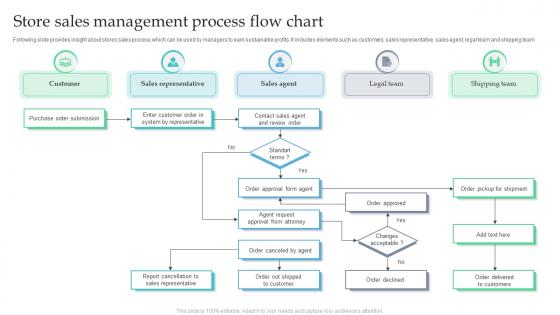
Following slide provides insight about stores sales process which can be used by managers to earn sustainable profits. It includes elements such as customers, sales representative, sales agent, legal team and shipping team.
People who downloaded this PowerPoint presentation also viewed the following :
Store Sales Management Process Flow Chart with all 6 slides:
Use our Store Sales Management Process Flow Chart to effectively help you save your valuable time. They are readymade to fit into any presentation structure.





FAQs for Store Sales Management
Honestly, start with nailing down your actual sales process first - everything else builds from there. You need clear revenue targets and territories mapped out properly. Track every deal through each stage like your life depends on it. Regular one-on-ones with your team are where you'll see the real breakthroughs happen. Document your whole process so it's repeatable and everyone knows the exact steps. Performance metrics matter too, obviously. Oh and consistent coaching - can't stress that enough. Pipeline management sounds boring but it's literally what separates good teams from great ones.
Break down those company goals into actual numbers your team can hit - revenue targets, new customers, whatever matters most. Each rep needs to see how their work connects to the big picture. Weekly meetings are clutch for this, honestly way more effective than most people think. Show progress on dashboards or scorecards so everyone knows where they stand. Celebrate when you hit milestones too - people need that validation. The whole point is making those vague business objectives feel real and personal to each salesperson's daily grind. Once they get that connection, you'll see way better results.
Honestly, data analytics has become huge for sales teams. It shows you patterns you'd never catch otherwise and helps predict customer behavior. Instead of making decisions based on hunches, you can actually see which leads are worth chasing and when deals might fall through. Track conversion rates, sales cycles, lead quality - all that stuff gives you real insight into what's working. I'd start simple though, maybe just pick one metric that hits your revenue directly and watch it for a while. You'll probably be shocked at what patterns emerge. Way better than flying blind.
Honestly, forecasting changed everything for our team. You'll actually see what deals are real vs just wishful thinking. When reps have to justify their numbers each week, they get way better at qualifying - no more throwing spaghetti at the wall. We do monthly commits with weekly check-ins, which sounds like overkill but trust me, it builds good habits. The best part? You catch pipeline gaps early. Like when Q3 looks thin, you can ramp up prospecting now instead of panicking later. Takes maybe 30 minutes weekly but saves you from those end-of-quarter scrambles that nobody enjoys.
Honestly, start with recognition - like actually calling people out in meetings when they crush it. I've watched managers totally flip their team's vibe just by being louder about wins. Set targets that stretch people but don't break them. The real magic though? Invest in their growth through training or giving them bigger projects. Sure, money helps short-term, but nothing beats helping someone level up their career. Oh, and figure out what drives each person individually - some want public praise, others prefer quiet feedback. Three areas: recognition, smart goals, development opportunities.
Dude, training is like the secret weapon nobody talks about enough. Your team's skills literally make or break your revenue. Sales moves so fast now - what crushed it last year? Probably useless today. I've watched reps stuck in neutral for months, then boom - right training hits and their numbers spike 20-30%. Pretty wild actually. Don't do the one-and-done workshop thing though. Monthly sessions work way better. Oh, and match the training to whatever gaps you're seeing in your pipeline data. That's where the magic happens.
Honestly, the worst part is when your team's performance is all over the place. Some reps crush it while others can't close anything. Sales cycles drag on forever too, which makes forecasting a nightmare. Pipeline management? Don't even get me started - it's chaos without good systems. Here's what actually works: regular check-ins with each rep to figure out what's blocking them. Get a decent CRM so you can see what's happening. Copy whatever your best performers do and make everyone else follow those steps. Oh, and tackle one problem at a time - I learned that the hard way. Trying to fix everything just stresses everyone out.
Honestly, CRMs just handle all the boring stuff you're probably doing by hand right now. No more spreadsheet hell from 2005 - you can see your whole sales pipeline instantly and track every lead interaction. The automatic follow-up reminders are a game changer. Your team can actually access the same customer info, so nobody's left looking clueless when someone asks about a lead. Reports generate themselves too, which means you'll know what's actually working vs what's just busywork. I'd map out your current process first though, then find a CRM that matches how you already work.
Track both leading and lagging stuff - you need the full picture. Conversion rates at each stage, deal size, cycle length, revenue vs targets obviously. Activity metrics matter too though - calls made, demos scheduled. Those actually predict what's coming better than looking backward (learned this the hard way). Customer acquisition cost and lifetime value ratios are huge. But honestly? Pick 3-5 core metrics that'll actually change how your team behaves. Build weekly reviews around those instead of drowning in every data point you can find.
Oh man, this is huge. What works in the US - being direct and moving fast - can totally bomb in places like Japan where you've gotta spend months just building trust first. Your whole approach changes: how you talk to people, negotiate deals, even manage your team. Some cultures want that top-down hierarchy thing, others hate it. Honestly, I learned this the hard way when I tried rushing a deal in Germany and it went nowhere. You really can't wing it - gotta research each market's business culture and completely redesign your sales process around it.
Skip the sandwich feedback thing—it's honestly annoying and nobody falls for it. Come armed with real numbers: conversion rates, pipeline speed, activity counts. Ask your reps straight up what's blocking them and what help they actually need. I always dig into both their wins AND losses because that's where you spot the patterns. Keep everything tied to behaviors they can control, not just results. Oh and make sure you're being direct but not a jerk about it. Wrap up with 2-3 concrete goals and book your next check-in before they leave.
Look, good communication is what keeps your sales team from falling apart. When you're open about pipeline stuff and share both wins and failures, trust builds naturally. People actually care more when they feel heard - crazy concept, right? Regular check-ins help, but don't make them boring status updates. Create space where your team can give honest feedback without worrying about backlash. Clear expectations matter too, obviously. Here's what I'd do first: just ask your team what's blocking good communication right now. Then actually fix those things instead of ignoring them.
Dude, three things will save your sanity here. Pay them what they're worth - market rate plus bonuses when they kill it. Competitors are constantly headhunting these people, so don't be cheap. Growth opportunities are huge too. Get creative with promotions or new responsibilities if you have to. I've seen companies lose absolute rockstars because they felt trapped in the same role forever - such a waste. Oh, and recognition matters way more than you'd think. Give them the hottest leads, best training, shout them out publicly when they crush goals. Regular check-ins help too. Just ask what they need and actually follow through.
Dude, feedback loops are game changers - wish someone told me this years ago! You're basically getting real-time intel from your team on what's landing with prospects, plus hearing directly from clients about your approach. Then you adjust on the fly instead of wondering why deals keep falling through. I used to just wing it and hope for the best, terrible idea lol. Make it structured though - weekly team debriefs, monthly client surveys. Actually use that data to tweak your pitch or follow-up timing. It's like having GPS but for sales instead of driving around lost.
Honestly? Put your customers first, even if it means losing a deal sometimes. Don't let your team BS people about what products can actually do or hide pricing tricks. I've watched so many sales teams crash and burn from chasing quick wins like that. High-pressure tactics are gross anyway. Pay your reps fairly so they're not desperate to oversell everything. Oh, and definitely set some ground rules about data privacy and how you research competitors. Create clear ethical guidelines and actually stick to them - otherwise what's the point?
-
I want to express my gratitude to SlideTeam’s presentation design services team for helping me create the best presentation of my life!
-
Presentation Design is very nice, good work with the content as well.