

Financial Management Process Flow Chart




Try Before you Buy Download Free Sample Product
 Impress Your
 Audience
 100%
100% Editable
 Save Hours
 of Time


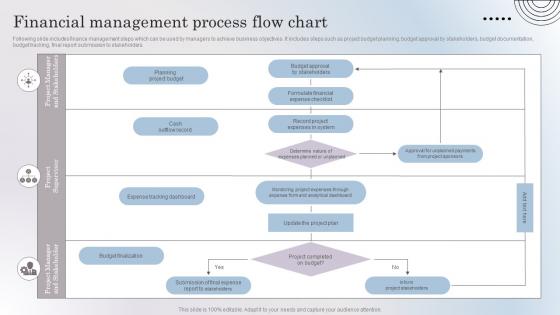
Following slide includes finance management steps which can be used by managers to achieve business objectives. It includes steps such as project budget planning, budget approval by stakeholders, budget documentation, budget tracking, final report submission to stakeholders.
People who downloaded this PowerPoint presentation also viewed the following :
Financial Management Process Flow Chart with all 6 slides:
Use our Financial Management Process Flow Chart to effectively help you save your valuable time. They are readymade to fit into any presentation structure.





FAQs for Financial Management
Honestly, the big three are tracking cash flow, budgeting, and keeping business money separate from personal stuff. Most people hate the cash flow part because it's boring as hell, but you've got to track every dollar in and out. Get QuickBooks or something similar - doesn't have to be fancy. Reconcile monthly though, that's key. Build an emergency fund too because rough patches always happen. Oh, and actually stick to your budgets instead of just making pretty spreadsheets. Don't try fixing everything at once - pick whatever you're worst at and start there.
Honestly, budgeting is like having GPS for your money - shows you exactly where everything's going. You'll catch cash problems way before they blow up, which is clutch. Different methods work better for different situations though. Zero-based budgeting makes you justify every single expense (total pain but you discover so much waste). The trick is finding what fits your company size and actually doing those budget reviews regularly. Otherwise you're just flying blind when things change. Really helps when you need to explain why you're spending money on certain things too.
Honestly, just pick whatever's driving you crazy right now and automate that first. I'd probably start with invoicing or expense tracking since those eat up so much time. Cloud accounting software lets you check your numbers from anywhere, which is pretty clutch. Your phone can scan receipts automatically now instead of you keeping a shoebox full of crumpled papers (guilty). The AI stuff actually works decent for sorting transactions - way better than doing it yourself. Once you get different tools talking to each other, you'll stop entering the same data twice.
Look, cash flow analysis is your lifesaver for avoiding those "oh shit" moments when bills are due but money hasn't hit your account yet. Map out your next 90 days - what's coming in vs going out. Trust me, being profitable on paper means nothing if you can't pay rent next week. Track it weekly or monthly so you can see the gaps coming. That way you can chase down collections earlier, maybe delay some payments, or line up credit before you actually need it. Way better than scrambling last minute when you're already broke.
Honestly, you've gotta treat this like budgeting your personal finances but way more complicated. Set aside money for the boring day-to-day stuff first - payroll, rent, that random equipment that'll break next month. Then carve out a chunk for the fun future stuff like R&D or expanding into new markets. The hardest part? Don't touch that future money when things get tight (and they will). I'd run some what-if scenarios - like what happens if sales drop 20% next quarter. Check in every few months to see if your split still makes sense. It's basically forcing yourself to think beyond next week's crisis.
Okay so three big things to think about: Don't put everything in one place - diversify your investments and income streams. I made that mistake once, not fun. Check your finances regularly with proper metrics and cash flow stuff so you catch problems before they get bad. Then build backup plans for different situations and keep some money set aside for emergencies. Insurance helps too for the really scary risks. Honestly, being ahead of problems beats scrambling to fix them later. Start by figuring out where you're most vulnerable right now and tackle those areas first.
Look, forecasting is basically your financial GPS - helps you see cash flow problems before they hit and figure out when you can actually afford to hire someone or buy that new equipment. Smart money decisions, you know? Honestly, most businesses fail because they run out of cash when they least expect it. With decent forecasts, you'll spot those danger zones early. Banks and investors eat this stuff up too - proves you're not just making it up as you go. Just start with a simple 12-month cash flow thing. Nothing fancy.
Ugh, manual expense tracking is the worst. Financial apps basically do all that annoying stuff for you automatically - they sync with your bank, categorize everything, and show you exactly where your money goes. Real-time spending updates are pretty clutch too. Most will even alert you about weird charges or help you actually stick to budgets (which I'm terrible at tbh). But honestly? The best part is tax season - everything's already sorted instead of you scrambling through receipts like a maniac. Start with Mint or YNAB, they're both solid for figuring out what works.
Honestly, just pick like 3-4 metrics so you don't drive yourself crazy with data. Current ratio is huge - basically current assets divided by current liabilities, tells you if you can actually pay your bills. Cash flow from operations is probably my favorite though, since companies can look profitable but still be totally screwed cash-wise. Gross profit margin's solid too for seeing real profitability. Oh, and debt-to-equity ratio if you're worried about how leveraged you are. Pull these monthly and compare against industry standards - that's where the real insights happen.
So corporate governance is basically the rulebook for handling company money and making financial calls. You'll need approvals for budgets, have to report performance properly, and follow controls when spending or investing. Honestly, it's kind of a pain but saves your ass from bigger problems down the road. Better risk management, clearer reporting, smoother decisions - that's what good governance gets you. My advice? Loop in the governance team early on major financial moves. Don't be that person trying to get retroactive approvals - trust me, it's way messier.
Honestly, just look at your numbers first - what's actually making money vs what's burning it. Cut the stuff that isn't working, even if Bob from marketing gets upset about his favorite campaign getting axed. Put your money where you're seeing real results. Revenue growth, cost savings, whatever moves the needle. I learned this the hard way - spreading budget across 20 tiny projects just makes everything mediocre. Check in every quarter and move money around based on what's performing. Sounds obvious but most people set budgets once and forget about them. Track everything so you can pivot fast when something tanks.
So accounting is basically looking backwards - recording what already went down and creating reports for investors, the IRS, whoever needs them. Financial management? Totally different beast. You're looking ahead, making budgets, planning stuff out to actually improve how the company performs financially. Honestly, I think of accounting like keeping score of a game that's already over. Financial management is more like... you're the one deciding which plays to run next. Really depends what you want to do - just track what happened, or actually shape what's coming?
Look at NPV, IRR, and payback period for each option - those three will give you the basics. Be realistic with your cash flow projections though, because wildly optimistic numbers always bite you later. Adjust your discount rates based on how risky each project is, or just run some sensitivity analysis. Here's the thing - sometimes strategic value matters more than pure ROI if it helps bigger company goals. Since you can't fund everything, rank projects by which ones create the most value. Oh, and make sure they actually fit your strategic priorities first.
Honestly, training your team on financial stuff is a total game-changer. People get way better at budgeting and actually understanding what those financial reports mean (which most of us pretend to read anyway). Your employees stop throwing money around randomly because they finally get cost control and ROI. Communication between departments flows so much smoother when everyone's speaking the same money language. Here's the thing though - they start thinking like they actually own part of the business instead of just clocking in. Start with basic financial literacy first, then build from there.
Honestly, just be upfront about risks and don't screw over your employees or customers for a quick buck. Avoid conflicts of interest - that stuff always comes back to bite you. I mean, we all saw what happened in 2008 when companies only cared about short-term profits, right? Keep accurate records and stay compliant with regulations, obviously. Think long-term impact on everyone involved, not just shareholders. Maybe do a quick audit of your current processes? You'd be surprised how many ethical blind spots pop up when you actually look for them.
-
Their professional templates are very impressive, even my manager was curious about the source. I am very grateful.
-
Wonderful templates design to use in business meetings.