


Financial Data Consolidation And Reporting Process Flow




Try Before you Buy Download Free Sample Product
 Impress Your
 Audience
 100%
100% Editable
 Save Hours
 of Time


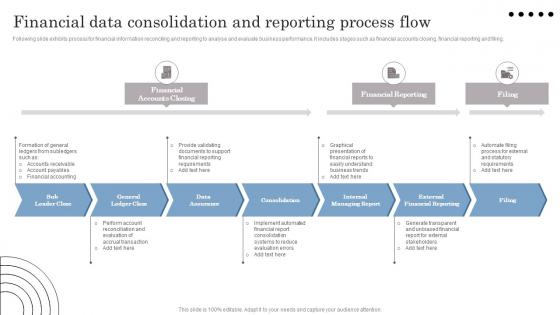
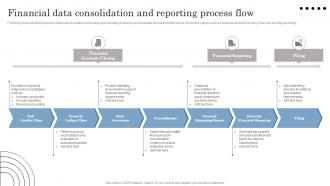
Following slide exhibits process for financial information reconciling and reporting to analyse and evaluate business performance. It includes stages such as financial accounts closing, financial reporting and filing.
People who downloaded this PowerPoint presentation also viewed the following :
Financial Data Consolidation And Reporting Process Flow with all 6 slides:
Use our Financial Data Consolidation And Reporting Process Flow to effectively help you save your valuable time. They are readymade to fit into any presentation structure.





FAQs for Financial Data Consolidation And
Honestly, the biggest thing is you'll stop making dumb mistakes and save a ton of time. Right now you're probably scrambling between like five different systems trying to match numbers - been there, it sucks. With everything consolidated, you get one clean source that actually makes sense. Auditors eat that stuff up too, which makes compliance way less painful. Decision-making gets faster when you can spot patterns without digging around everywhere. Oh, and definitely map out what data sources you have first - I was shocked how many random spreadsheets we were using when I did that exercise.
Honestly, it's a game changer - you stop wasting hours digging through random spreadsheets and systems. All your financial data lands in one spot, so you can actually see patterns and catch issues before they blow up. No more arguing about which numbers are "right" because everyone's looking at the same thing. The real-time aspect is huge too. I'd say pick your messiest data sources first and tackle those - probably your biggest pain points anyway. You'll wonder why you didn't do this sooner once everything clicks together.
Honestly, Excel with Power Query works fine for most basic stuff. Multiple data sources though? You'll probably want Tableau, Power BI, or Alteryx instead. Oracle Hyperion and SAP BPC are enterprise-level but they cost a fortune - only worth it if you're at a huge company. Python with pandas is my personal favorite if you can code at all. Super flexible once you get the hang of it. Start by figuring out where all your data lives first. Then just pick whatever connects to those sources without making your life hell. Don't overthink it.
Oh man, consolidation is a game changer for accuracy. You know how you've got customer revenue spread across like five different spreadsheets? That chaos ends when you merge everything into one clean dataset. All those duplicate entries disappear, and discrepancies get sorted out automatically. The best part is you're forced to standardize everything - same formats, currencies, accounting methods. Catches so many errors you'd normally miss. Automated validation rules basically eliminate those annoying manual typos too. Honestly, just start by listing out all your data sources first. You'll be shocked at how messy it actually is.
First thing - get all your entities using the same chart of accounts. Trust me on this one, it'll save you tons of time later. Document everything as you go because your auditors will definitely ask questions (and honestly, you'll forget stuff too). Don't wait until the end to reconcile - do it in chunks throughout the process. Automate whatever you can to cut down on stupid manual mistakes. Oh, and build buffer time into your timeline because something always goes wrong. Make sure your intercompany elimination entries are clean and you're applying consistent policies across the board.
Honestly, consolidation makes compliance so much less of a headache. You're not scrambling between different systems trying to make numbers match when auditors show up. Everything's in one place, so pulling SOX or GAAP reports becomes pretty straightforward. No more "wait, why doesn't this match what accounting has?" moments. Controls are way easier to manage too - one system means one audit trail to worry about. Teams I know have literally cut their compliance prep time in half doing this. Oh, and definitely figure out which regulations are your biggest pain points first. That'll help you decide what data to tackle initially instead of trying to do everything at once.
Oh man, you're gonna hate the data format nightmare - every system speaks a different language. Getting subsidiaries to submit on time? Good luck with that. Your ERPs definitely won't talk to each other, so prepare for manual currency and accounting standard reconciliation hell. Timing mismatches will drive you crazy too. And don't even get me started on eliminating intercompany stuff without screwing up your revenue numbers. Honestly, map your data sources now and budget like twice the cleanup time you think you need.
Dude, automation seriously saves your butt during month-end. No more copying data between systems - it just pulls everything from your ERP, bank feeds, whatever automatically. The error catching alone is worth it since weird stuff gets flagged right away. Your team can actually analyze numbers instead of being data entry zombies. Honestly, I wish we'd done this years ago. Map out what you're doing manually first, then find tools that play nice with your current setup. The upfront work sucks but you'll thank yourself later.
So you know how consolidation just mashes all your data together? Forecasting actually makes that useful for planning ahead. You can spot patterns across departments and figure out where things might go sideways. The real magic happens when you use that complete picture to predict cash flow and what resources you'll need down the road. Just don't forget about intercompany eliminations and currency stuff when building your models - learned that one the hard way. Otherwise your forecasts will be garbage from the start. It's honestly way more interesting than just reporting what already happened.
You really need solid data standards from day one - trust me on this. Get everyone using the same templates and naming rules, no creative accounting BS allowed. I've watched projects crash because people got fancy with their chart of accounts. Set up validation rules that catch mistakes early, before they wreck your reports. Each business unit should have someone owning data quality. Document what you've got now, then figure out how to transform everything into the same format. Oh, and make the standards actually stick - that's honestly the hardest part.
Track your data accuracy rates and how much you've cut processing time - those are the big ones. Error frequency too. But honestly? Don't sleep on user satisfaction scores from your finance team, that stuff matters more than people think. Measure how long consolidation cycles take now vs your old manual mess. Cost per report is solid if you need to prove ROI to the bosses. I'd start tracking monthly, then you can figure out where you're actually saving time versus just... you know, shuffling problems around differently.
Honestly, getting your financial data consolidated is a game-changer for strategic planning. You'll finally have one clean view instead of hunting through random spreadsheets that never match up (ugh, the worst). Makes spotting trends and growth opportunities so much easier. Resource allocation becomes way less of a guessing game too. Think of it like organizing your messy closet - suddenly you can find everything and see what you actually have. Start by figuring out which data sources you're manually piecing together right now. That's where you'll feel the biggest relief first.
Honestly, charts and graphs are total lifesavers when you're drowning in financial data. You'll spot trends and weird outliers way faster than scrolling through spreadsheets forever. Dashboards let people see what's happening instantly - no explanation needed. Heat maps are perfect for showing where things are going wrong, and waterfall charts break down how each part contributes to the big picture. I'm probably biased since I love data viz, but matching the right chart to your audience makes all the difference. Way more impactful than rows of numbers.
So first thing - figure out what rules actually apply to your industry. Banking's got totally different consolidation requirements than like, retail or manufacturing. Healthcare deals with all that patient data privacy stuff during mergers. Energy companies? They're wrestling with commodity pricing headaches. (Honestly learned this the hard way on a project last year - what a mess.) Tech firms always seem to trip up on subscription revenue when they're consolidating subsidiaries. Map out your specific GAAP or IFRS requirements before diving into the actual consolidation work. Each sector's weird in its own way.
Honestly, start with data governance and tech controls - that's your foundation. Manual reviews are a nightmare once you scale up, so get automated reconciliation checks running ASAP. Role-based access is huge too, only let authorized people touch the consolidated data. Here's what saved my sanity though: standardize your chart of accounts across all entities BEFORE consolidating anything. Seems obvious but you'd be surprised how many skip this step. Run parallel reporting for a few cycles to catch weird discrepancies. Oh, and document everything because your future self will thank you when training new people.
-
Great product with effective design. Helped a lot in our corporate presentations. Easy to edit and stunning visuals.
-
“There is so much choice. At first, it seems like there isn't but you have to just keep looking, there are endless amounts to explore.”