


Record To Report Financial Process Flowchart




Try Before you Buy Download Free Sample Product
 Impress Your
 Audience
 100%
100% Editable
 Save Hours
 of Time


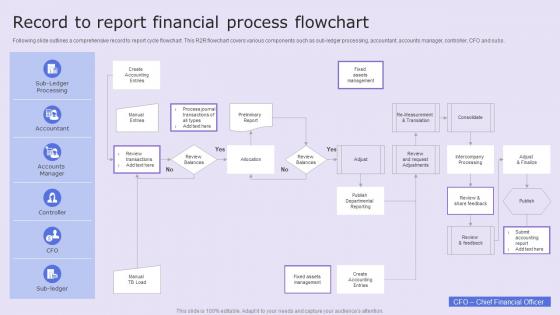
Following slide outlines a comprehensive record to report cycle flowchart. This R2R flowchart covers various components such as sub-ledger processing, accountant, accounts manager, controller, CFO and subs.
People who downloaded this PowerPoint presentation also viewed the following :
Record To Report Financial Process Flowchart with all 6 slides:
Use our Record To Report Financial Process Flowchart to effectively help you save your valuable time. They are readymade to fit into any presentation structure.





FAQs for Record To Report
So there's basically five steps you gotta get through: collecting all your transaction data, processing journal entries, reconciling accounts, putting together financial reports, and closing the books. Takes about 5-10 days usually, depends how messy your company's systems are. Each step builds on the last one - screw up reconciliations and your reports will look like garbage when your boss starts poking around. Honestly? Get those reconciliations locked down early. I've seen too many people scramble at month-end because they rushed through that part. Trust me on this one.
Honestly, automation is a game-changer for R2R. Start with your biggest time-wasters - journal entries, reconciliations, all that tedious stuff. What used to take hours now happens in minutes. Way fewer mistakes too since you're not dealing with typos or calculation errors. Real-time data processing is clutch because you catch problems early instead of scrambling at month-end. I'd map out which manual processes drain the most time first. Then check if your current ERP can handle more automation or if you need RPA tools. Trust me, your team will thank you.
Oh man, where do I even start? Data quality is probably your worst enemy - garbage in, garbage out, you know? Month-end closes are absolute chaos with everyone running around like headless chickens. Manual processes will drain your soul, and don't get me started on trying to reconcile accounts when your systems hate each other. Spreadsheets everywhere creating version nightmares. Compliance adds extra fun because auditors love finding that one missed control. Honestly, pick your biggest headache first and fix that before moving on. You'll go crazy trying to solve everything simultaneously.
Dude, real-time reporting is seriously night and day compared to waiting weeks for monthly reports. Instead of finding out about cash flow problems after the damage is done, you'll spot issues while there's still time to fix them. Your team can actually pivot when needed - like, same day decisions instead of "let's discuss this next quarter." I honestly don't know how we functioned before with those brutal month-end cycles. Start small though - figure out what numbers your bosses check obsessively and automate those dashboards first. Performance metrics, profitability, whatever keeps them up at night.
Honestly, compliance is what holds your whole R2R process together. Without it, you're basically flying blind on regulatory requirements and internal controls. Journal entries, reconciliations, financial close, reporting - compliance touches everything. SOX, GAAP, tax regs... yeah, it's the stuff that makes accounting "fun" but also keeps us relevant. Poor compliance controls? Your financial data becomes worthless and regulators will come knocking. Document everything from the start and build those approval workflows right into your cycle. Trust me, it's way easier than scrambling to fix things later when auditors show up asking questions.
Analytics will catch R2R patterns you'd never spot manually - trust me on this. Check your cycle times, error rates, bottlenecks across different units. The data always shows weird inefficiencies you didn't expect. Predictive stuff helps flag problems before month-end madness kicks in. Variance analysis shows why your actuals keep missing forecasts (which honestly happens to everyone). Real-time dashboards keep your team from that last-minute panic. Don't go crazy though - start with one annoying issue like journal errors and build from there.
Start with automation - get your journal entries, reconciliations, and reports running automatically. It'll save you so much time later. Standardize your chart of accounts across everything too. Real-time data feeds beat waiting for month-end dumps every time. Set clear cutoff procedures so people know when to stop recording stuff. Exception reporting catches problems early instead of you scrambling at close (learned that one the hard way). Oh, and tackle your biggest headaches first - don't try to automate everything at once.
Oh totally, every industry tweaks their R2R process differently. Manufacturing gets obsessed with inventory costs and valuation stuff. Financial services? They're all about regulatory compliance and risk controls - makes sense given how regulated they are. Healthcare is brutal honestly, dealing with insurance claims and revenue recognition gets messy fast. Retail focuses more on same-store sales and seasonal trends. Tech companies struggle with subscription revenue and stock comp (that part's actually pretty complicated). The basic R2R framework stays the same across industries, but you'll definitely need to adjust your timelines and reporting based on what regulators and stakeholders expect from your specific sector.
So AI and machine learning can basically automate your journal entries and spot weird stuff before it becomes a problem. RPA takes care of all those boring reconciliations - honestly, nobody misses doing those manually. Cloud platforms finally make real-time reporting actually work instead of being this fantasy we all talked about. Blockchain's creating these audit trails that are nearly impossible to mess with, which is pretty cool. My advice? Don't go crazy right away. Pick one process, test it out first, then expand from there. Way less risky that way.
Build controls into each step instead of tacking them on later. Three-way matches should be automated, and you'll want different people preparing vs approving journal entries. Real-time alerts for weird entries are clutch. Monthly reconciliations will save your butt - seriously, they catch problems before they get messy. Set up approval workflows based on dollar amounts and make sure material adjustments have backup docs. The trick is making this stuff feel normal, not like red tape. I'd start by mapping what you're doing now and finding your biggest risk spots first.
Honestly, automated reconciliations are a lifesaver for R2R accuracy. Real-time validation at the source catches errors before they mess up your whole close process. Three-way matching sounds boring but trust me - it'll save you so many headaches later. Standardizing your chart of accounts across systems is huge too. Don't rely on month-end manual reviews when you're already drowning in work. Build these checks into your daily workflow instead. Consistent data entry protocols are clutch. I learned this the hard way after spending way too many late nights fixing preventable errors.
Dude, R2R is basically doomed without cross-departmental stuff. Finance can't get anywhere without clean data from ops, accounting needs IT to actually access systems, and timing becomes this whole nightmare when people aren't synced up. I've watched month-end closes become complete chaos - like, people staying until midnight because nobody communicated. Operations might change something last-minute and forget to tell finance. Set up regular check-ins between teams so everyone knows how their work affects the final reports. Honestly, half the battle is just getting people to talk to each other instead of working in silos.
Honestly, I'd start with days to close - that's usually where you feel the pain most. Track how many manual journal entries you're doing too, plus your error rates. Days sales outstanding matters, but reconciliation time is what kills teams. The cycle from transaction to actual reporting? That one's brutal if it's dragging out. I always tell people to measure rework time vs. analysis time - you'll be shocked how much gets wasted on fixing stuff. Don't go crazy though. Pick maybe 3-4 metrics that actually hurt right now and track those religiously. You can always add more later once you've got those dialed in.
Honestly, the whole R2R thing works best when you're not scrambling last minute. Set up quarterly check-ins to review your processes against new regs that are coming down the pipe. Most finance teams I know keep regulatory calendars and subscribe to accounting updates - sounds boring but it saves your butt later. Build your controls to be flexible from the start. That way when standards change (and they always do), you're tweaking instead of rebuilding everything. Oh, and get tight with your auditors. They usually know what's coming before it hits and can give you a heads up. Way better than finding out the hard way.
Honestly, R2R is getting completely overhauled right now. AI and machine learning are automating everything - which is about time because those manual processes were brutal. Real-time reporting is becoming the norm instead of waiting around for month-end closes. Cloud solutions are finally taking over (shocking, I know). ESG reporting isn't optional anymore either, it's just part of the standard package now. The cool part? Data visualization tools are making financial stuff actually understandable for people outside finance. Oh, and everything's shifting from just compliance work to actually helping with strategy. Start learning automation tools now - seriously, manual work is dying fast.
-
Slideteam offers pocket-friendly products. As a college student this is a really necessary thing to look at while paying for something.
-
It is my first time working with them and that too on a friend's recommendation. I would say, I am not expecting such a worldly service at this low price.