


Financial Payment Procurement Process Flow Chart




Try Before you Buy Download Free Sample Product
 Impress Your
 Audience
 100%
100% Editable
 Save Hours
 of Time


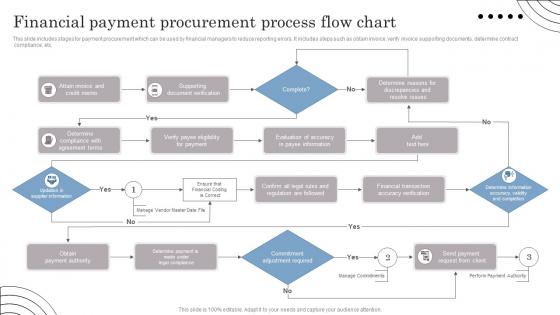
This slide includes stages for payment procurement which can be used by financial managers to reduce reporting errors. It includes steps such as obtain invoice, verify invoice supporting documents, determine contract compliance, etc.
People who downloaded this PowerPoint presentation also viewed the following :
Financial Payment Procurement Process Flow Chart with all 6 slides:
Use our Financial Payment Procurement Process Flow Chart to effectively help you save your valuable time. They are readymade to fit into any presentation structure.





FAQs for Financial Payment Procurement
So you've got six main steps to deal with. First, figure out what you actually need - honestly this part's harder than it sounds. Get your budget approved by finance (good luck there). Then hunt for vendors, compare their proposals, and negotiate the contract terms. Implementation comes next, plus you'll need to monitor how things are going afterward. Oh, and here's the thing nobody tells you - pad your timeline like crazy. Vendor responses? Always late. Internal approvals? Even worse. I learned this the hard way on my last procurement project.
Honestly, risk stuff is baked into pretty much every procurement step. You're always checking if vendors are stable, reading contract fine print, wondering if supply chains will blow up your budget. Financial risks hit hardest - cost overruns, sketchy payment terms, suppliers who promise the moon but can't deliver. I've watched so many projects crash because someone got excited about a "amazing deal" without doing homework first. The real magic happens during vendor evaluation and contract talks. That's where you figure out if saving money is worth the headache. Just make a basic risk scoring thing for big decisions.
Honestly, tech is changing procurement in crazy ways right now. AI can analyze your spending patterns automatically, and these e-procurement platforms handle everything from requisitions to purchase orders in one spot. Digital contract management is huge too - no more hunting through filing cabinets! The compliance tracking feature alone will save you so much stress. Oh, and you get real-time analytics on vendor performance that wasn't even possible before. My advice? Start with something simple like digital invoicing first. Don't overwhelm your team by rolling out everything at once.
Don't just recycle last year's RFP template - figure out what actually matters for your specific situation first. Get at least 3-5 solid bids, but seriously, don't let finance bully you into picking the cheapest option. Check their financials and compliance stuff, plus talk to references from companies your size. Their implementation timeline matters too since vendors love to overpromise on delivery dates (learned that the hard way). Oh and loop in your key stakeholders early or they'll complain later. Document everything because audits are a pain when you can't find paperwork.
Honestly, most people obsess over cost savings but miss the bigger picture. Yeah, that matters, but you'll also want to track cycle time, supplier performance, and contract compliance. Invoice processing time is huge too - can't believe how many teams ignore that. Dashboards showing real-time metrics are where it's at for catching problems early. My advice? Pick maybe 3-4 metrics that actually make sense for your company first. Don't overcomplicate it right away. Things like purchase order accuracy and stakeholder satisfaction scores can come later once you've got the basics down.
Ugh, budget approvals are the worst - they take forever. Vendor compliance will drive you crazy too, plus everyone keeps changing what they want halfway through. The paperwork is honestly insane. You'll be dealing with super limited options for niche stuff, negotiations that go on and on, and like five different departments all wanting their say. Contract terms get weird around payments and deliverables. Oh, and price talks? They drag. Start way earlier than seems reasonable - I'm talking months ahead. Document everything because people will definitely "forget" what they agreed to later.
Procurement gets way more complicated when compliance enters the picture. Gone are the days of just finding the cheapest option. Now you've got to weave regulatory stuff into vendor selection, contracts, monitoring - the whole nine yards. Your procurement folks will need to buddy up with legal and compliance teams constantly. Honestly, it's kind of a headache but makes you more strategic about purchases. Pro tip: build those compliance checks into your process from day one. I've seen companies try to add them later and wow, what a disaster that becomes.
Honestly, cost-benefit analysis is like your procurement safety net. Compare all your costs - purchase price, setup, maintenance, whatever - against the benefits you'll actually get over time. I've dodged some seriously dumb purchases this way! Plus it gives you real numbers when stakeholders start questioning your decisions. Don't just go for the cheapest thing without thinking long-term value, you know? Oh, and document both the obvious benefits AND the harder-to-measure stuff early on. Makes your whole analysis way more solid.
Document everything from the start - seriously, this saved my butt so many times. Post your procurement policies where everyone can see them, keep detailed records of decisions and communications. Use standardized evaluation criteria that are transparent to all stakeholders. Getting multiple people involved in big decisions helps avoid bias issues too. Oh and definitely set up some kind of shared tracking system - could be a simple folder or dashboard where people can check progress whenever. The key is staying ahead of it rather than scrambling later. Trust me, missing documentation will bite you eventually!
Dude, negotiation is where the magic happens - you're basically reshaping that whole contract to fit what you actually need. Price matters obviously, but don't forget about payment terms, deadlines, who's responsible when things go sideways. I swear, companies that negotiate well can slash 15-20% off their total costs. Do your research first though - figure out what's bugging them and what you can give back. Oh, and have your backup plans ready. Know when to walk away before you even sit down. Trust me on this one.
So data analytics basically stops you from flying blind with procurement decisions. You'll spot patterns in spending, see which suppliers actually show up on time, and catch where money's getting wasted. Historical data helps predict what you'll need down the road too. When it comes to contract negotiations, having real numbers makes suppliers way less likely to BS you - they can't argue with facts. Oh and don't go crazy with dashboards at first. Pick maybe 2-3 metrics that tackle your biggest procurement nightmares and build from there.
Honestly, treat your suppliers like actual partners instead of just people you throw money at. Regular check-ins work wonders - don't be one of those teams that only calls when stuff hits the fan. Pay them on time, share your forecasts when you can, and give real feedback (the good AND the ugly). Bring your key suppliers into planning conversations early too. Oh, and stop always chasing the cheapest option - longer contracts with performance bonuses usually work out better anyway. I'd start with your top 3-5 critical suppliers and set up quarterly reviews. Trust me, it makes a huge difference.
Ugh, economic swings are the worst for procurement budgets - everything becomes a guessing game. Inflation hits and suddenly your budget's worthless while suppliers jack up prices halfway through contracts. During recessions you might score better deals, but then your own company's cutting budgets left and right. International sourcing? Currency swings will mess you up if you're not careful. I swear, exchange rates have the worst timing. Build some wiggle room into your planning with different scenario budgets. Also worth keeping suppliers happy - when things get messy, those relationships really pay off in negotiations.
Watch out for conflicts of interest - don't favor vendors just because you know them personally. I get that it's easier to work with people you trust, but it'll bite you later. Document your criteria before you even look at proposals, not after. Give everyone the same info and timeline. Never accept gifts or anything that could look sketchy - honestly, some vendors will try this stuff. Your choices need to make sense on paper if someone questions them down the road. Keep good records throughout the whole thing and stick to your evaluation rubric.
Just bake sustainability right into how you evaluate vendors. Score them on carbon footprint, waste reduction, ethical sourcing - not just price and quality. Some companies are crushing it on this front already, honestly makes them stand out. Make your key suppliers report their sustainability metrics and hit actual targets, like cutting packaging waste by 30%. Focus on your biggest spending areas first - that's where the real impact happens. Oh and definitely add a simple scorecard to every RFP from now on. Way easier than trying to retrofit this stuff later.
-
Loved the collection. Editing the presentation was seamless with their templates.
-
“Superb. What a great finding. Thankful for SlideTeam. We were paying people to make slides which went all in vain. We are so happy to have found you.”