

Financial Control Process Flow Chart




Try Before you Buy Download Free Sample Product
 Impress Your
 Audience
 100%
100% Editable
 Save Hours
 of Time


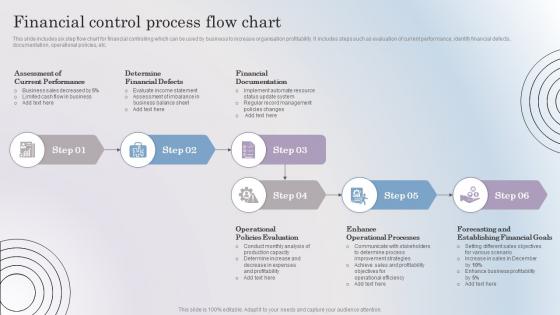
This slide includes six step flow chart for financial controlling which can be used by business to increase organisation profitability. It includes steps such as evaluation of current performance, identify financial defects, documentation, operational policies, etc.
People who downloaded this PowerPoint presentation also viewed the following :
Financial Control Process Flow Chart with all 6 slides:
Use our Financial Control Process Flow Chart to effectively help you save your valuable time. They are readymade to fit into any presentation structure.






FAQs for Financial Control
Alright so first things first - you need solid budgeting and forecasting down. Regular financial reports are a must, plus internal controls so nobody's stealing from you (sounds paranoid but it happens more than you'd think). Cash flow management is huge though - I can't tell you how many profitable businesses I've watched crash because they ran out of actual money. Risk management and compliance stuff matters too. Here's the thing: everything has to work together or it's pointless. I'd start by figuring out what you already have, then tackle your biggest problem areas first.
Honestly, start by getting your department heads involved in creating realistic budgets - they know what they actually need way better than anyone else. Track spending monthly against those targets, but don't just let it sit there. I'd set up alerts at like 80% so nobody gets blindsided. The variance analysis part is huge - you gotta regularly check where you're over or under budget. Some departments always think they need more than they do, so quarterly reviews help you adjust based on real data. Also super important that this isn't just another forgotten spreadsheet.
Dude, financial tech has seriously changed everything. Real-time alerts pop up when sketchy stuff happens, and you can automate most of the boring approval stuff. The fraud detection is wild - AI catches patterns I'd never spot. Plus cloud systems mean I can check our numbers from literally anywhere (probably check them too much tbh). Manual data entry? Nearly gone. Reconciliation that used to take hours? Done automatically. You actually get time for the interesting parts like strategy now. Just pick whatever manual tasks eat up most of your time and automate those first.
So I check my numbers against budget every month - super boring but worth it. Track your revenue growth, profit margins, cash flow, that stuff. Honestly? The hardest part is just doing it consistently. I swear by a simple spreadsheet that shows variance percentages so you can see what's going wrong fast. Pick maybe 3-5 metrics that actually matter to your business and stick with those. The real value comes when you dig into WHY the numbers are off. Like, revenue's down 15% - is it pricing, fewer customers, what? That's where you learn stuff.
Dude, the worst thing you can do is mix your personal and business money - nightmare territory. Track your cash flow monthly, not just when you feel like it. Stop making decisions based on hunches when you could actually look at real numbers. Also don't be that person scrambling for receipts during tax season (been there, it sucks). Having just one person handle everything financial is risky too. Get accounting software instead of random spreadsheets. Separate accounts from the start. Trust me, you'll save yourself so much headache later when things get crazy busy.
Honestly, just grab QuickBooks Simple Start or even Excel templates - track your cash flow every week and you'll be golden. Don't overthink it with expensive software yet. The 80/20 thing really works here: watch your biggest expenses and main revenue streams like a hawk, but forget stressing over every $5 coffee purchase. You can automate invoicing pretty easily without paying an accountant. Set some basic approval rule - maybe anything over $500 needs two signatures or whatever makes sense. Oh, and pick ONE financial number to check weekly. Seriously, consistency beats perfection every single time.
So financial control is like tracking your money flows - budgets, checking if you hit targets, that kind of monitoring stuff. Management is more the big picture decisions: where to invest, how to structure things, growth strategy. Control asks "did we mess up?" while management asks "what's our next move?" They definitely blur together though, which honestly makes sense. You can't really do one without the other effectively. When you're building this stuff out, think of control as your measuring and watching system. Management handles the actual decision-making and planning. You'll need both - the oversight piece AND someone thinking strategically about where you're headed.
So basically financial controls are like your early warning system - they catch problems before everything goes to hell. Monthly budget reviews and spending limits help you spot cost overruns, cash flow problems, or even fraud way earlier. It's honestly like having a car dashboard instead of just crossing your fingers that nothing breaks. Plus it forces departments to actually justify their spending instead of going crazy with the company card. I'd start with simple stuff like approval limits and regular check-ins. You'd be surprised how many red flags show up once you're actually paying attention to the numbers.
Definitely focus on variance analysis first - comparing your budget to what actually happened. Cash flow accuracy matters too, plus how fast you're closing books each month. Internal audit findings are honestly where the real issues show up. Most people ignore segregation of duties compliance, but that's where things fall apart. Also worth watching your A/R aging and inventory turnover - they'll catch control problems you won't see elsewhere. I'd track these monthly to start. Once you spot any weird trends, that's when you dig deeper into what's going wrong.
So financial control is basically your company's BS detector when making decisions. You get real data on budgets, forecasts, costs - all the boring stuff that actually matters. Without it, people make decisions that sound amazing in meetings but completely wreck your profits later. I've seen this happen way too many times. The trick is building those financial checkpoints into your planning from the start. Don't wait until the end to run the numbers. Short version: let the data guide you, but don't let it completely paralyze every decision you're trying to make.
Honestly, ditch those yearly budgets - they're pretty much dead weight after six months. Do rolling forecasts instead, updating them monthly or quarterly. Way more useful. Set up variance analysis so you can compare what actually happened vs what you predicted. Cash flow projections are clutch for catching problems before they bite you. I'd start with monthly rolling 12-month forecasts since they're way more accurate. Dashboard reporting lets you track your KPIs in real-time rather than getting blindsided at month-end. Oh, and definitely do scenario planning for best/worst cases - saves you from total panic mode when things go sideways.
Look, training turns those dusty procedure manuals into something people actually follow. Your team needs to get *why* stuff matters - proper invoice approval stops fraud, reconciliation catches mistakes before they spiral. Most "control failures" I've dealt with? Just people who didn't know the process existed. Trained employees spot problems early and become your best defense against financial screwups. Oh, and focus on what each person actually touches daily - no point training AP folks on payroll controls they'll never see. Start with role-specific sessions.
Honestly, just nail these three things: document everything, separate who does what, and review stuff monthly. Yeah, the paperwork's annoying but auditors eat that up. Don't let the same person approve payments AND process them - that's asking for trouble. Someone else should always double-check your reconciliations too. Oh, and keep up with whatever new regulations hit your industry because they change all the time. My old boss used to say if you can't explain a transaction in 30 seconds, your process sucks and needs fixing.
Honestly, your budget should be your strategy's best friend. Track what's actually happening vs what you planned - that's where the magic happens. When marketing spend isn't hitting those revenue targets, you'll spot it way faster this way. Don't get stuck with rigid annual budgets though (learned that the hard way). Rolling forecasts are clutch because you're always looking three months ahead instead of backwards. Build in flexibility so you can pivot when things get weird. Your financial data basically becomes this storyline showing what's crushing it and what needs work.
Dude, poor financial control will absolutely wreck your business. Cash flow goes to hell, you can't make decent investment calls, and investors bail. You're basically driving blind - can't see problems coming or pivot when you need to. Compliance becomes a nightmare too, and those penalties just bleed you dry. Everything gets affected, from day-to-day ops to your bigger strategic moves. Honestly, I've seen way too many businesses crash because of this. Start simple though - track your cash flow religiously, even if it's just a basic spreadsheet. Regular financial check-ins will save your ass.
-
Huge collection of high-quality templates. Worth each penny.
-
Thank you for showering me with discounts every time I was reluctant to make the purchase.