


Process Flow Diagram Of Credit Management





Try Before you Buy Download Free Sample Product
 Impress Your
 Audience
 100%
100% Editable
 Save Hours
 of Time


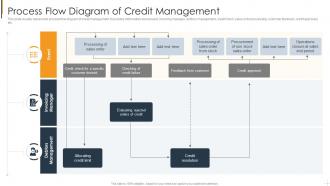
This slide visually represents process flow diagram of credit management. It provides information about event, invoicing manager, debtors management, credit check, sales order processing, customer feedback, credit approved, etc.
People who downloaded this PowerPoint presentation also viewed the following :
Process Flow Diagram Of Credit Management with all 6 slides:
Use our Process Flow Diagram Of Credit Management to effectively help you save your valuable time. They are readymade to fit into any presentation structure.





FAQs for Process Flow Diagram
You'll need four main things: credit checks, solid policies, regular monitoring, and collection steps. Start by setting clear criteria for who gets credit - way too many businesses mess this up by being overly generous upfront. Payment terms should actually work for both sides. Monitor accounts regularly so you catch problems before they blow up. When payments are late, have a clear escalation process ready. Oh, and document everything in one system so your team isn't scrambling to figure out what's happening with each account. Keep collections systematic but don't burn bridges - you might need those relationships later.
Look, you've gotta check people's credit before lending them money - it's basically your safety net against getting screwed over. Skip this step and you're asking for trouble (learned that one the hard way). Proper assessment lets you set smart credit limits and payment terms without being paranoid about it. The tricky part? Don't be so strict that you lose good customers, but don't be a pushover either. I'd say start with solid criteria and actually stick to them. It keeps your cash flow steady and saves you from those nightmare clients who disappear when bills come due.
Tech has completely changed credit management - like, you can't compete without decent systems anymore. AI algorithms crush manual processes for risk analysis speed and accuracy. Most platforms now automate credit scoring, payment reminders, all that stuff. Real-time analytics catch problems early, which honestly saves so much headache down the road. Plus everything integrates with your accounting software so you're not doing double data entry. I'd start by looking at what you're currently using and figure out where automation would help most. Some of these new tools are actually pretty impressive.
Stop just hitting customers with "no" constantly - that's what kills relationships. Be upfront about your credit terms from day one, but when problems pop up? Work with them. Payment plans, longer terms, maybe ship part of their order. I've seen this work way better than just cutting people off. Your team needs to explain WHY you're making certain credit calls and always throw out some alternatives. Most customers actually appreciate the honesty and will meet you halfway if they get what's happening. Make it feel like you're problem-solving together instead of being the credit police, you know?
Honestly, start with DSO - that's just how long it takes customers to actually pay you. Bad debt percentage is the other must-have metric. From there, aging reports show you exactly where things are getting stuck (super eye-opening). I'd also track your credit approval times because slow approvals kill deals. Collection effectiveness index is gold but most people skip it for some reason. Oh, and watch customer payment patterns - you'll spot the serial late payers fast. Those first two metrics though? They'll tell you everything you need to know about what's broken.
Honestly, start with credit checks on your current customers - way easier than chasing bad debt later. Set up alerts for when payments get sketchy or their credit scores tank. New accounts need proper credit applications, none of this handshake deal nonsense. Look at payment patterns too, some customers are just chronically late. Industry stuff matters - if construction's having a rough year, all your contractor clients might struggle together. Credit limits based on what they can actually handle, not what they promise. Monthly reviews are boring but they'll save your ass.
Get ahead of it early, that's my biggest advice. Don't wait until things get ugly - send friendly check-ins before accounts go seriously overdue. I've watched too many people blow up good relationships by going full aggressive right away. Call them up and ask what's going on instead of just demanding money. Maybe they need a payment plan or something. Write everything down so you're not having the same conversation twice (trust me on this one). Stay persistent but don't be a jerk about it. You want them thinking "helpful partner" not "annoying debt collector." Have a timeline ready so you know exactly when to get tougher.
Oh man, international credit management is such a headache. You're juggling different currencies, legal systems, and payment cultures all at once. Currency swings alone can kill you - that invoice worth $10k today might only net you $9k when payment clears. Each country has its own credit reporting and collection rules too. What's normal payment terms here? Totally unrealistic somewhere else. I learned this the hard way with a client in Germany who thought 90-day terms were insulting. Start by finding local credit agencies in your main markets. Credit insurance is probably worth it for bigger international accounts.
When the economy's doing badly, you gotta tighten everything - credit limits, approvals, monitoring frequency. Default risk goes through the roof. Good times? You can be more generous with credit, but that's honestly when people get too cocky and mess up later. I'd say adjust your collection approach too - there's a difference between customers struggling because everyone's broke versus just their business sucking. The real trick is keeping your policies flexible enough to pivot fast when things change. Way better than playing catch-up after you're already behind.
Look, customer segmentation is honestly a game changer instead of treating everyone the same. Break your customers into groups - maybe by risk level, payment history, or credit scores. Then adjust your approach for each group. Your sketchy clients? Hit them with shorter payment terms and check in weekly. Meanwhile, those solid long-term customers can get way more flexibility. I learned this the hard way after micromanaging everyone equally for way too long. It's actually pretty smart because you're putting your energy where the problems usually pop up. Just dig into your existing customer data first - you'll probably spot some obvious patterns right away.
SAP Credit Management and Oracle Credit-to-Cash are the heavy hitters here - super solid for collections automation and credit scoring. Creditrek's another good one. But honestly? Don't just chase the big names. Your company size matters way more than you'd think. Smaller operations might do better with Credit Key or even some CRM add-ons instead of those massive enterprise systems. Here's what I'd actually do: map out whatever manual stuff you're doing now (trust me, this step saves headaches later), then demo maybe 2-3 options. See what clicks with your actual workflow instead of what looks impressive on paper.
Honestly, credit stuff changes massively depending on what industry you're in. Retail companies use automated scoring since they're cranking through tons of small transactions daily. Manufacturing? They'll give you way longer to pay because those B2B relationships actually matter. Don't even get me started on healthcare - insurance makes everything a total mess. Financial services are super strict (regulations and all that). Construction companies do milestone payments tied to project phases, which makes sense. You're way better off looking at what similar companies in your sector do rather than following some generic playbook.
Start with credit risk basics and financial statement analysis - that's your foundation. Then dive into industry-specific stuff and how to actually evaluate customers and set limits. Don't sleep on the soft skills though! Negotiation and communication training will literally save your sanity when dealing with difficult accounts. Make sure everyone knows your credit software inside and out too. Oh, and whatever regulatory stuff applies to you guys. I'd kick off with a solid credit analysis workshop first, then see where the gaps are. Honestly, the early warning signs training might be the most valuable piece.
Honestly, just get your payment terms in writing from the start - put them on every single invoice. I know it sounds boring but track everything in a spreadsheet at first (fancy software can wait). Here's what most people mess up: they're too polite about chasing late payments. Send those reminder emails at 30, 60, 90 days past due. No exceptions, even for customers you really like - trust me on this one. Ask for deposits upfront from new clients too. Once you've got some momentum going, then you can look into proper credit management tools. The whole thing really comes down to sticking to your rules consistently.
Don't harass people when collecting - that's the big one with debt collection laws. Privacy stuff matters too, so you can't just share their financial details with random people. If you're reporting to credit bureaus, double-check your data is right under the Fair Credit Reporting Act. The discrimination piece gets messy though. Can't deny credit based on race, gender, all that protected stuff. Honestly I'd document every decision you make, even the boring ones. Oh and definitely loop in legal before making any major policy changes - way easier than fixing problems later.
-
“I always have a wonderful experience with SlideTeam. It's my ""go to"" when I need a template.”
-
The Designed Graphic are very professional and classic.