


Process Flow Of Credit Collection Management




Try Before you Buy Download Free Sample Product
 Impress Your
 Audience
 100%
100% Editable
 Save Hours
 of Time


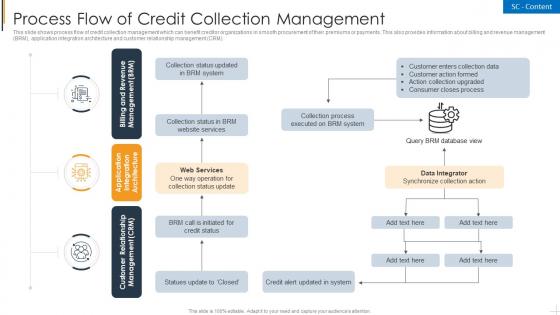
This slide shows process flow of credit collection management which can benefit creditor organizations in smooth procurement of their premiums or payments. This also provides information about billing and revenue management BRM, application integration architecture and customer relationship management CRM.
People who downloaded this PowerPoint presentation also viewed the following :
Process Flow Of Credit Collection Management with all 6 slides:
Use our Process Flow Of Credit Collection Management to effectively help you save your valuable time. They are readymade to fit into any presentation structure.





FAQs for Process Flow Of
You'll want solid credit policies from day one - set payment terms and limits before you extend anything. Build in regular check-ins at 30, 60, 90 days past due so stuff doesn't slip by. Mix up your communication too... some people ignore emails but pick up calls, others are the opposite. Honestly? The hardest part is just staying on top of your tracking system. I've seen businesses lose thousands because they weren't organized. Document every interaction and decide upfront when you'll send things to collections - don't wait until you're frustrated and making bad decisions. Trust me on that one.
Look at three main things: their payment history, financial health, and what you can handle cash-flow wise. Check their credit score first, obviously. Then dig into how fast they've actually paid other invoices - that's your best indicator right there. Different industries have their own payment rhythms too, so factor that in. Order size matters because it affects how much risk you're taking on. Honestly, I'd go conservative with new customers at first. You can always loosen up the terms once they've proven themselves reliable over time.
Dude, segmentation is a game-changer for collections. Group your customers by credit scores, payment history, debt amounts - that kind of stuff. Then you can figure out who needs the hammer vs who just needs a friendly reminder. Honestly, I've watched teams burn so much time treating every late account exactly the same. Makes no sense. Your risky customers? Hit them hard with aggressive follow-up. Good customers going through a rough patch? Give them some breathing room. Just start with 3-4 basic groups using whatever data you have now. You can get fancy later.
Automated systems can hit way more customers than calling manually - that's the biggest win. Email and text reminders work pretty well for overdue accounts, and you can set those up once then forget about them. The analytics stuff helps you figure out which accounts are actually worth chasing (some people will never pay, let's be real). CRM systems keep everything in one spot so you're not digging through spreadsheets constantly. Online payment options help too since people can pay instantly instead of mailing checks like it's 1995. I'd start with automated email reminders first.
DSO is your main number - shows how long you're waiting to get paid. Then watch your aging buckets (30, 60, 90+ days) because that's where you'll spot trouble before it gets worse. Collection effectiveness index tells you what percentage you're actually collecting, which honestly can be pretty eye-opening. Bad debt write-offs matter for the bigger picture. Track which contact methods work best too - no point wasting time on calls if email gets better results. Cost per collection is another good one to monitor. If you're just starting out though, focus on DSO and aging reports first.
Honestly, just talk to people like they're actual humans going through stuff. Send friendly reminders early - don't wait until they're months behind. Email, text, call, whatever they actually check. Those generic collection letters from the Stone Age? Trash them. Be specific about what's owed and when. Set up automated sequences but always let people reach a real person easily. Payment plans help tons when someone's struggling. I know it sounds obvious, but you'd be shocked how many businesses still send threatening robot letters instead of just... being decent about it.
Dude, the FDCPA is your bible here - no calls before 8am or after 9pm, zero harassment or threats allowed. When someone asks you to validate a debt, you have to do it. State laws are all over the place too, especially with statute of limitations stuff. Truth in Lending Act applies if it's consumer credit. Honestly, collections used to be way more aggressive back in the day but now? Everything's locked down tight. My advice: document literally everything, make sure your team knows the rules inside and out, and don't hesitate to bug your lawyers when something feels sketchy.
Honestly, just don't be a dick about it. Start gentle with reminders and try to understand what's actually going on with them first. Most people aren't trying to screw you over - they're probably just stressed about money. Offer payment plans or give them a little extra time if you can. I've watched businesses completely nuke customer relationships by jumping straight to aggressive collections calls. Super dumb move. Work with them on something realistic instead of against them. And yeah, document everything but keep it human, you know?
Start with prevention - get clear payment terms upfront and invoice right after delivery. Then set up automated reminders at 30, 60, 90 days. The squeaky wheel really does get paid faster. For overdue accounts? Pick up the phone instead of just emailing - way more effective. Payment plans work great too, or offer small discounts for immediate payment. I learned this the hard way, but you've gotta stay systematic about it. Don't let things pile up like I did. Block out time each week to review your aging report and actually take action on it.
Yeah, you've gotta totally adjust based on your industry. Healthcare means dealing with insurance headaches and payment plans - so longer timelines, more patience. Retail moves super fast since people choose to buy that stuff. Manufacturing is all about relationships though, so you can't just hammer people with robocalls or you'll kill future deals. Construction's weird with lien rights and project cash flow... honestly kind of a pain. Each industry pays differently, so your whole approach - timing, how you talk to people, when to escalate - needs to match that reality.
Okay so three main things to cover. Legal stuff first - what they can't say without getting you sued, because trust me, people love to threaten lawsuits over collections. Communication skills are huge too - active listening, how to calm someone down when they're screaming about late fees. Then your company's actual policies on payment plans and hardship cases. Role-playing helps a ton for practice. Oh, and definitely have newbies shadow your best collectors for like a week - watching someone handle a real angry customer is worth way more than any training manual.
Look, your credit policies need regular check-ups or they'll get stale fast. Market conditions change, customer habits shift - what worked last year might be killing your cash flow now. I'd say every 3-6 months, sit down with your collections team (they're the ones dealing with this mess daily anyway). You'll spot patterns you missed before. Maybe certain customers are always late, or your payment terms are way too generous. Companies I know have cut their DSO by 15-20% just from tweaking things after quarterly reviews. It's honestly one of those boring tasks that actually moves the needle.
Honestly, the biggest mistakes I see? Companies don't set clear payment terms upfront - that's like asking for trouble. Then they wait forever to chase overdue payments, or they're super inconsistent about it. Document everything too, seriously, you'll thank yourself later when things get messy. I've seen businesses go too hard and piss off good customers, or be way too soft and basically train people to pay late. Oh, and treating your biggest client the same as some random one-time buyer is pretty dumb. My advice? Set firm terms from day one and actually stick to them.
So basically you want to dig into your payment data from the last 2-3 years and spot the red flags that showed up before people defaulted. Look for stuff like payment delays getting longer, credit usage spiking, or sudden drops in account activity. Machine learning can help crunch all this and spit out risk scores - honestly it's pretty neat how well it works. Don't forget external stuff too, like if their whole industry is tanking. The trick is teaching your model what actually matters vs just noise. Track things like how often payment patterns change or when accounts go quiet. Way better than just guessing who might bail on you.
Set clear payment terms from day one - seriously, this saves so much headache later. Follow up at 30, 60, 90 days past due. Your tone should get firmer each time but don't be a jerk about it. Write everything down because you'll totally forget who promised what. Mix up how you contact them - some people ignore emails but answer calls, others are the opposite. I automate reminders for small amounts but personally reach out for bigger ones. Stay persistent without being pushy. You still want their business after they pay up.
-
Unique research projects to present in meeting.
-
Understandable and informative presentation.